






Bruttians
In the middle of the fourth century BC, the peoples of the southern peninsula forced their way into the politics of Italy under a name that outsiders associated with rebellion. Within a generation, Bruttian forces were taking cities and helping to bring down a king. The country between the two seas had acquired a power that neither its neighbours nor the Greek coast could ignore.
The peninsula beyond Lucania
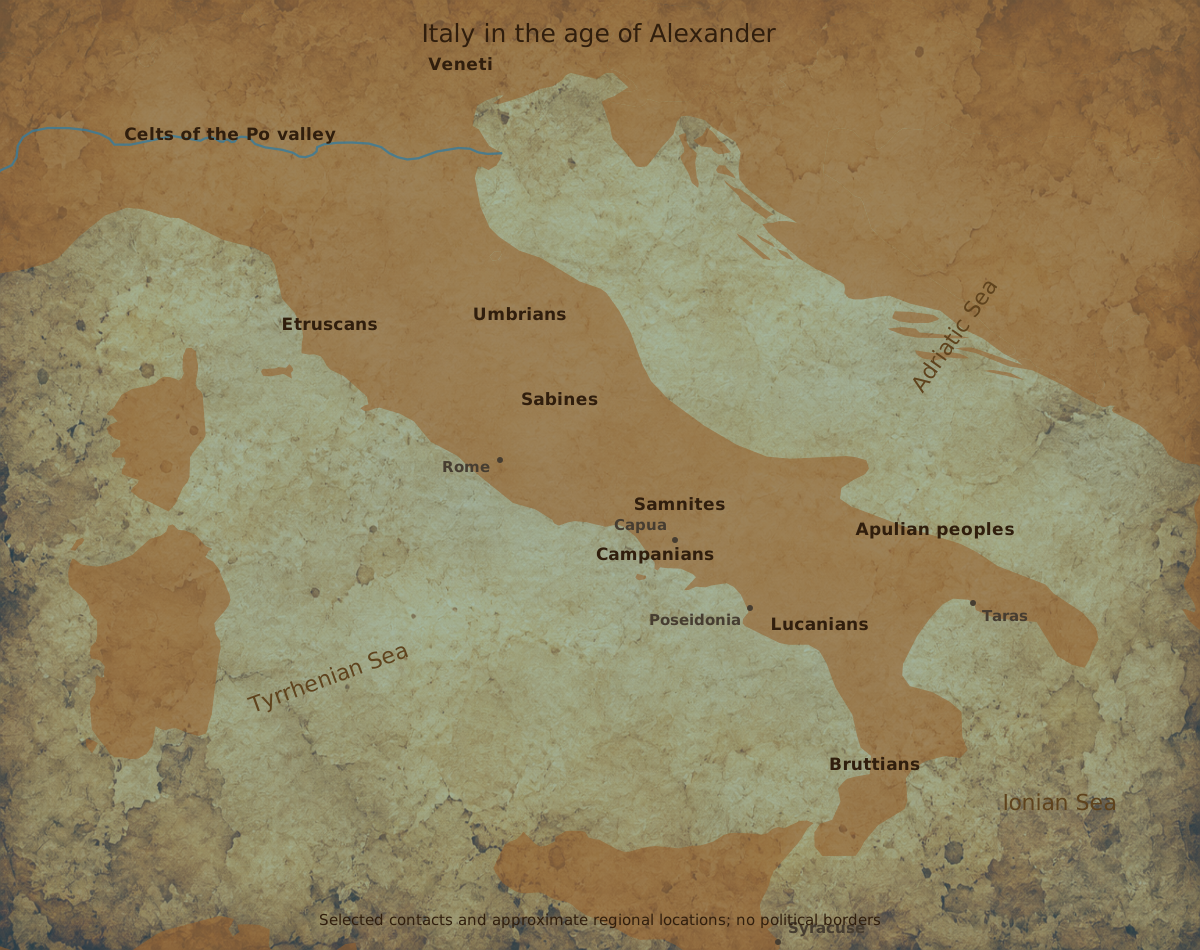
Bruttian country occupied the southern end of the Italian mainland, in what is now Calabria. Mountain interiors and the wooded Sila rose between the Tyrrhenian and Ionian coasts. Routes descended towards plains and ports where Greek settlements had long maintained their own networks of land, commerce and allies.
The landscape contained resources worth defending and worth taking. Forests supplied timber and other products; upland grazing supported herds; valleys and lower slopes sustained cultivation. A community able to control the approaches between the interior and the coast could influence the movement of goods and armed men across a considerable area.
This was not a country awaiting people until the Bruttian name appeared. Earlier inhabitants, Greek coastal communities and the expansion of Lucanian power had already shaped its settlements and relationships. The emergence of the Bruttians changed how those populations could act politically. It did not create an empty homeland out of nothing.
Consentia became an important inland centre. Other communities and strong positions belonged to a network in which local authority remained significant. A common name could unite interests, but the armed strength behind it depended on people whose obligations began in particular places and households.
A people remembered through rebellion
Ancient writers associated the beginnings of Bruttian independence with a revolt around 356 BC. They explained the name through Lucanian speech, describing fugitives or dependent herdsmen who had broken free from their masters. The story gave the new power an origin in refusal: people once expected to serve had claimed the ability to decide for themselves.
The language is also the language of outsiders. A hostile neighbour could turn a rival's independence into evidence of disobedience and low birth. The emergence of the Bruttians brought together a more complicated population than a tale of runaway slaves alone can convey. Local groups, dependants and armed men could acquire a shared political identity through the struggle against an existing authority.
The timing mattered. The power of Syracuse was shaken by internal conflict, while the arrangements that had sustained influence along the southern coasts became less secure. The decline or distraction of a stronger neighbour created room for new coalitions. The Bruttians used that opening to become an independent force rather than remain merely the subjects or followers of another people.
Their story belongs to a wider fourth-century Italy in which political identities could be made through action. A community's claim to land and freedom gained weight when it could gather allies, field an army and compel recognition. The people who called themselves by a common name did not need permission from the older powers to become important.
The coast within reach
Greek cities offered access to cultivated territory, skilled production and the sea. They were rich neighbours and potential allies as well as targets. Bruttian expansion repeatedly carried the struggle towards them, turning control of roads and inland ground into pressure on the urban coast.
The danger to a city was not confined to an assault on its walls. An enemy who could ravage its fields, interrupt movement or threaten its rural population could undermine the prosperity that made the city powerful. A garrison protected buildings more easily than every farm or road. Defending the countryside could require accepting battle on ground an opponent understood better.
Greek and inland interests nevertheless crossed those lines. Exiles sought patrons; families could form connections beyond their own community; soldiers might serve where opportunity or necessity led them. The armies fighting in southern Italy were assembled inside those relationships. Cultural difference did not prevent cooperation any more than shared speech guaranteed loyalty.
The capture or control of a city could change the balance within the Bruttian world itself. Access to coastal wealth strengthened some communities and leaders more than others. Expansion created political choices at home as well as enemies abroad. A coalition that had formed to resist subjection now had to decide how to use the authority it had won.
The king from across the sea
Tarentum's invitation to Alexander of Epirus brought a formidable new actor into the region during the 330s BC. The king could draw on the experience and prestige of an overseas monarchy. For the Greek cities, his victories promised relief; for the inland peoples, they threatened the settlements and freedom gained through years of struggle.
Alexander's campaigns reached into Bruttian and Lucanian country. Consentia and Terina appear among the towns taken in the tradition preserved by Livy. The removal of hostages from leading families added a personal burden to military defeat. The security of households could be tied directly to obedience to the king.
Yet victories did not eliminate the hostile forces around him. Alexander also relied on local support, including Lucanian exiles whose interests were bound to the politics of their homeland. The army's strength therefore included men whose commitments could change if the balance of the campaign changed.
Near Pandosia, conventionally dated around 331 BC, the king's position collapsed. Livy describes prolonged rain and rising water separating his troops into bodies unable to support one another. Lucanian and Bruttian forces attacked the isolated positions. In the attempted escape that followed, a Lucanian exile killed Alexander at a river crossing.
The victory had a significance beyond the death of one commander. A royal expedition that had taken important towns could still be defeated by the people whose country it sought to master. The Bruttians and Lucanians had preserved the ability to act after reverses, and their local strength became decisive when the king's army lost cohesion.
An army of the southern interior
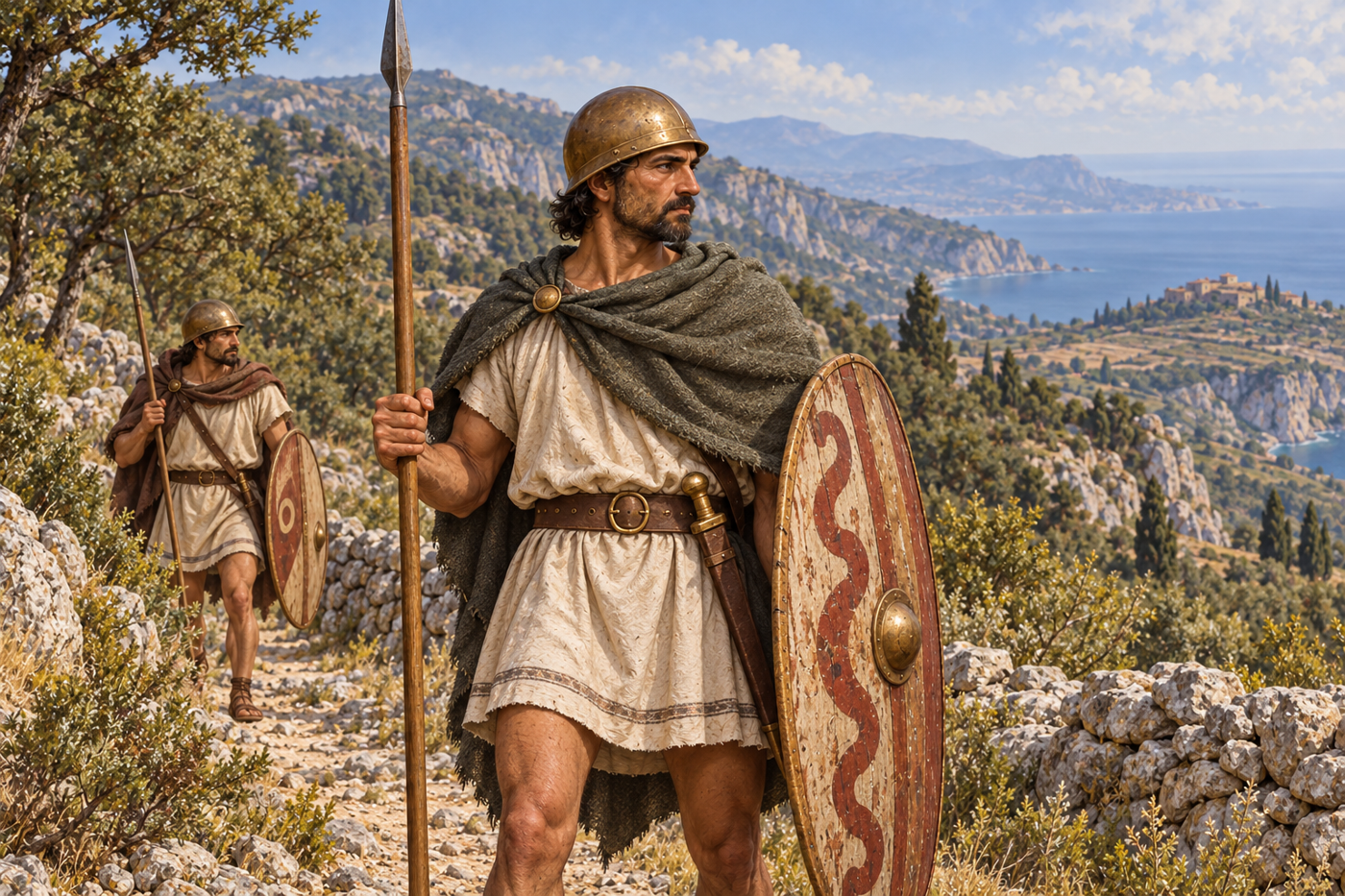
Bruttian warfare drew on the conditions of this contested landscape. Men on foot defended settlements and controlled approaches, while lighter fighters could use difficult ground and expose an enemy's movement. Spears, javelins, swords and shields belonged to the broader military world of southern Italy. Equipment moved with soldiers, booty, trade and the ambitions of those who could afford distinctive protection.
Knowing the country offered an advantage, but it did not replace organisation. A successful attack required forces to arrive, cooperate and remain committed. The ability to exploit an enemy's isolation, as the Pandosia tradition describes, depended on collective action as well as familiarity with a valley or pass.
Belief and sacred obligations belonged to the same communities that supplied the army. The struggle over land affected the places where people worshipped and buried their dead. A victory could confirm the standing of a leader and the security of the community; defeat could expose both to demands from a conqueror. War was inseparable from the social order it threatened to change.
Independence after Pandosia
The death of Alexander did not end rivalry in southern Italy. Greek cities sought new means of protection, Lucanian interests continued to shift, and Rome's influence moved steadily southward. The Bruttians would face further enemies and make further choices as those pressures intensified in the following century.
In Alexander the Great's lifetime, however, their achievement was already unmistakable. A people remembered as rebels had become a power capable of taking cities, defending its own country and helping destroy a king's hopes of conquest. Their armies fought in the space between the rich coast and the mountain interior, turning the refusal to remain subordinate into a claim upon the future of the south.