





Old World | ||
|---|---|---|
|
Southern Guilds
|
Eastern Guilds
|
Tenkyo Rebels
|
|
Kumaguchi
|
Massaloi
|
Tohei
|
|
Mori
|
Kento
|
Tsunomon
|
|
Namshin
|
Ankarath
|
Haeguk
|
|
Botai
|
Taiping
|
Xian
|
Empire | ||
|---|---|---|
|
Western Guilds
|
Supreme Empire
|
Voltrmen
|
|
The Old Guild
|
Swolves
|
Ritolia
|
|
Palter
|
Boucaners
|
Lioners
|
Threats | ||
|---|---|---|
|
Akasuna
|
Wanyue Raiders
|
Gotoz & Smogu
|
|
Orc Rebels
|
Dakonoxes
|
Celestian Peace
|
|
Greanans
|
Clergy
|
Naxjabas
|
|
Myriam
|
Southern Elves
|
Seraphims
|
|
Wulfsons
|
Bug Army
|
Fukai
|
Welcome to Damocles
On the far edge of the galaxy, Damocles remained cut off from the Supreme Empire for nearly two millennia. During that long isolation, clans of noble warriors battled endlessly for power and honor. How the first humans arrived—or what level of technology they once possessed—has long since been forgotten. Only legends survive, along with fragments of ancient war-phrases still used in everyday speech. Their original meaning, much like their origins, is now lost to time.
Damocles was rediscovered a little more than 800 years ago by smugglers searching for a quiet relay world where they could trade illegally with the non-humans scattered across this region of space. What they found instead was a highly structured society: from the warrior aristocracy to the outcasts of the mountains, each group played its part in maintaining a delicate balance—at least on the surface. The smugglers quickly learned to blend in, respecting the codes just enough to bend the rules, like nearly every inhabitant of Damocles.
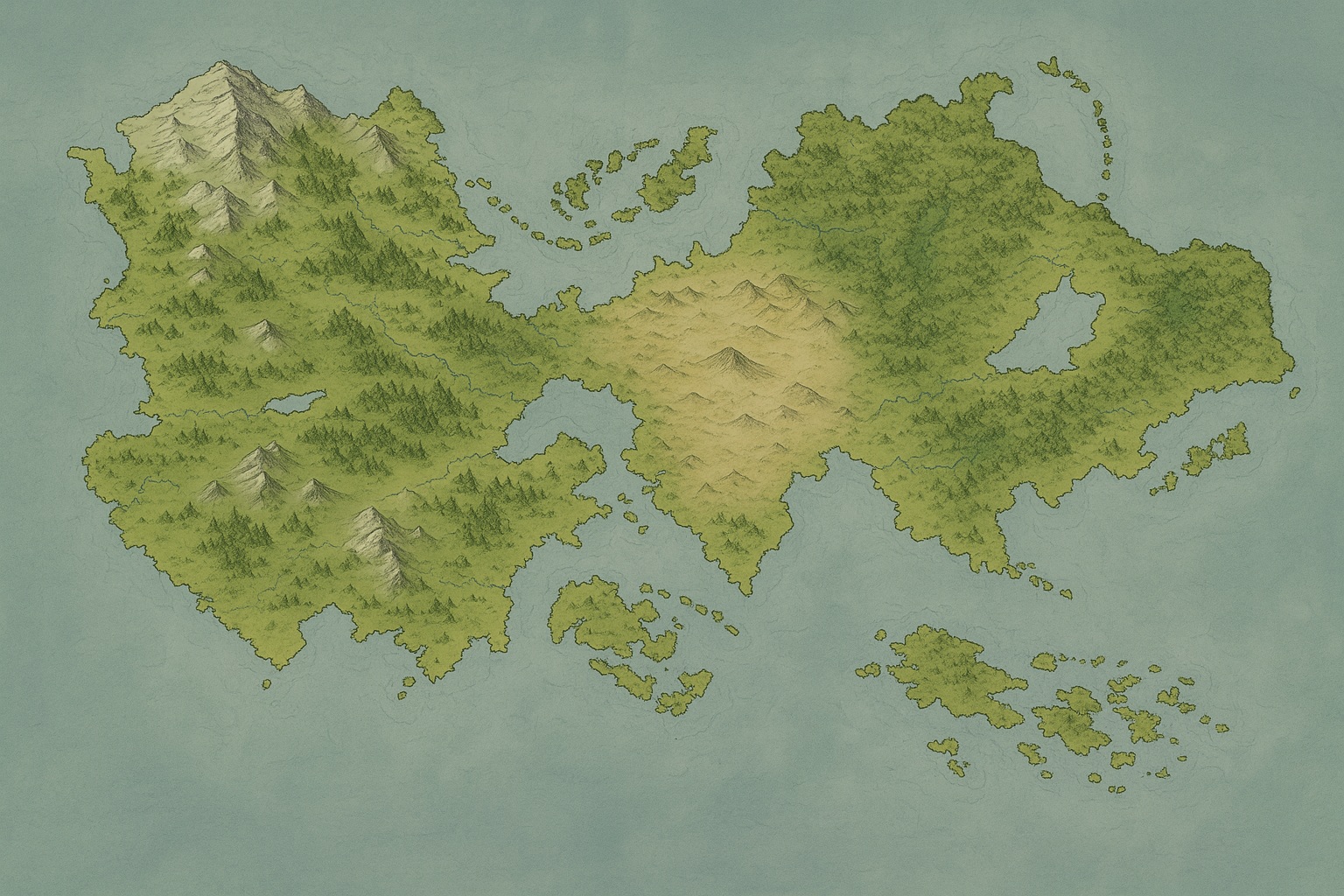
Our understanding of the geography and society of the era comes mostly from their travel journals. Fertile coastal regions were dominated by mighty warrior clans. The mountains sheltered outlaws, exiles, and all those who had chosen a life beyond clan law. They survived by selling ore, and by protecting—or raiding—the merchant caravans heading toward the central plains. Those plains, less fertile, were home to countless sects who carved out miniature states, constantly striving for supremacy. Sometimes a defeated clan would retreat into the plains to rebuild its strength before attempting to reclaim a place among the coastal powers.
Further south lay the vast desert peninsula of Akasuna, inhabited by the Firstborn and their immortal kings—scattered ethnic groups who claimed descent from the planet’s original inhabitants. Their tall, slender physique contrasted sharply with the stockier build of other Damocleans. Their strange cults revolved around human sacrifice, and it was widely believed they mastered the transfer of vital energies, which they traded to malevolent alien entities in exchange for sophisticated weapons.
At first, the arrival of foreigners did little to disrupt the global balance. They established trading outposts in the southern central plains and showered nearby sects with alien artifacts to maintain good relations. They refueled their ships and left to trade with worlds of the Empire. But over time those strange trinkets became holy relics, fought over by rival sects. The new doctrines born from these objects spread as far as the coastal cities. A few centuries later, when the first members of the Celestial Peacekeepers set foot on Damocles, the fruit was ripe and ready to be plucked.
In less than a generation, they united most sects under three complementary Paths. They prompted the creation of a Council of Clans, allowing diplomacy a chance to resolve old conflicts. After establishing a priesthood of the Celestial Voice to dominate all sects, they placed their technology at the service of extracting iron and rarer metals through drones. Within a few years, former outcasts became merchants and overseers of automated mines and industries, serving the Peacekeepers. Whether their true objective was simply the exploitation of Damocles’s resources is still debated. What is certain is that this new merchant aristocracy merged with the old one, and clans now competed for control of the mines as fiercely as for the fertile plains.
Within decades, Damocles shifted from a logistical outpost to a thriving trade hub. Foreigners from across the Empire flocked to purchase stylized replicas of alien artifacts manufactured on-world. The Peacekeepers themselves faded from view, their rule enforced through the priesthood of the Celestial Voice and fanatical servants armed with the most advanced weaponry. Their presence dwindled as their distant nation suffered defeat after defeat against the Human Empire. Soon, they became little more than legend.
But their technology remained. The priesthood continued to innovate, inspired both by Imperial craft and by the esoteric devices brought by the aliens who still trafficked with the southern barbarians.
Inevitably, prosperity bred envy. Had Damocles remained insignificant, the Supreme Empire might have ignored it for many more millennia. But success draws predators. Wealthy families from nearby Imperial worlds petitioned the Empire for support in conquering Damocles—and were granted it. Combining their forces, they launched an invasion.
The landing was chaotic. Warned in advance, the priesthood unleashed catastrophic weapons that destroyed most of the regular army’s transport ships and their communication relays, severing the planet from the galaxy for centuries. The smaller noble vessels, however, made planetfall. Where they landed, they encountered disorganized resistance. Some Imperial clans were crushed instantly; others, larger and more disciplined—like the Lioners—annihilated several rivals and forged the greatest realm. The cunning Swolfs exploited native inter-clan rivalries, eliminating enemies and weaving alliances. For although Damoclean clans had initially united against the invaders, the invaders themselves quickly learned to play the local political game.
The last defenders of the old order were wiped out by chemical bombardments in the mountains. Most surviving independent clans swore allegiance to the Supreme Empire, keeping their lands and their rank. Rivalries persisted, and would rise again—but only after the Great War.
Though seemingly untouched, the priesthood had exhausted most of its resources. The sects of the Three Paths sacrificed countless followers to slow the coalition—primarily the foreign alliance led by the Lioners—as it advanced toward the sacred center of the Celestial Voice. Many more died defending it. To protect their advanced technology, the priesthood vanished into a secret refuge. On rare occasions they still strike: stealing artifacts, assassinating nobles, or pursuing motives unknown. They leave behind no trace—only legends of weapons of impossible power and armor that renders them invisible, invulnerable, or both.
The coalition of foreign nobles and Damoclean clans—now unified under Swolf leadership—turned its attention southward, striking at the descendants of the smugglers and outlaws who had long controlled the land bridge connecting the desert to the continent. Retreating into the sands, the Saurians resisted for years, launching precise counterattacks in terrain they mastered. Despite facing forces ten to fifteen times their number, they fought on using patched-together alien vehicles and weaponry repaired hundreds of times. When finally cornered, they fired their last rounds and burned the final drops of fuel. After their surrender, many were deported into Swolf territory, where they now pay their tribute as elite warriors. For a time, the entire planet was subdued.
But nature took back what politics claimed. Cut off from the galaxy, the clans returned to old habits—alliances shifting, wars erupting, disappearances and rebirths of ancient houses. Rumors now whisper that tensions between the Lioners and the Swolfs may soon ignite into open war.
From the unnatural weapons unleashed during the Great War, a toxic, aggressive supernatural forest—the Fukai—now spreads relentlessly across the world. It creeps through old battlegrounds, swallows abandoned cities, and sends its roots beneath the ruins of the industrial south. In the most devastated regions, where nuclear fire fell and the soil itself was poisoned, the Fukai twisted into something even stranger. Those irradiated zones became the cradle of a new horror: men and women who survived the bombardments only to be reshaped by the spores that rose from the awakened jungle.
They would come to be known as the Bug Army—the forsaken children of the Great War.
Some embraced the whispering call of the forest, surrendering fully to the Fukai’s will. Others resisted the mind that sought to claim them, forming fractured warbands of exiles—too altered to return to humanity, too proud to kneel before the living jungle. Their camps grew like tumors along the borders of no man’s land, half ruin, half organism, pulsing with veins of chitin and metal. Wherever the Fukai advanced, the Bug Army followed; wherever the clans tried to fortify, the infected tunneled beneath; wherever the invaders built walls of steel, the transformed raised hives of flesh.
The Bug Army is a reminder that Damocles does not forget its wounds—and never forgives them.
The sects labor in secret to restore the Celestial Peace. Mutants hidden in the mountains dream of vengeance. The Firstborn await the imminent return of their sadistic alien gods. And as the sky threatens to open once more, who can say whether the Supreme Empire will return to “restore order”?
Meanwhile, other horrors grow unchecked: the voracious Bug Army, the evolving Fukai spawn, and countless swarms born from Damocles’s wounded soil.
Damocles is a battlefield once again.
Welcome to Damocles.