






Apulians
The road to Luceria could draw an army across half of southern Italy. To Roman and Samnite commanders, the Apulian towns were allies to secure, enemies to isolate and positions from which a war might be won. To their inhabitants, those same agreements offered a chance to survive the struggle without surrendering every local ambition to it.
Between the Adriatic and Tarentum
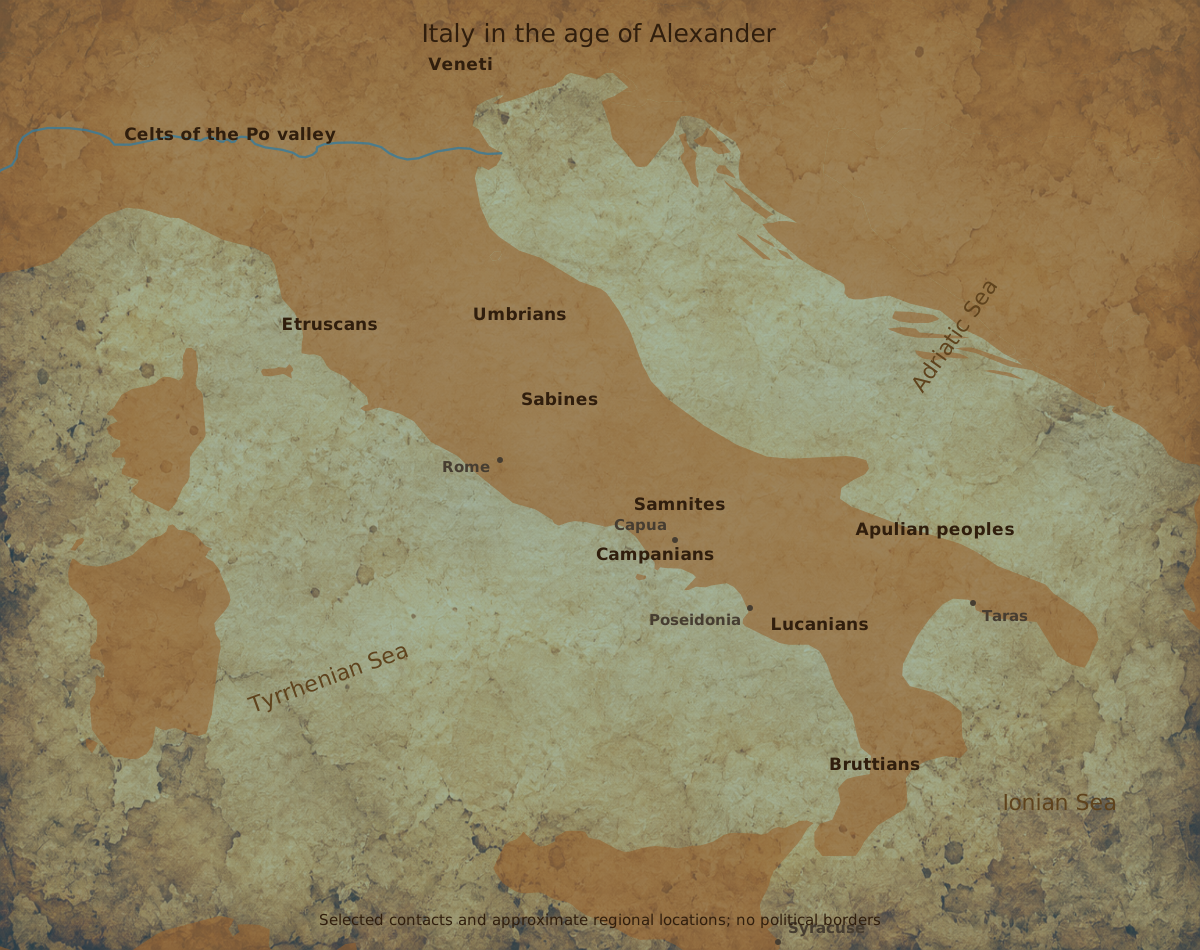
Southeastern Italy contained several distinct worlds. Daunians occupied the north, Peucetians the country farther south, and Messapians the heel of the peninsula. The broad name Apulia embraces communities whose territories, traditions and political choices were not identical. Their cities did not answer to one king or gather automatically behind a single commander.
The landscape helped shape those differences. The northern plains offered extensive farmland and room for movement. Farther south, limestone uplands and enclosed cultivated ground connected inland settlements to the coasts. Harbours and landing places opened towards the Adriatic and Ionian seas, while routes through the interior joined the region to Samnium and the rest of Italy.
Arpi, Canusium and Luceria belonged to the northern network of settlements. In the south, the communities around Tarentum lived beside a powerful Greek city whose prosperity and ambitions extended beyond its walls. A coastal connection might bring opportunity, but it could also bring a navy, an expeditionary force or demands that a smaller neighbour could not easily refuse.
The populations of this country carried histories that reached across the Adriatic as well as into Italy. Language, local pottery and funerary traditions gave those connections distinctive forms. Greek authors supplied origin stories and broad ethnic names; the people who built towns and maintained sanctuaries also possessed more immediate identities, rooted in families and particular territories.
Princes, horses and the language of wealth
The leading households of Apulia made their standing visible through the objects they acquired and the dead they commemorated. Large painted vessels, bronze equipment and carefully arranged graves gave material form to rank. Imported forms could be selected and reshaped for local use. A Greek story on a vase might become part of a ceremony conducted by people whose speech and loyalties were their own.
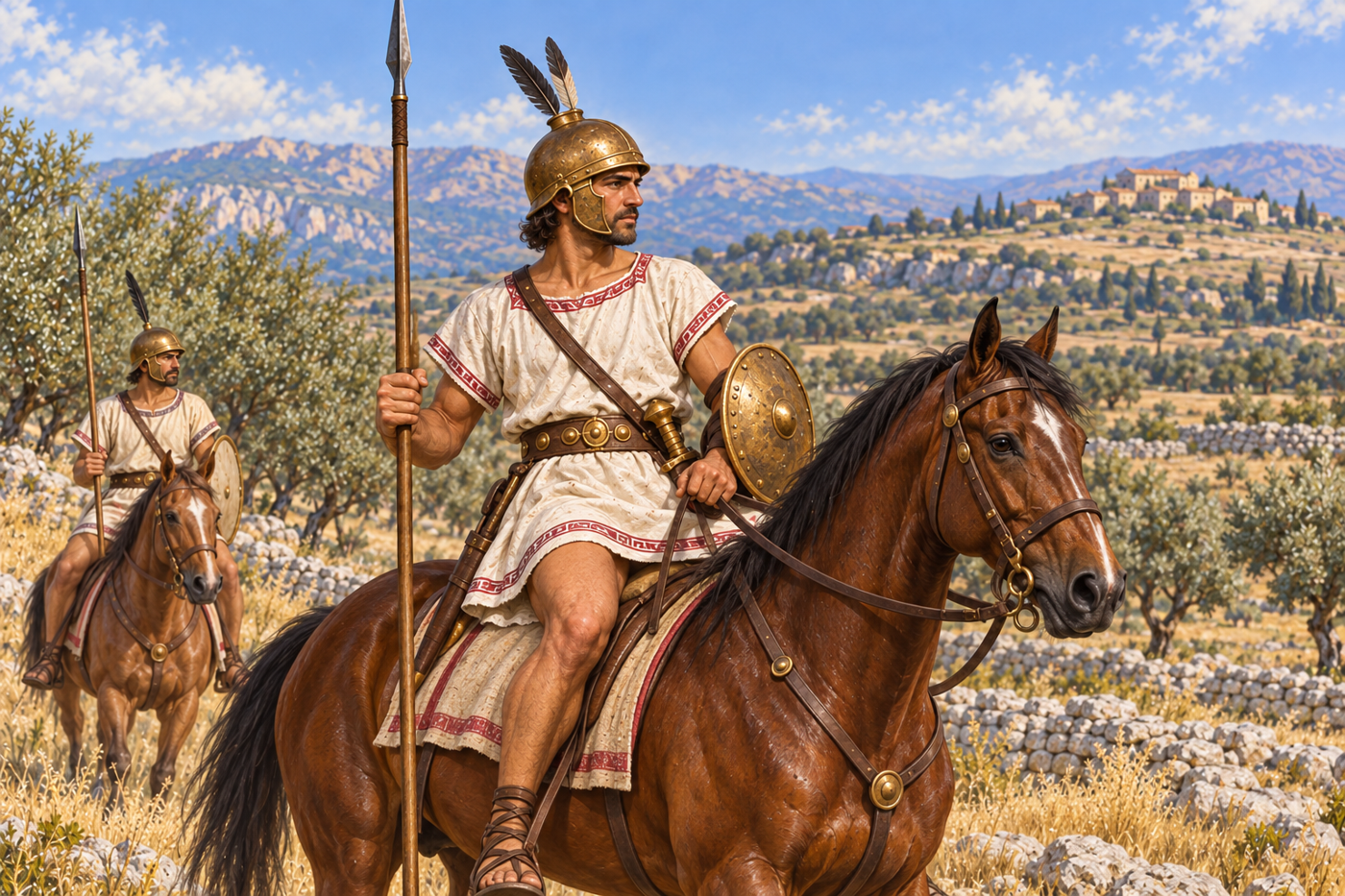
The horse occupied a prominent place in this display. Maintaining one required resources, and its equipment could proclaim the owner's position as clearly as his clothing. Mounted service connected elite prestige to practical military power. A rider could observe, carry a message, move rapidly between threatened places or exploit an enemy's disorder.
Such prominence did not make every community a cavalry state. Fields, towns and camps required infantry to defend them. Armed men on foot carried spears and shields, while lighter fighters used missiles and the opportunities offered by the ground. The wealthiest rider and the less richly equipped man beside him participated in a common war without enjoying the same standing within it.
Surviving armour gives this world a tangible presence. Fourth-century bronze cuirasses associated with Apulia belong to a network of skilled manufacture and elite demand. Their shaped surfaces and protective function joined beauty to danger. They were valuable objects worn by men who expected to be seen, remembered and exposed to weapons.
The Greek neighbour
Tarentum brought the resources of a major Greek city into close contact with the surrounding peoples. Its workshops, trade and military requirements encouraged exchange; its pursuit of security could also threaten neighbouring land and independence. Relations changed with local circumstances. The same region could support commercial cooperation, mercenary service and bitter fighting.
The Messapian world had long experience of this relationship. Earlier wars had shown that the Greek cities could suffer severe defeats, while later appeals to overseas commanders demonstrated that Tarentine resources did not remove the need for allies. The issue was who would control the country around the cities, not whether one culture could remain untouched by the other.
In 338 BC, Archidamus of Sparta died fighting in southern Italy during an expedition associated with Tarentum's struggles against its neighbours. Alexander of Epirus followed in the 330s. These interventions made the southern Adriatic part of the same age of royal warfare that carried the Macedonian Alexander into Asia, but they had their own aims and their own consequences for local communities.
Foreign kings could defeat armies and take towns; they could not make the interests of all their allies coincide. A settlement acceptable to Tarentum might be intolerable to one of its neighbours. A powerful local family could seek the king's support against rivals, then find that the protection carried obligations it had not expected. The ambitions of a small community remained present inside the larger war.
Towns choosing sides
Roman and Samnite competition increasingly drew northern Apulia into their struggle during the later fourth century. An alliance offered a town a means of confronting a nearby danger. It could also provide an external power with a route, provisions and a position from which to operate against another community.
That made Apulia more than a remote theatre. To hold connections there could threaten an opponent's flank and extend influence beyond the mountain approaches. The northern plains and the roads towards Luceria mattered because they gave armies choices. The threat to an ally could force a commander to move quickly, even when the route carried serious danger.
The Caudine disaster of 321 BC was bound to this geography. According to Livy, reports that Luceria was under attack encouraged the Roman consuls to take the shorter route through the Samnite passes. The trap was sprung far from Luceria itself, but it depended on the importance attached to maintaining an Apulian relationship. Local allegiance had become a concern capable of directing a consular army.
The subsequent wars repeatedly changed the balance around the towns. Agreements with Rome did not mean identical interests among the Apulian communities, and Samnite pressure did not unite them into one enduring alliance. Each settlement had to weigh the cost of resistance against the consequences of depending on another power.
Sanctuaries, memory and the people at home
The religious life of the region shared the variety of its political landscape. Local sacred places stood within a wider world of exchange, and Greek religious imagery circulated through objects used by non-Greek households. Burial customs and offerings expressed the hopes of families as well as the public standing of the dead.
The images surrounding a grave could speak of heroic distinction, companionship and the passage beyond life. They did not erase the practical world that sustained the household: land, animals, marriage, trade and the possibility that a son or husband would not return from service. The prestige of an armed rider was sharpened by that risk.
As the fourth century drew to a close, Apulia remained a country of active communities rather than an empty corridor between Rome and Tarentum. Its inhabitants negotiated, fought, employed outsiders and used distant alliances to pursue local aims. The expanding wars of Italy would increasingly constrain those choices, but they had not yet reduced them to a single political future.
An Apulian army gathered that local determination. Its horsemen carried the confidence of prosperous houses, while its infantry defended the settlements and cultivated ground on which their wealth depended. Beyond the familiar names of kings and republics stood communities whose decisions could alter the road an army took and, with it, the course of a campaign.
Sources
- Strabo, Geography VI.1–3: the peoples and cities of southern Italy.
- Livy, History of Rome IX: Caudium, Etruria, Umbria and the later Samnite campaigns.
- Metropolitan Museum of Art, Apulian bronze cuirass, fourth centuryBC,1992.180.3a,b.
- François Sabbathier, Dictionnaire, s.v.Apulie.
- Nicholas Sekunda and Simon Northwood, Early Roman Armies, Osprey Men-at-Arms283.