






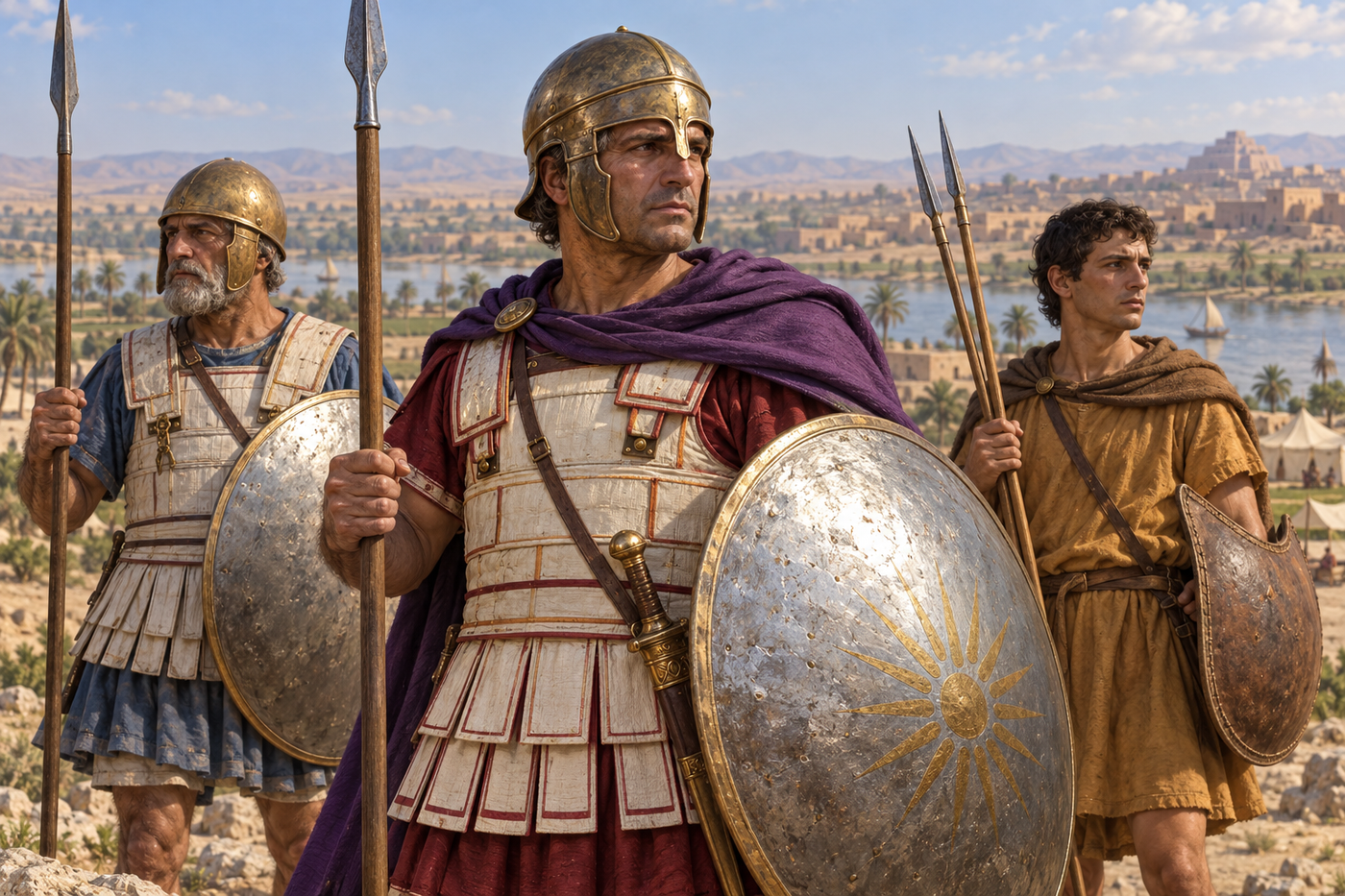
Imperial Macedonians
The men who thought they were being replaced
At Opis in 324 BC, Alexander announced that soldiers no longer fit for service would return to Macedonia with generous rewards. The response was anger. Men who had followed him across Asia heard the announcement in the shadow of another change: new recruits from his conquered territories were learning Macedonian drill and entering the army.
The veterans demanded that he dismiss them all. They mocked his association with Ammon and challenged the king whose victories they had helped create. The army that had conquered the Persian empire had become powerful enough to dispute the future Alexander intended for it.
An army far from Macedonia
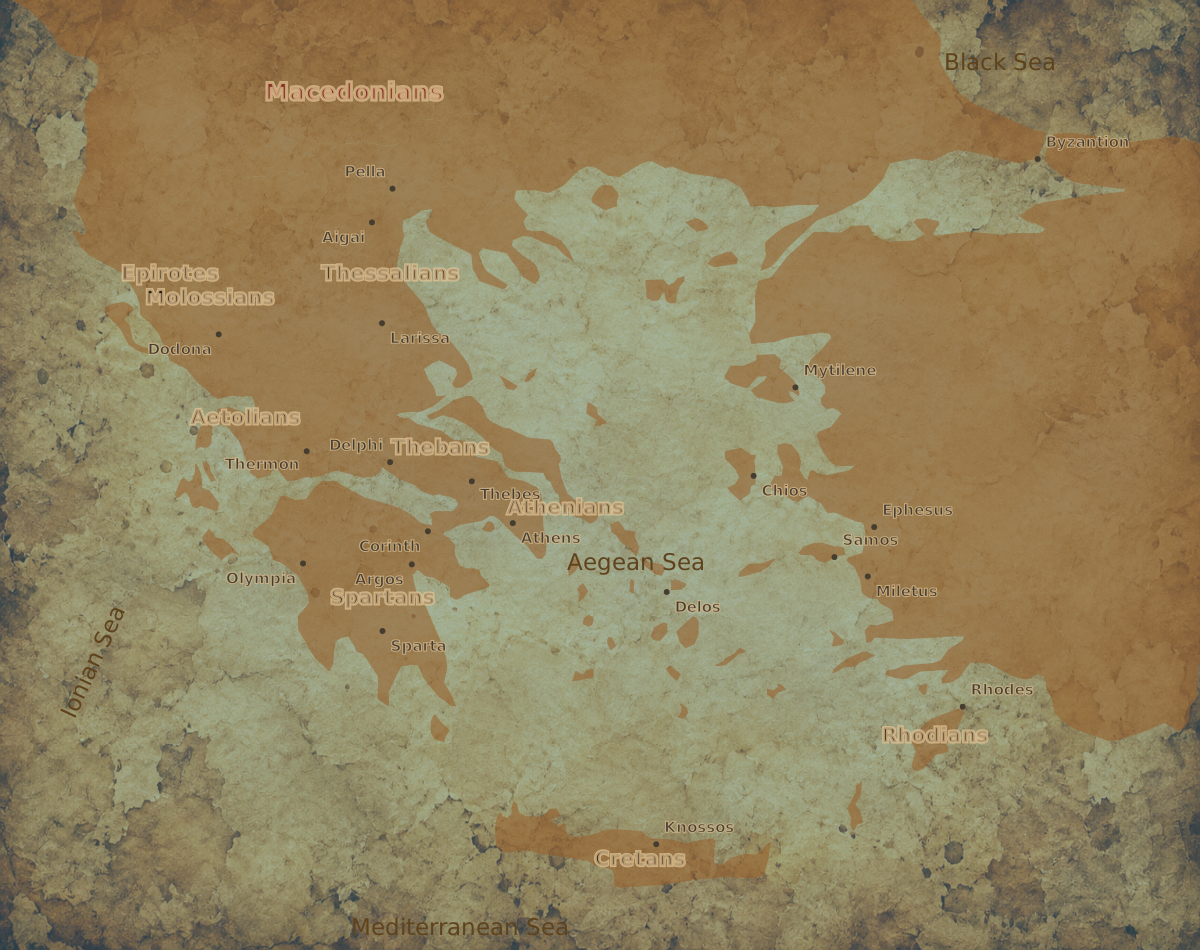
The force that crossed the Hellespont in 334 had been built upon Philip II's reforms and the resources of Macedonia and its allies. Ten years later, its surviving soldiers had marched through Anatolia, the Levant, Egypt, Iran, Central Asia and the north-western subcontinent.
Experience bound them together. Men had learned to operate beside the same neighbouring units, recognise officers' habits and carry out difficult movements under pressure. The phalanx, cavalry, light troops and siege specialists had acquired a common history of battles, crossings and assaults.
That experience also had a physical cost. Wounds, disease and exhaustion reduced the number able to continue. Some had settled in garrisons or foundations along the route; others had already been released. Replacements arrived, but the army could not simply reproduce the community that had left home.
The king's military household
Alexander's personal leadership remained central. The Companion cavalry offered both a fighting force and a circle of royal service. The guards and selected infantry stood close to the king in battle, while officers whose careers had begun under Philip now commanded across a much larger theatre.
Campaigning repeatedly changed how those forces were used. Mountain warfare required detachments that could move rapidly; sieges demanded engineers, missiles and coordinated assaults; river battles tested transport and the ability to assemble after a crossing. A veteran's value included the capacity to respond to orders learned through many different kinds of danger.
The growth of imperial responsibilities added still more demands. The king needed troops to hold cities and provinces while the field army continued. The conquest had created more military obligations than the original Macedonian force could meet by itself.
The Epigoni arrive
In 324, the governors brought Alexander young men trained with Macedonian equipment and methods. Arrian calls them the Epigoni, the successors. Their arrival made a long-prepared transformation visible to the soldiers already serving.
For Alexander, provincial manpower offered a means of sustaining royal power across the lands he had conquered. For the Macedonians, it raised the possibility that their special position was ending. Their anger concerned influence and recognition as much as competition for a place in the ranks.
The new recruits were part of a broader process. Selected eastern horsemen entered the Companion formations, and sons of important Iranian families received positions close to the king. Service in the royal army could now draw upon the aristocracies of the former Persian empire.
Peucestas and the new court
Peucestas embodied another part of the change. As governor of Persis, he adopted Persian dress and learned the language. Alexander approved his efforts, while Macedonians who disliked the direction of the court saw them as another sign of their king's growing distance.
The marriages at Susa had already joined leading officers to Iranian noblewomen. Alexander himself married into the Achaemenid dynasty. These acts tied the royal household and the army's leadership to families whose authority had survived the conquest.
The policy could secure cooperation, but it also unsettled men who believed their earlier service entitled them to privileged access. The conqueror was assembling a ruling order larger than the society from which his campaign had begun.
The confrontation at Opis
When the soldiers challenged him, Alexander ordered the arrest and execution of leading agitators. He then withdrew and began assigning prestigious commands and Macedonian military names to Persian formations. The demonstration showed what replacement might mean in practice.
The Macedonians came to the palace, laid down their weapons in supplication and sought reconciliation. Arrian presents their grievance through Callines, who complained that Persians had been recognised as the king's kinsmen while Macedonians lacked the same honour.
Alexander answered by extending that recognition to them. The reconciliation culminated in a banquet, with Greek religious specialists and Magi participating in the libations. The ceremony expressed an intended partnership under the king, though it did not erase the rival claims and memories that had produced the crisis.
Changing the ranks
At Babylon in 323, Peucestas brought a substantial new force from Persis. Arrian describes Alexander incorporating Persian archers and javelin men into files framed by Macedonian soldiers and officers. The arrangement combined different weapons and levels of experience within a deliberately reorganised body.
These troops were distinct from the young men already trained entirely in Macedonian fashion. Several experiments could exist within the same expanding army. Alexander was attempting to use the resources of his empire while preserving the command and experience on which he relied.
The process remained unfinished. New campaigns were being prepared when the king died at Babylon. His officers inherited soldiers whose loyalties had been shaped by years of royal service, but no successor possessed his uncontested claim to command them all.
The Silver Shields after Alexander
The veterans known as the Silver Shields became a formidable force in the wars that followed. Under Antigenes and Teutamus, they served with Eumenes against Antigonus. Their reputation rested on a shared history reaching back through the conquests.
Diodorus describes their effectiveness and the authority they claimed as men who had conquered Asia. Yet their army also carried families, possessions and the accumulated wealth of long service. At Gabiene, the loss of the baggage helped turn a battlefield struggle into a political catastrophe. Eumenes was handed over in the bargain that followed.
The episode exposed the human limits of a famous military reputation. Veterans could fight with extraordinary confidence while remaining vulnerable through those they sought to protect.
The inheritance of conquest
The imperial army had become both Alexander's greatest achievement and one of the problems his death left unresolved. It contained Macedonian veterans, Greek mercenaries, allied contingents and recruits from the lands it had conquered. Their cooperation depended on pay, command, personal loyalties and the authority of the king.
After 323, those resources armed competing claimants. The formations that had made a single empire possible became the instruments through which its commanders divided it. The soldiers carried Alexander's military inheritance into a new age, but they would no longer march towards one shared royal objective.
Sources
Ancient narratives
- Arrian, Anabasis, VII.6, the Epigoni; VII.8–11, Opis; VII.12; VII.23, the mixed formations.
- Diodorus Siculus, Library of History, XIX.28–30 and XIX.41–44.
Military history
- Nicholas Sekunda, The Army of Alexander the Great, Osprey Men-at-Arms 148 (1984), army organisation and later reorganisations.