






Carthaginians
The city across the sea
In 332 BC, Tyre appealed to Carthage while Alexander's siege works advanced towards its walls. The older city looked to the power founded by its people on the African shore. Some women and children reached safety there, but the relief force that might have changed the siege never came.
Carthaginian representatives were themselves caught in Tyre when it fell. Those who took refuge in the sanctuary of Melqart received Alexander's protection. For Carthage, the war in the east had ceased to be distant news: its ancestral city had been conquered, and the victor now possessed the principal Phoenician ports.
The New City
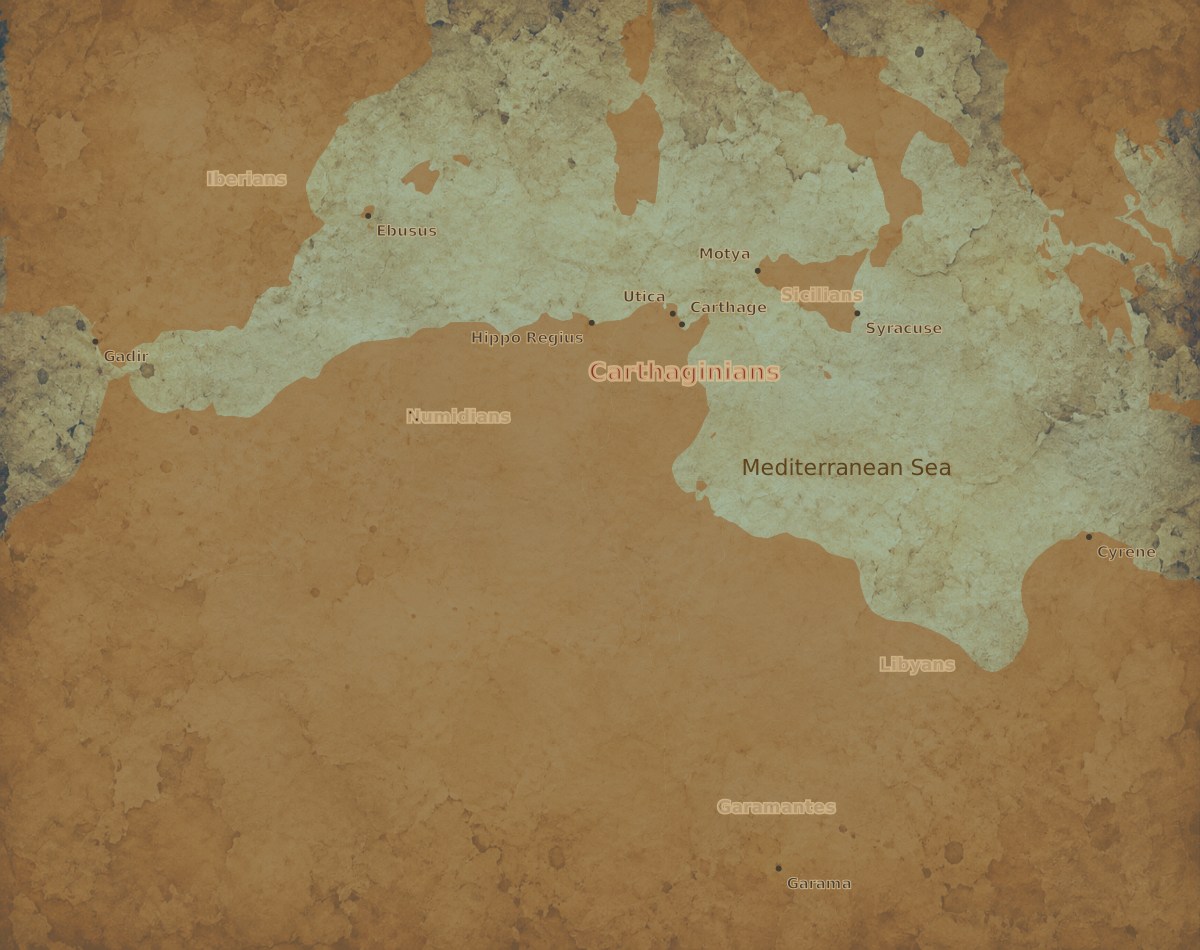
Carthage stood on the Gulf of Tunis, where a favourable coastal position connected the settlement to Mediterranean routes and the agricultural country behind it. Founded by Phoenicians in the ninth century BC, it grew into a power whose influence extended across parts of North Africa, Sicily, Sardinia and the western sea.
Its name, Qart Hadasht, meant the New City. The foundation tradition gave that beginning a memorable heroine: Elissa, also known as Dido, who fled Tyre and obtained ground by cutting an oxhide into strips. The story made ingenuity and determination part of the city's origin.
By Alexander's lifetime, Carthage was a major political centre in its own right. Its leaders commanded resources far beyond those of an overseas colony dependent on its mother city. The relationship with Tyre endured through cult, memory and diplomacy, while the African city pursued its own wars and alliances.
More than a harbour
The wealth supporting Carthage came from workshops, trade, agricultural estates and the obligations of dependent communities. Ships connected ports, but the city also required grain, livestock and cultivated land close enough to sustain its population.
The countryside became particularly visible when Agathocles invaded Africa in 310 BC. Diodorus describes prosperous estates, gardens and substantial agricultural wealth. The invader found valuable resources within reach precisely because war had so often been carried overseas instead.
Carthage's relationship with surrounding African communities could therefore determine the course of a campaign. Their labour and contributions sustained its power, while resentment or a change of allegiance could threaten it. An army on the African shore tested those relationships directly.
Citizens and hired armies
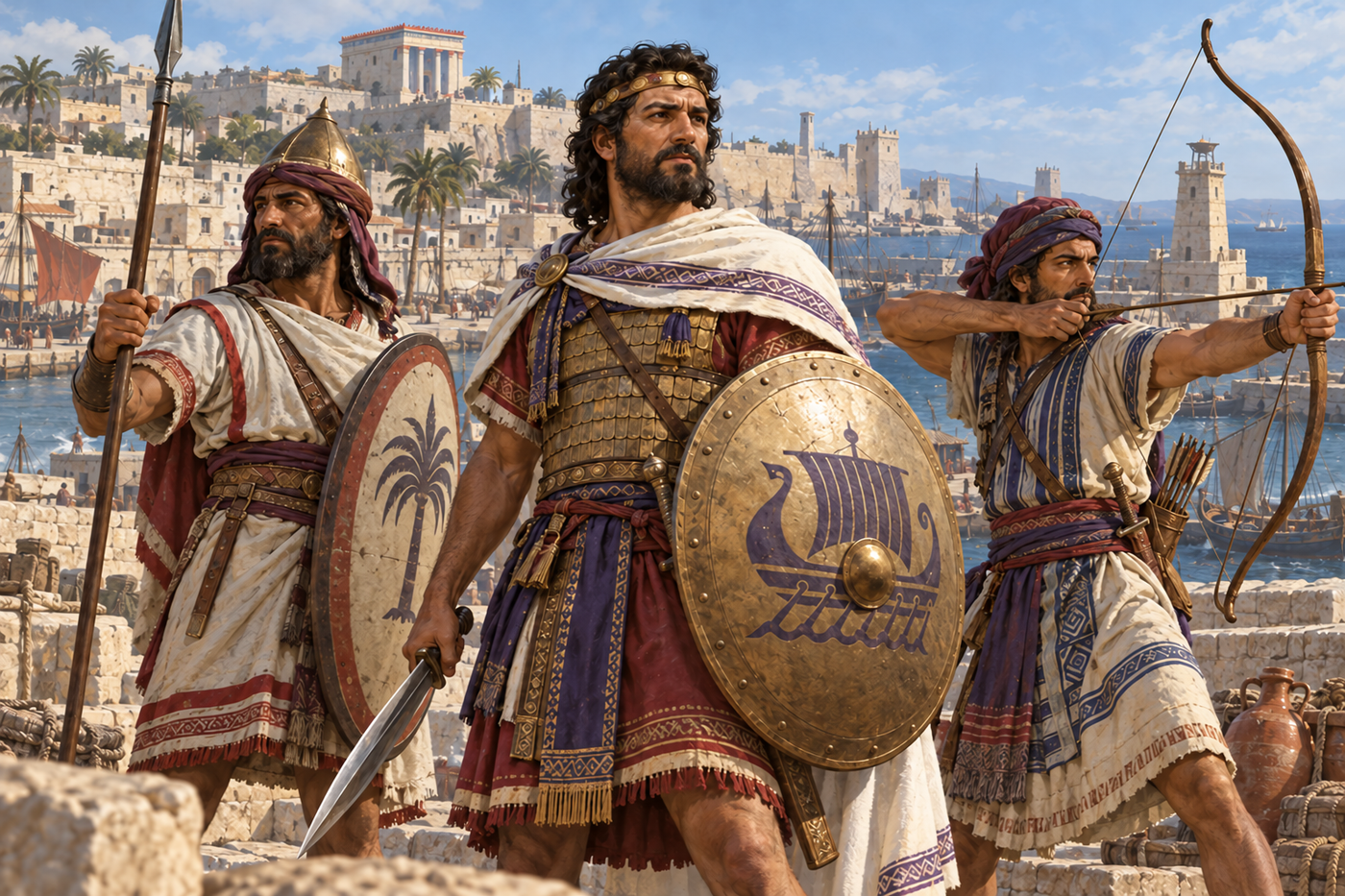
Carthaginian forces drew upon several sources of manpower. Citizens could serve, while African subjects, allies and hired soldiers provided a wider range of troops. Recruiting across different regions allowed commanders to assemble forces with complementary experience and equipment.
Such an army depended on arrangements extending beyond the battlefield. Pay had to be found, transport organised and leaders entrusted with commands. A successful commander could hold a varied force together through rewards and confidence; defeat could expose the tensions within it.
The citizen element carried a different kind of obligation. Men whose families stood among the city's wealthy households could lose their lives in an expedition whose failure would be felt throughout the ruling community. The disaster at the Crimisus made that cost unmistakable.
The river and the storm
In the 340s BC, Timoleon challenged Carthaginian power in Sicily. His campaign emerged from the struggles among Syracuse, other Greek cities and local rulers whose alliances could change rapidly. Carthage sought to exploit those divisions and secure its position on the island.
At the Crimisus, Timoleon attacked a Carthaginian army during its crossing. The river divided the force, while a violent storm helped turn the battle against the men already engaged. Diodorus describes the destruction of the Sacred Band, a body of distinguished citizen soldiers whose equipment and standing marked them out.
The losses struck at Carthage itself. Plutarch's account emphasises the wealth carried by the fallen and the shock of citizens dying in such numbers. The battle became a warning that money, fine armour and a large expedition could not remove the danger of unfavourable ground and a determined enemy.
Sicily's changing loyalties
The struggle was never simply a permanent division between Greeks and Carthaginians. Sicilian rulers could cooperate with Carthage against Greek rivals. Timoleon's enemies included men who sought their own power through such arrangements, while the coastal and inland communities pursued interests that did not always align.
Ports and fortified cities mattered because they could receive supplies and reinforcements. A fleet might support a siege, evacuate a defeated force or prevent an opponent from crossing. Naval strength and land warfare were parts of the same contest for the island.
The settlements reached after a campaign rarely ended the rivalry permanently. A new commander or a change within Syracuse could reopen the struggle. Carthage had to sustain its western position across generations, long before Rome became its principal enemy.
Melqart and the fall of Tyre
The siege of Tyre brought a different obligation into view. Melqart, whom Greek writers associated with Heracles, linked the African city to the religious world of its Phoenician origins. The presence of Carthaginian envoys in the besieged city gave that relationship a human form.
Alexander's victory transformed the eastern Mediterranean. Phoenician fleets that had served Persia were now available to the Macedonian king, and the coast through which Carthage maintained contact with its ancestral world had a new master.
Carthage nevertheless remained outside Alexander's conquests. Its future would be shaped by the western wars it was already fighting and by the upheavals that followed his death. The fall of Tyre was an encounter with his power, rather than the beginning of a Carthaginian campaign against him.
Agathocles brings the war home
In 310, Agathocles escaped from a desperate position in Sicily by sailing to Africa. Diodorus tells how he burned his ships after landing, committing his men to survival through victory. The expedition reversed the usual direction of the war.
Carthage had to defend its own countryside while maintaining forces overseas. The invaders could seek support among communities unhappy with Carthaginian rule, turning political grievances into a military opportunity. A victory in Sicily no longer guaranteed safety at home.
The city endured the crisis. Its survival belonged to the same qualities that had made it powerful before Alexander: the ability to mobilise resources, recover after defeat and sustain relationships across a wide region. Behind its famous fleets stood a society whose fortunes could be decided as readily in an African field as in a distant Sicilian harbour.
Sources
Ancient narratives
- Justin, Epitome, XVIII.4–5, the foundation tradition.
- Diodorus Siculus, Library of History, XVI.78–81; XVII.40–46; XX.3–12.
- Plutarch, Timoleon, 25–29.
- Arrian, Anabasis, II.24.
History and archaeology
- UNESCO, Archaeological Site of Carthage.
- Metropolitan Museum of Art, The Phoenicians (1500–300 BC).
- Josette Elayi, “The Relations between Tyre and Carthage during the Persian Period”, JANES 13 (1981), pp. 25–27.