






Dardanians
The offer a Macedonian king refused
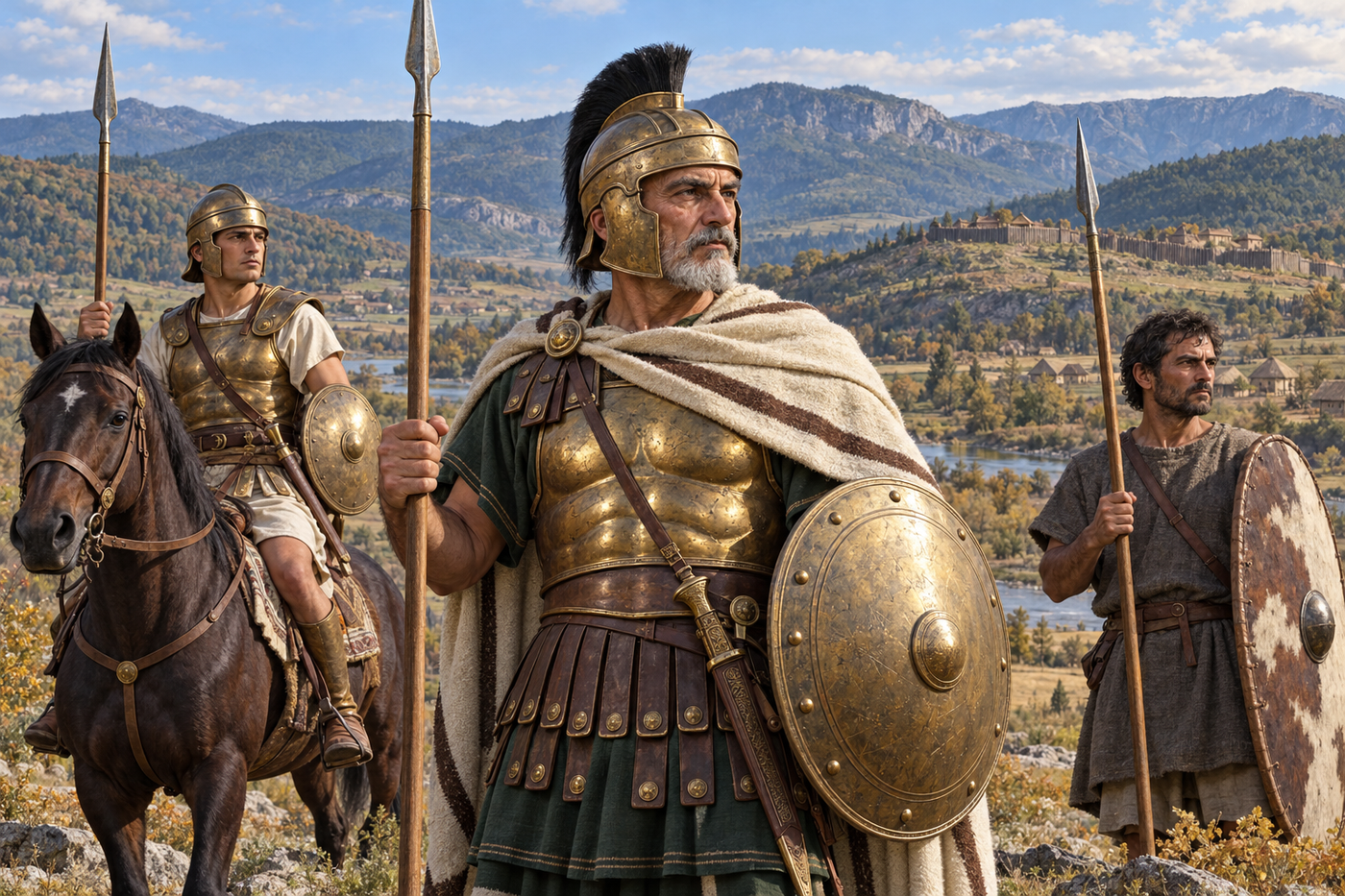
In 279 BC, as Celtic armies approached Macedonia, a Dardanian king offered troops to Ptolemy Ceraunus. Justin tells how the Macedonian ruler rejected the help with contempt: the descendants of Alexander's soldiers, he declared, should not need their northern neighbours to defend them. Soon afterwards, Ceraunus was defeated and killed.
The story belongs to the generation after Alexander, but its argument looks back to his conquests. Macedonian pride in the victories of Asia had become a reason to dismiss an alliance close to home. The Dardanians, who could be enemies or useful partners, possessed armed strength that even a hostile tradition could not ignore.
The basins of the central Balkans
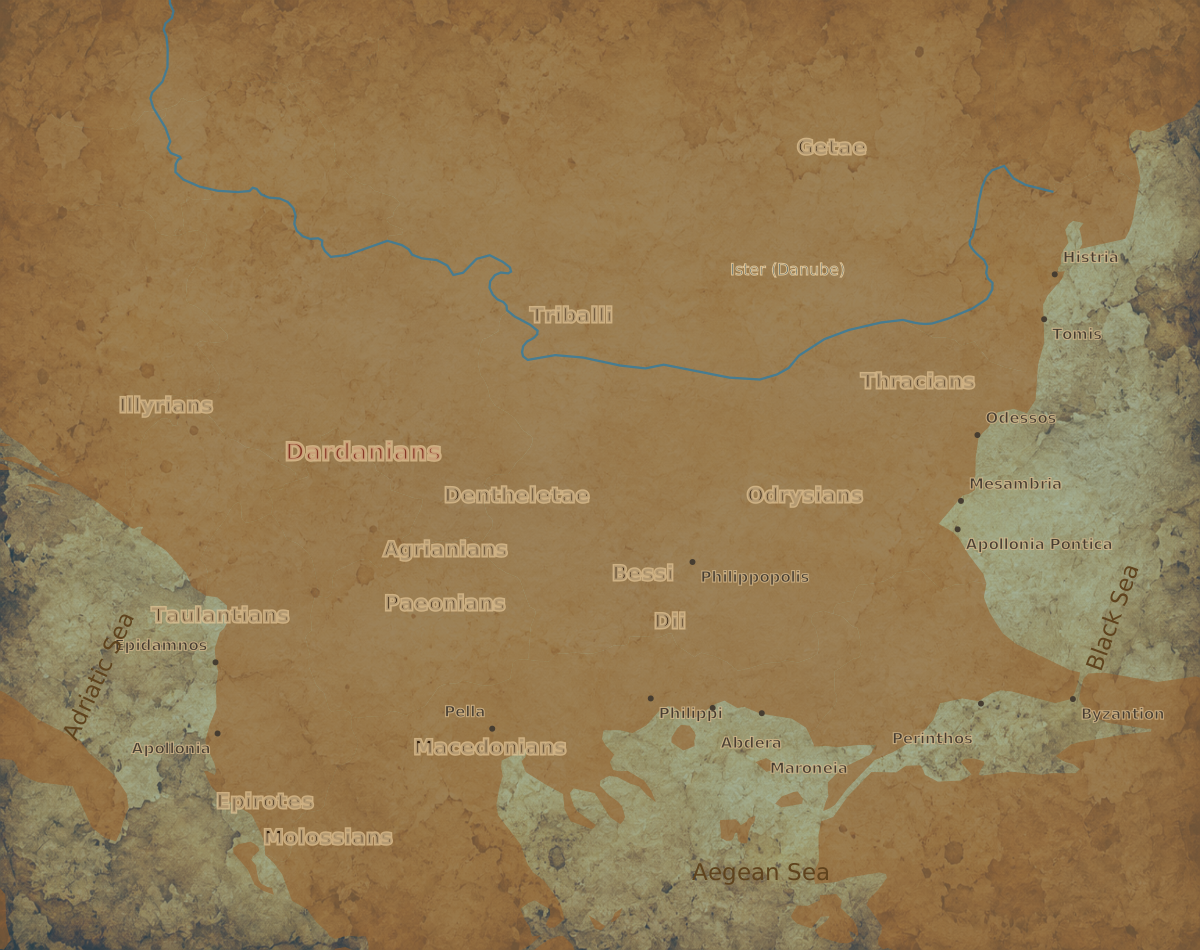
Dardania lay in the central Balkan interior, with a heartland around modern Kosovo and neighbouring districts. Cultivated basins and river corridors connected the surrounding uplands to the approaches of Paeonia and Macedonia. The country stood within the overland relationships joining the northern interior to the southern kingdoms.
Its resources came from several kinds of landscape. Fields supplied food, pastures supported livestock, and routes through the hills allowed movement between communities. The mineral wealth of the wider region added another source of power. A ruler who could hold settlements and gather followers in these basins had a substantial foundation for action beyond them.
The mountains shaped the country without isolating it. Imported objects, regional coinages and the campaigns recorded by ancient writers all reveal connections running across its approaches. Dardania belonged to the political and economic life of the Balkans, even when Greek authors saw it chiefly through its wars.
Wealth before the Macedonian conquests
The rich double burial at Banja e Pejës, dating to the sixth century BC, shows the presence of powerful households in the region long before Alexander. Valuable objects and elaborate funerary treatment expressed distinctions within society. Mediterranean connections could reach the interior through the possessions acquired and displayed by its elites.
Such households formed part of the background from which later political authority emerged. Wealth could sustain dependants, equip warriors and mark a family's standing among its neighbours. The visible splendour of a burial also carried that standing beyond the life of the person commemorated.
Silver travelling south
Fourth-century silver coinage provides another view of the region's connections. Damastion and related mints issued coins within a monetary world linked to Paeonian and Greek centres. Their circulation places the Balkan interior within networks of exchange extending towards the Aegean.
The precise site of Damastion remains unresolved. Studies of findspots and mining districts have directed attention towards the wider Skopje basin and the country to its north and east. What survives most clearly is a flow of metal and money across political boundaries.
Recent analyses of coin silver reinforce the importance of Balkan sources to several mints. Mining, refining and exchange connected the resources of the interior to economies farther south. The relationship gave rulers reasons to seek influence over routes and producing districts, while merchants and craftsmen worked across the same regional connections.
The northern problem of Macedonia
Philip II came to power in a Macedonia endangered by its neighbours. The defeat and death of Perdiccas III against the Illyrians in 359 BC had exposed the kingdom's weakness. Philip's subsequent victory over Bardylis reversed the immediate crisis and began a much larger expansion.
That success changed the balance across the western and northern approaches. Neighbouring rulers faced a monarchy increasingly able to impose settlements and return with another army when resistance revived. Alliances became especially important at moments of succession, when opponents hoped a new Macedonian king would be unable to maintain his predecessor's authority.
Alexander confronted such a challenge in 335. Cleitus and Glaucias combined against him at Pelion, while other peoples watched for opportunities along his route. The campaign demonstrated how closely the security of Macedonia depended on events beyond its cultivated plains. Before Alexander could march into Asia, he had to prevent the Balkan frontier from becoming a war behind him.
After the conqueror
The Dardanians' clearest named royal actors appear in the struggles that followed Alexander. The offer made to Ceraunus reveals a leader able to propose military assistance on a significant scale. It also reveals a political choice: cooperation with Macedonia could sometimes be preferable to allowing a new invading power to overturn the region.
Later relations were frequently hostile. In the third century, Longarus emerged in the wars against Demetrius II. Macedonia was drawn between conflicts in Greece and pressure from its northern neighbours, a recurring problem for kings whose ambitions extended farther than the forces immediately available to them.
Raiding could achieve results beyond the damage done to farms and settlements. An invasion threatened captives, supplies and royal prestige, compelling a king to return from another theatre. The northern frontier could therefore redirect a campaign being fought far away.
Bato and the changing alliances
In 200 BC, Bato, son of Longarus, appeared among the rulers approaching the Roman commander in the opening stages of the Second Macedonian War. Livy places him beside other regional leaders who saw an opportunity in Rome's intervention against Philip V.
The Dardanians were acting within a diplomatic world whose scale had changed. Their disputes with Macedonia could now be connected to a Mediterranean power capable of sending armies into Greece. Cooperation promised advantage, but it also brought a new participant into the decisions affecting the Balkan interior.
A power rooted in its own country
Dardanian strength endured because it rested on more than the fortunes of one invading army. The basins, routes and communities of the interior continued to sustain rulers after a defeat or a change in the Macedonian dynasty. Their neighbours had to reckon with that persistence.
Across the generations surrounding Alexander, the balance repeatedly shifted between confrontation and negotiation. The same people who could raid Macedonia might offer it help against another enemy. Their history was shaped by those choices, made from a country whose resources and strategic position gave its leaders reasons to pursue ambitions of their own.
Sources
Ancient narratives
- Diodorus Siculus, Library of History, XVI.2–4.
- Arrian, Anabasis, I.5–6.
- Justin, Epitome, XXIV.4 and XXIX.4.
- Livy, History of Rome, XXXI.28.
Archaeology, coinage and historical studies
- Naser Ferri, “The Resistance of the Dardanians to Roman Conquests and Romanisation” (2019), pp. 93–111.
- Johannes Heinrichs, “Silver from the North: Damastion and Some Dardanian Mints, the Chalkidian League, and Philip II” (2024), pp. 97–117.
- K. J. Westner and colleagues, “Tracing Metallurgical Links and Silver Provenance in Balkan Coinage (5th–1st Centuries BCE)” (2024).
- Y. N. Kuzmin, “King Demetrius II of Macedon: In the Shadow of Father and Son” (2019), pp. 59–84.