






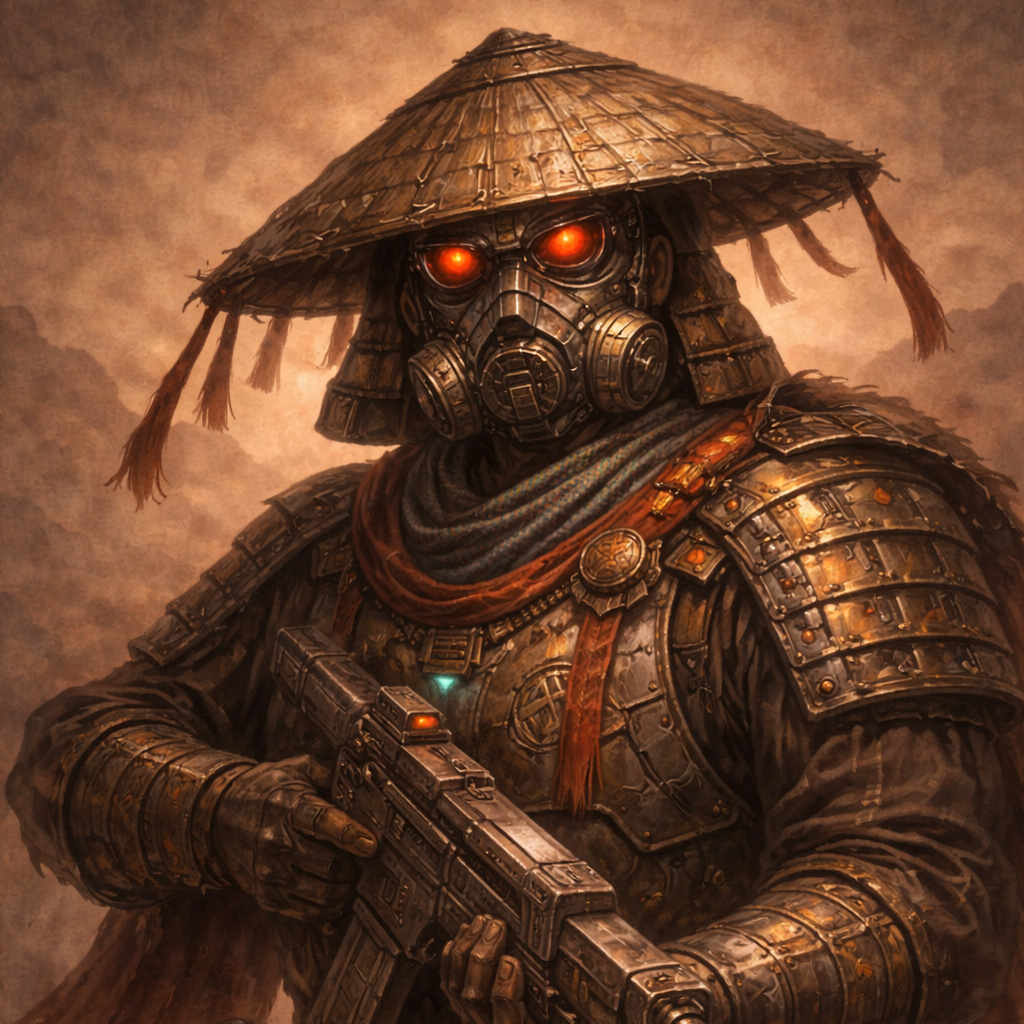
Part I, The Inland Heart of Tohei
Between the fortified coasts of Kento, Palter, and Ritolia lies a different kind of power: the inland clans of Tohei. They possess no single throne, no universal banner, and no ruler whose word is law from one horizon to the other. To foreign observers, this often appears as weakness. In truth, it is something more complex and far more enduring.
The interior of Tohei is a web of fertile plains, caravan roads, fortified market towns, temple estates, ancestral domains, river ports, and defensible hill settlements. Each territory belongs to a clan, a league of families, a military brotherhood, or a negotiated coalition that may last generations or collapse in a season. Borders are real, but rarely absolute. Authority exists, but is constantly tested, bargained with, and redefined.
What the inland clans lack in centralization, they compensate for in position. Their lands sit astride the routes linking the coastal powers to the mining wealth of the East Guild and South Guild. Grain convoys, metal caravans, tax collectors, mercenary recruiters, pilgrims, diplomats, smugglers, and spies all pass through the interior. Roads that seem provincial on a map can decide campaigns when armies begin to move.
The region is also among the richest agricultural zones in the northeast. Broad plains yield grain in abundance, livestock herds sustain military populations, and river systems support irrigation, transport, and market growth. Many coastal states possess stronger fleets or larger arsenals, yet depend indirectly on inland harvests to sustain prolonged war. Hunger has changed the fate of kingdoms more than once in Tohei.
Because of this, every major power seeks influence there. Palter finances roads, arsenals, and local reformers. Kento appeals to ancient legitimacy and inherited duty. Ritolia spreads fear, propaganda, and clandestine agents. Mori cultivates marriage ties and elite diplomacy. Kumaguchi invests through commerce and patronage. The Swolfs, masters of balance, work constantly to prevent any single rival from dominating the region outright.
To the people who live there, however, the inland clans are not merely a strategic prize. They are homelands of layered identity. A man may owe taxes to one lord, military service to another, pray in a temple tied to a third faction, and marry into a family loyal to a fourth. Such contradictions are not exceptional. They are normal life in the interior.
This complexity makes conquest difficult. Invading armies can seize roads, burn fields, and occupy towns. They often discover too late that the real structure of power lies in kinship, grain storage, local memory, and agreements made far from formal courts. A banner can be toppled in a day. A network may survive for centuries.
Thus the inland clans remain one of the decisive forces of Tohei: too divided to rule the northeast alone, too wealthy and too necessary to be ignored by anyone who hopes to rule it.
Part II, Ancient Roots and the Legacy of the Wind Confederation
The inland clans of Tohei did not appear suddenly with the Imperial invasion, nor were they created by modern politics. Their roots reach back into the oldest remembered ages of human settlement, to the migrations and wars that followed the struggles of Wanyue and the expansion of mankind across Damocles.
In those distant centuries, the peoples who would one day become the clans of Tohei were not yet divided into their present forms. Many belonged, directly or indirectly, to the traditions later remembered as the Confederation of the Wind: a broad constellation of warrior houses, frontier settlers, shrine guardians, mounted warbands, and farming communities tied together by custom more than bureaucracy.
Some rode north to reclaim lands from beast kingdoms. Others defended caravan routes through open country. Some guarded sacred sites or mountain passes. Others cultivated newly secured plains and became prosperous landholding families. Great houses such as Kento would later emerge as symbols of wisdom and leadership, but they were never alone. Around every famous lineage stood dozens of lesser companions whose descendants still claim honorable origin.
Many inland clans trace their legitimacy to these forgotten companions. One family may preserve the banner of a captain said to have died beside a Kento hero. Another claims descent from settlers granted land after a victorious campaign. Another from temple wardens entrusted with relics of the old age. Whether every claim is true matters less than the fact that such memories are believed, repeated, and politically useful.
This inheritance shaped the culture of the interior. Land was never viewed as mere property. It was stewardship earned through service. Leadership was expected to combine martial competence with protection of dependents. Honor mattered, but so did harvests, road security, and the settlement of disputes before they became blood feuds. Even now, a governor who wins battles but lets roads decay may be remembered poorly.
The inland clans also inherited a habit of autonomy. Because many began as frontier communities far from any great court, they learned to defend themselves, negotiate locally, and distrust distant commands that offered little protection. This instinct survived every later transformation. Empires could demand obedience, but local elites expected to retain a voice in how they were governed.
When newer powers rose, they had to work through these old foundations rather than replace them entirely. Kento prestige drew strength from ancient memory. Palter reform succeeded where it respected local intermediaries. Swolf diplomacy flourished because it understood layered loyalties. Ritolia, by contrast, has often struggled because fear can suppress memory but rarely erase it completely.
Today, the roads carry armored convoys instead of horse columns, and market towers rise where watchfires once burned. Yet beneath the modern surface, the inland clans still think in older terms: lineage, obligation, reputation, and the belief that no ruler remains legitimate for long if he forgets the people and the land that sustain him.
Part III, Wealth of the Inner Plains
To outsiders, the inland clans are sometimes mistaken for lesser powers because they lack the grand coastal capitals of Kento, the industrial prestige of Palter, or the massed armies of Ritolia. This is a dangerous misunderstanding. The heartland of Tohei is not poor land. It is one of the most valuable regions on the continent.
The great plains produce abundant grain, livestock, fibers, medicinal plants, and industrial crops. In good years, harvest surpluses feed cities far beyond the interior. In difficult years, whoever controls these reserves gains leverage over neighbors more dependent on imports. Food, more than banners, often decides which alliances endure.
Rivers crossing the plains serve as arteries of transport. Barges, armored convoys, and caravan columns move between market towns, fortified depots, and frontier exchanges. Roads built during successive eras, first by native confederations, later expanded under Imperial influence, still bind the region together. Though many are damaged or contested, enough remain functional to sustain vigorous commerce.
The inland clans also benefit from privileged access to mountain resources through long-standing ties with the East Guild and the South Guild. Ore, rare metals, chemical compounds, machine components, and skilled technical labor descend from the uplands in exchange for grain, protection, and market access. These relationships are not always peaceful, but they are mutually profitable.
This position makes the interior the natural crossroads of northeastern Damocles. Trade routes linking the guild territories to Palter, Ritolia, Mori, Kento, and other powers pass through or near inland markets. Merchants from rival states may refuse one another at court while quietly sharing warehouse space in neutral towns.
Many settlements therefore grew into prosperous mixed centers where farmers, smiths, caravan brokers, priests, mercenaries, and foreign agents live side by side. Some towns are famous for horse breeding or grain exchanges. Others specialize in arms repair, salvaged relic electronics, textiles, medical compounds, or contract law for mercenary companies.
Because no single authority dominates the whole region, taxation remains fragmented. This can slow large public works, but it also creates opportunities. Traders reroute cargo through friendlier jurisdictions. Clans compete to attract craftsmen. Markets adapt quickly when wars close one corridor and open another.
Economic competition is inseparable from politics. Palter seeks dependable supply lines and commercial partners. Ritolia wants grain, manpower, and strategic depth. Kento values prestige networks and loyal intermediaries. Mori invests where influence can grow discreetly. The Swolfs prefer a prosperous interior that remains divided enough to need arbitration.
Thus the wealth of the inland clans lies not only in fertile soil or mineral access, but in position. They stand where roads meet, where rival interests overlap, and where every greater power must eventually bargain. In Damocles, that kind of geography can be worth more than gold.
Part IV, The Age of Competing Visions
Two centuries after the invasion, the inland clans of Tohei no longer fight over a single question of survival. They now struggle over the meaning of order itself. The old enemies remain, but the greatest battles are often political before they become military.
No unified ideology dominates the region. Instead, several major currents compete for influence across courts, markets, temples, militias, and clan councils. Alliances shift constantly because many leaders privately sympathize with one vision while publicly serving another.
The first and most powerful current favors a flexible Imperial integration. Its supporters argue that the old world cannot be restored exactly as it was, and that survival depends on adapting Imperial institutions to local realities. They often cooperate with Palter and accept the broader strategic framework imposed by the Swolfs. They support professional administration, improved roads, modern arsenals, and negotiated autonomy for loyal clans. To their enemies, they are opportunists who have traded dignity for comfort. To their followers, they are realists who understand how power works.
The second current seeks a traditional restoration under the moral leadership of Kento. These clans believe the fragmentation of Tohei comes from abandoning ancestral hierarchy and sacred obligations. They do not always reject technology or Imperial ties, but they insist that political legitimacy must flow through recognized houses, inherited customs, and disciplined social order. Their influence is especially strong among conservative landholders, older warrior families, and communities that distrust rapid reform.
A third current remains devoted to the ideals of the Celestial Peace. Though greatly weakened by the purges and centuries of decline, its followers still survive in temple circles, secret schools, rural congregations, and certain merchant networks. Some sincerely await the return of the emissaries and believe Damocles can yet be spiritually renewed. Others use the movement as a shield for local independence. Their strength lies less in armies than in patience, secrecy, and the ability to endure persecution.
A smaller but growing movement looks south and east toward Kumaguchi. Its thinkers argue that the endless rivalry between old noble houses has exhausted Tohei. They advocate a newer political model centered on commerce, urban development, maritime trade, and merit rather than inherited prestige. While still a minority current inland, it attracts ambitious merchants, younger officers, and educated administrators frustrated by ancestral quarrels.
Above all these currents hovers the question of Swolf power. Some view the Swolfs as guarantors of balance who prevented the northeast from collapsing into endless civil war. Others see them as elegant masters of division, keeping every rival just weak enough to remain manageable. Both interpretations contain truth, which is why their influence endures.
Most clans therefore live in contradiction. A lord may praise Kento tradition, buy Palter rifles, negotiate with Swolf envoys, tolerate Celestial priests, and secretly invest in Kumaguchi trade houses. In the inland clans, ideological purity is rare. Survival usually wins.
Part V, Armies of the Interior
The inland clans do not field a single national army. Their military strength comes from layered forces raised through local obligations, private contracts, regional defense leagues, and patronage from greater powers. This makes them uneven in quality, but highly adaptable.
At the foundation stand clan retainers and provincial militias. These troops guard roads, escort harvest convoys, patrol river crossings, and reinforce town walls during crises. Their equipment varies widely. Some still wear composite armor descended from older traditions, reinforced with modern plating. Others carry refurbished pulse carbines, mass-driver rifles, or rugged ballistic weapons easier to maintain far from industrial centers.
Above them stand the professional households of major clans: disciplined infantry, mounted reconnaissance units, shock troops, and bodyguard formations maintained year-round. These soldiers are often equipped with superior gear purchased from Palter workshops or inherited from ancient stockpiles. Veteran cadres train local levies when war threatens, allowing the interior to mobilize faster than outsiders often expect.
One of the region’s most distinctive strengths is its use of relic weapons from the invasion era. Across the plains and hill forts survive old laser arrays, drone-control nodes, armored walkers stripped for parts, sensor towers, and damaged artillery platforms too ancient to reproduce but still deadly when restored. Entire local reputations have been built on a single functioning relic battery hidden in a monastery cellar or fortress vault.
Palter influence has modernized many arsenals. Reliable rifles, defensive shields, communications sets, field generators, anti-armor launchers, and modular vehicle parts flow into allied territories. Even clans hostile to Palter often obtain such equipment through smugglers or intermediaries. A weapon’s origin matters less once battle begins.
The inland clans also export fighters. Mercenary bands from the region serve in nearly every neighboring state. Some are light infantry specialists skilled in ambush and rough terrain warfare. Others are caravan guards, artillery crews, or hardened urban enforcers. A few elite companies possess enough armor and discipline to operate like miniature armies for hire. Their loyalty lasts exactly as long as contracts, honor, or profit align.
In open war, the greatest advantage of the interior is not raw firepower but resilience. Invaders must secure roads, bridges, depots, and grain routes while facing harassment from local bands who know every ford, ravine, and village network. Garrisons become isolated. Supply columns vanish. Friendly guides change allegiance overnight.
For this reason, wise generals do not merely conquer the inland clans. They negotiate with them, recruit them, or divide them. Those who rely only on force often discover that victory on the battlefield is easier than holding what they have taken.
Part VI, Economy and Trade Networks
For all their political fragmentation, the inland clans of Tohei are bound together by something stronger than ideology: circulation. Grain, ore, weapons, salt, medicine, livestock, textiles, machine parts, temple offerings, mercenary contracts, and tax caravans move constantly through the interior. If the coast is where banners are displayed, the plains are where power is fed.
The wealth of the region begins with agriculture. The inner plains are among the most fertile lands of northeastern Damocles, capable of sustaining dense rural populations and generating the surpluses that make armies possible. In years of stability, harvests enrich noble houses, merchant syndicates, temple estates, and guild intermediaries alike. In years of crisis, grain reserves become political weapons. A clan that cannot impose its will by force may still do so by controlling who eats, when, and at what price.
Yet the inland economy is not merely agricultural. Its second foundation lies in access. The East Guild and the South Guild draw metal, fuel compounds, and rare materials from the mountains, but the roads carrying those resources toward the coast pass through the domains of the inland clans. Warehouses, fortified toll stations, caravanserais, repair yards, relay posts, and river crossings all create revenue. Every convoy must negotiate with someone. Every route enriches someone.
This has fostered a sophisticated commercial culture. Market towns that appear secondary on military maps often act as financial lungs for much larger powers. Credit is extended against future harvests. Security guarantees are sold alongside warehouse leases. Contracts for mercenary service are brokered beside temple festivals. Arms shipments may travel under the seal of a merchant house that publicly denounces militarization while privately profiting from it.
Palter influence is especially visible here. Through contracts, engineering missions, logistical partnerships, and weapons sales, Palter has helped modernize portions of the inland economy without fully controlling it. Roads have been widened. Bridges strengthened. Storage facilities expanded. Some clans welcome this as progress. Others see it as a soft chain built from convenience rather than iron. They are not entirely wrong.
Kento influence works differently. Where Palter offers systems, Kento offers legitimacy. Old houses closer to traditionalist circles often prefer to route political and commercial relationships through familiar codes of obligation, patronage, and ceremonial trust rather than purely contractual logic. This can slow business, but it creates resilient loyalties money alone cannot easily buy.
Kumaguchi influence grows through a third method: patronage capital. Their merchants and urban allies invest in inns, shipping depots, milling operations, caravan credit, and urban property, especially where local elites are frustrated with both Palter dependence and Kento nostalgia. If this trend continues, the economic geography of the interior may shift without a single battle being fought.
Thus the inland clans are not merely a crossroads. They are an economy of mediation. Those who cannot conquer the plains still come to bargain with them, because in Tohei, movement itself is wealth.
Part VII, Battlefield of Influence
If the inland clans are rich, they are also exposed. Their fertile lands, trade roads, and fragmented authority make them the principal arena of competition between the great powers of northeastern Tohei. Armies do not need to march openly for war to exist there. Influence itself is a campaign.
Kento seeks to preserve moral leadership over the interior. Its allies emphasize ancestral legitimacy, continuity, and the idea that true order in Tohei must still flow through native aristocratic tradition. Kento does not control the inland clans, but it still commands deep reservoirs of respect, especially among houses that fear the erosion of old customs and the rise of purely transactional politics.
Palter pursues the interior through administration, infrastructure, trade, and military contracting. It understands that controlling the inland economy is more durable than merely threatening it. By supplying weapons, sponsoring roads, and tying local prosperity to broader stability, Palter creates allies who may never kneel formally, yet increasingly depend on its system. This makes it both useful and deeply suspect.
Ritolia approaches the interior through fear, pressure, infiltration, and ideological subversion. It lacks the broad trust networks of its rivals, but compensates through clandestine agents, support for hardline factions, punitive raids near vulnerable borders, and propaganda directed at populations resentful of compromise. Ritolia does not need to rule the interior yet. It only needs to keep it unstable enough that no rival can safely consolidate it.
Mori works with quieter tools. Marriage ties, officer exchanges, ceremonial diplomacy, and selective support to families of consequence allow Mori influence to spread without the noise of overt domination. Their strength lies in patience. They rarely seek to own the interior, only to ensure that when decisions are made, some of the voices around the table owe them courtesy or blood.
Kumaguchi seeks to transform commercial relevance into political gravity. Unlike Kento, it does not possess ancient symbolic leadership. Unlike Palter, it lacks the same degree of technocratic reach. Unlike the Swolfs, it does not arbitrate the whole northeast. Its path therefore lies in becoming indispensable through money, supply, and urban patronage. The smaller but growing inland current that looks toward Kumaguchi reflects this ambition.
The Swolfs remain the supreme managers of balance. They do not need to dominate every market town directly if they can prevent anyone else from doing so. Their diplomacy in the interior is built on selective support, timely pressure, and constant arbitration between competing powers. To many inland lords, Swolf influence feels less like occupation than like weather: always present, rarely loved, impossible to ignore.
The result is a region in permanent contest. One town may host a Kento-leaning governor, a Palter-financed arsenal, Mori marriage ties, Kumaguchi-backed merchants, and a hidden Celestial network tolerated by all because none are strong enough to purge the others cleanly. Another may outwardly submit to Swolf order while quietly selling food to whichever power pays most. A third may change orientation entirely after one assassination, one failed harvest, or one marriage.
This is why the inland clans matter so much. They are not simply between the great powers. They are the space through which those powers define one another. Whoever dominates the plains gains food, movement, and legitimacy. Whoever loses them may still hold the coast, but only as a fortress waiting to starve.
In the end, the inland clans are not a vacuum between stronger states. They are the decisive ground upon which the future of Tohei is negotiated, delayed, and one day perhaps decided by force.
Part VIII, Armies of the Inland Clans
The inland clans do not possess a single centralized war machine. Their military power is dispersed across hundreds of local domains, private households, temple estates, guild contracts, and regional alliances. To an outside observer, this can seem disorganized. On campaign, it often proves maddeningly resilient.
Every major clan maintains its own core of professional retainers: disciplined infantry, armored escorts, reconnaissance riders, artillery crews, and command cadres trained from youth for service. Around these permanent forces gather temporary levies raised in wartime, local militias defending roads and granaries, and sworn auxiliaries called by treaty obligations. The result is not uniformity, but depth. Destroy one army, and three more may rise from territories thought pacified.
Weapons reflect the layered history of Tohei. Many formations still carry refurbished relics from the age of invasion: pulse rifles whose makers are forgotten, plasma cutters adapted into trench weapons, combat drones rebuilt from salvaged components, damaged exo-suits reserved for elite champions, and ancient sensor arrays reactivated whenever war approaches. Such relics are precious, unreliable, and often worshiped almost as much as they are maintained.
Alongside these survive modern arsenals supplied through trade or alliance, especially from Palter workshops. Modular carbines, stabilized heavy weapons, anti-armor launchers, field shields, encrypted communications packs, smart optics, and efficient transport vehicles have transformed many inland armies. Even clans publicly hostile to Palter often possess Palter-made weapons acquired through intermediaries.
The region is equally famous for its mercenary culture. Countless warbands hire themselves to neighboring powers for coin, grain, or political favor. Some are cheap Brotherhood companies from Tohei’s poorer districts, numerous, aggressive, and expendable. Others are veteran professionals whose officers maintain reputations older than some noble houses. These elite bands can garrison cities, break sieges, escort trade caravans through war zones, or vanish overnight if contracts sour.
In defensive warfare, the inland clans are notoriously difficult to uproot. Their commanders understand roads, irrigation lines, ridge paths, hidden depots, and seasonal terrain better than any invader. Fields can be flooded, bridges collapsed, supply columns ambushed, and retreating forces drawn into prepared kill zones around fortified towns. Many armies have won glorious battles in the interior only to lose the campaign to hunger and exhaustion.
When united by necessity, the clans can field formidable coalitions. When divided, they remain dangerous precisely because no enemy can ever be certain where the next resistance will emerge. In the inland plains of Tohei, war is rarely decided by one decisive clash. It is decided by endurance.
Part IX, Faith, Society, and Legitimacy
The inland clans are not bound together by one faith, one law, or one identity. Their society is a living mosaic where old traditions, practical necessity, imported ideas, and hidden loyalties coexist in uneasy balance. This complexity is often mistaken for confusion. In truth, it is the foundation of their durability.
Ancestor veneration remains central across much of the region. Household shrines preserve names, banners, weapons, and stories of those who founded villages, defended roads, or died in forgotten wars. To rule without honoring one’s lineage is considered hollow. Even ambitious reformers usually wrap new policies in the language of inherited duty.
Alongside ancestral customs survive martial codes descended from the old confederations. Courage, restraint, loyalty to dependents, and the obligation to answer insult still shape elite behavior, though not always sincerely. In some courts these values are lived with genuine conviction. In others they are elegant masks worn over naked ambition.
The temples of the Celestial Peace, though diminished, were never fully erased. Some stand openly as tolerated religious institutions stripped of former power. Others operate quietly through pilgrim networks, charitable houses, schools, and circles of initiates. For certain communities they offer spiritual comfort. For others they preserve a political memory older than imperial rule.
Commerce has created another source of legitimacy. In prosperous towns, a governor who keeps markets safe, roads open, and taxes predictable may command more loyalty than a noble with flawless bloodlines. Merchant families fund festivals, militias, irrigation works, and food reserves, weaving influence through generosity as effectively as any sword lord does through fear.
Daily life reflects all these layers. A farmer may pray at an ancestral shrine, sell grain through a guild broker, serve in a militia led by a noble house, and send a child to study under temple tutors. A merchant may donate to reformist governors while secretly funding traditionalist cousins. Contradiction is not an exception in the interior. It is ordinary life.
This is why legitimacy in the inland clans is never absolute. It must be renewed constantly through protection, prosperity, ritual respect, and the ability to navigate competing loyalties without tearing society apart. Many rulers have held titles. Fewer have truly governed.
As long as this balance endures, the inland clans will remain what they have always been: not a single nation, but a civilization of negotiated power.
Part VI, Named Figures of the Inland Clans
Lady Akiho Sadanori is one of the most influential reformist governors of the central plains. Educated by accountants, engineers, and military advisers rather than temple tutors, she believes prosperity is the foundation of sovereignty. Under her rule, roads have been paved, irrigation expanded, and local arsenals modernized through discreet agreements with Palter. Her critics accuse her of selling the future of the interior piece by piece to foreign interests. Her supporters answer that empty pride has never fed a village or repaired a bridge.
Lord Daichi Morokane stands at the opposite pole. A stern aristocrat descended from an old warrior line, he calls for a restoration of proper hierarchy under the moral leadership of Kento. He sees the inland clans as spiritually weakened by merchants, opportunists, and imported habits. Though conservative in rhetoric, he is no fool. He studies modern war carefully and knows that tradition without force becomes nostalgia. Many veteran households and rural landholders see in him the image of what a lord should be.
High Priestess Reika Tenshou rarely appears in public, yet her influence travels farther than many armies. Keeper of hidden shrines and protector of surviving Celestial networks, she speaks softly of balance, purification, and the return of higher order. Some believe she is a sincere guardian of an older truth. Others insist she is simply the most gifted conspirator of her generation. Entire districts that seem politically dormant have been known to move in unison after one of her messages circulates.
General Takeshi Venturo, born of mixed inland and foreign blood, earned fame during frontier campaigns against Ritolian incursions and border raiders. He combines disciplined fieldcraft with a practical disregard for ideological purity. If supplied by Palter, he uses Palter steel. If advised by Kento veterans, he listens. If mercenaries can win a battle cheaply, he hires them. Soldiers trust him because he wastes neither lives nor victories.
Master Broker Hanae Guilden is the invisible hand behind countless caravan treaties, grain contracts, debt settlements, and ceasefires that officially never happened. Of mixed heritage and raised between guild merchants and clan retainers, she understands both numbers and honor. She has prevented famines, financed militias, ruined rivals, and enriched allies, often in the same season. Many governors claim to despise her methods while depending on them completely.
Lord Masanobu Kurogane is the most prominent inland patron of the Kumaguchi current. Younger than many of his rivals and far more ruthless than his polished manners suggest, he argues that Tohei needs competent leadership rooted in commerce, urban growth, and disciplined statecraft rather than ancestral mythology. He presents himself as a modernizer. His enemies call him a usurper waiting for old houses to weaken.
Part VII, The Inland Clans Today
The inland clans now stand at the center of every strategic calculation in northeastern Damocles. None of the great powers can ignore them, yet none can fully command them. Their fields feed armies, their roads move commerce, their markets finance ambition, and their rivalries create endless openings for foreign influence.
Kento still draws respect across much of the interior, especially where memory and ceremony retain political weight. Palter gains ground through infrastructure, weapons contracts, and the promise of orderly prosperity. Ritolia seeks to turn fear, grievance, and covert pressure into future conquest. Mori advances through marriages, elite diplomacy, and patient prestige. Kumaguchi courts the ambitious and commercially minded. The Swolfs remain the master arbiters, intervening whenever balance threatens to collapse too far in one direction.
Yet the greatest danger to the inland clans often comes from within. Their diversity is a source of resilience, but also of paralysis. A crisis that demands unity may instead produce debate. A needed reform may drown in local rivalry. A common enemy may be invited in by one faction seeking advantage over another.
And still, they endure. When coastal wars burn too hot, refugees flee inland. When ports close, caravans reroute through their roads. When dynasties fall, forgotten houses rise from the plains with grain, coin, and armed retainers ready to bargain for a larger place in the world.
Some dismiss the inland clans because they lack a single emperor or supreme council. Those who know Damocles better understand the truth: they are not weak because they are divided. They are powerful because division has taught them how to survive every kind of master.
If one day they unite behind a shared vision, they may reshape all of Tohei. If they do not, they will continue doing what they have done for two centuries, deciding which of their rivals rises, and which one falls.