






Greek Colonies
A familiar shore at the edge of the world
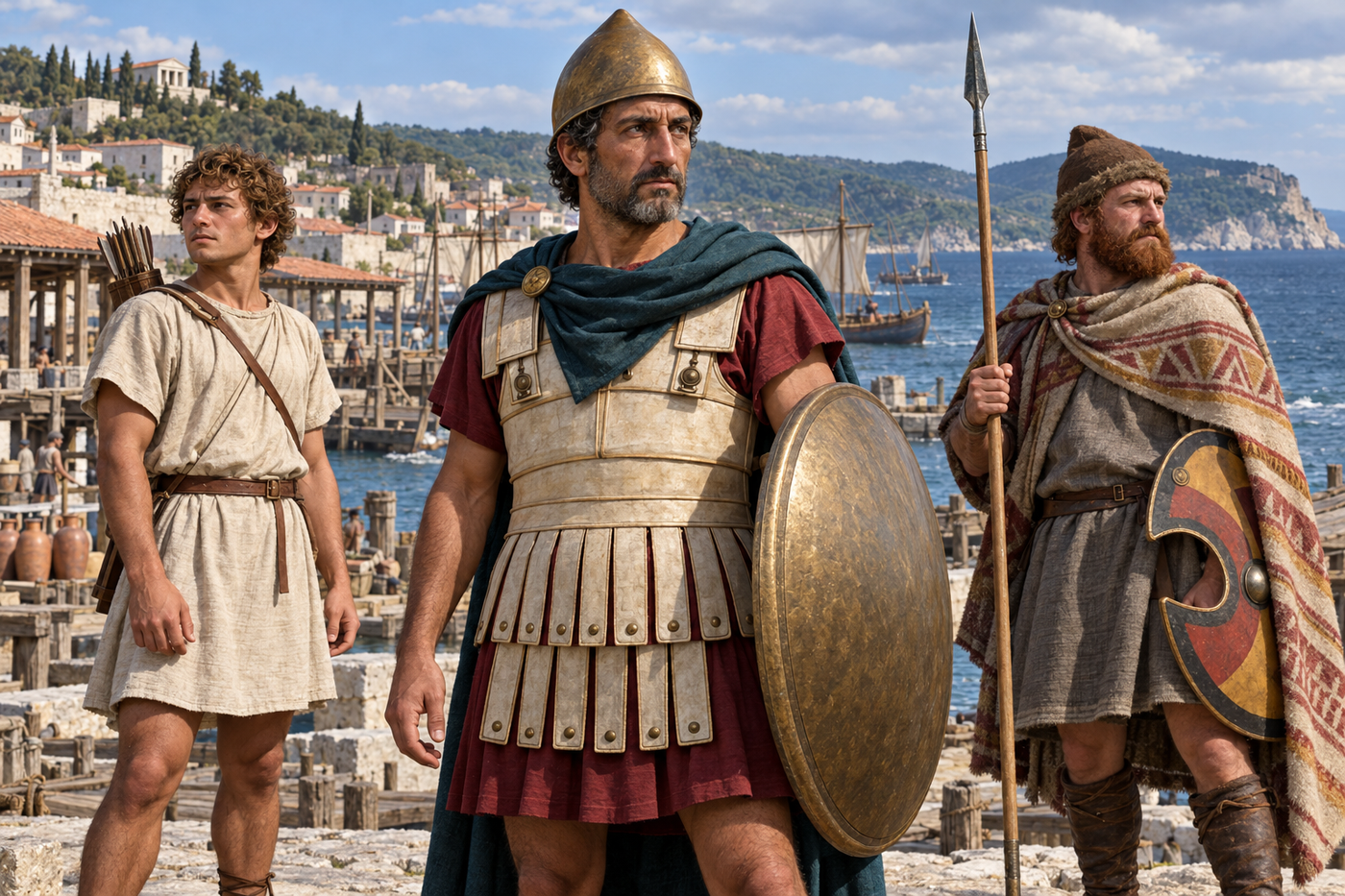
When the survivors of Cyrus' expedition reached Trapezus in 400 BC, the sea promised a way home. The city above it offered something equally precious: a market, food and people who spoke their language. These exhausted soldiers had crossed hostile country after the death of the prince who hired them. Now, on the southern shore of the Black Sea, they found a Greek community that belonged to the same wider world as the homes they had left behind.
The welcome did not make every problem disappear. Thousands of armed visitors needed provisions, and their hunger could become a danger to the countryside. Trapezus had neighbours of its own and agreements worth protecting. Xenophon's account brings the life of an overseas Greek city into sharp focus: connected to distant shores, rooted in a particular landscape, and obliged to make difficult choices when outsiders arrived with weapons.
Cities carried across the sea
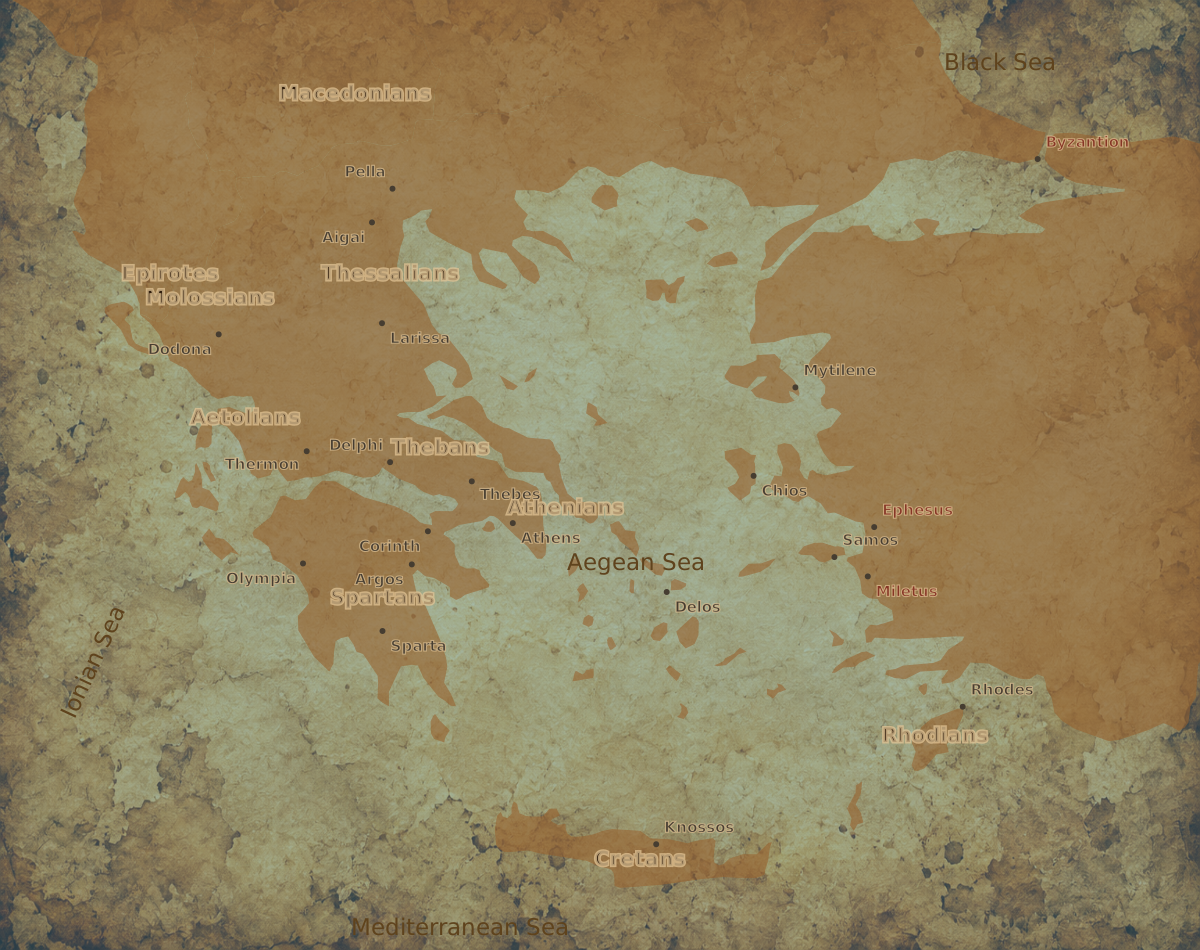
Greek settlement had spread around the Mediterranean and Black Sea over several centuries. Migrants founded communities in southern Italy and Sicily, on the coasts of North Africa, beside the approaches to the western Mediterranean and around the Pontic shore. Different expeditions carried different hopes: land, trade, escape from conflict, or a new beginning under leaders able to gather companions and support.
A founding city might provide settlers, sacred traditions and a remembered connection. The new settlement nevertheless developed its own institutions, rivalries and ambitions. Corinth and Syracuse could honour a common relationship while remaining separate political communities. Sinope and its daughter cities on the Black Sea maintained connections that carried obligations as well as pride. The strength of those relationships became especially visible when a smaller settlement needed protection or its inhabitants complained of mistreatment.
The territory around a city mattered as much as the harbour. Fields, vineyards, farmsteads and roads sustained the people behind the walls. Neighbouring communities already had claims to land and resources. Settlement could therefore lead to exchange and partnership, to intermarriage and shared habits, or to violent dispossession and recurrent war. Each city inherited the consequences of its own beginnings.
The founder and the gods
The memory of a founder helped give a community a common past. A founder's story could explain why the settlers had travelled, who had guided them and what relationship bound the city to its gods. Sanctuaries, festivals and the public care of sacred places gave that history a visible setting. The same sea that brought traders and soldiers carried pilgrims, dedications and stories of divine assistance.
Massalia preserved a particularly memorable foundation tradition. A Phocaean visitor, welcomed at a local ruler's feast, was chosen by the ruler's daughter as her husband when she offered him the ceremonial cup. The tale, preserved in differing forms, made a marriage and a moment of hospitality part of the city's origins. It placed the encounter between newcomers and inhabitants at the centre of civic memory.
Such traditions could strengthen a community whose daily life depended on dealings with people beyond its walls. Greek gods remained recognisable across the sea, but the particular places, families and ceremonies of each city made religion local. At Trapezus, Xenophon's soldiers celebrated deliverance with sacrifice and athletic contests. Their relief took a form the people of an overseas Greek settlement could understand.
Trapezus and the burden of hospitality
Trapezus had been founded from Sinope in Colchian country. Its position made it a useful place to recover from the long march, but the city's leaders could not ignore the consequences of accommodating an army. They gave the soldiers food and conducted negotiations involving neighbouring Colchians. Hospitality and diplomacy were intertwined: helping the newcomers could also protect relationships outside the city.
The returning army wanted ships. A voyage might spare it another dangerous journey overland, but vessels, crews and provisions had to come from somewhere. Every proposal placed demands on people who had not chosen the army's war. Officers debated routes and supplies while the cities weighed the cost of cooperation. An exhausted force might still be strong enough to seize what it could not purchase.
At Cotyora, another settlement connected with Sinope, the tension became explicit. Sinopean envoys objected to damage done to their colonists and territory. Xenophon answered by explaining the army's needs and conduct. The encounter involved argument, mutual pressure and the prospect of future assistance. A common Greek identity supplied language and expectations; it did not settle who would feed the soldiers or repair the harm they caused.
These negotiations show the skill required of local leaders. They had to distinguish a passing force from a lasting enemy, offer enough help to preserve peace and avoid becoming helpless in their own countryside. A city's safety could depend on its envoys and personal connections before anyone took a place on the wall.
Fields behind the harbour
The northern Black Sea provides a powerful surviving picture of the relationship between city and land. At Tauric Chersonesus, the agricultural territory was organised into plots whose boundaries can still be traced. Farmsteads and vineyards tied the urban community to a productive hinterland. The arrangement developed during the fourth and third centuries BC, as the city extended its control over the surrounding landscape.
This was wealth that needed defending. A harbour could welcome ships while an enemy threatened the harvest inland. The people who voted in assemblies and worshipped in civic sanctuaries also depended on the security of farms, roads and stored produce. Fortification and armed service belonged to the same effort to keep a community alive from one season to the next.
For larger powers around the Black Sea, grain could become an instrument of diplomacy. The rulers of the Cimmerian Bosporus supplied Athens and received honours in return. An Athenian decree of 347/6 BC praises Spartokos and Pairisades for continuing their father's care for grain exports. Crowns, envoys and agreements linked royal interests in the north with the needs of a distant democracy.
Citizens, hired soldiers and men of ambition
A city could call upon its citizens, but an overseas community might also need skills and numbers beyond its own population. Hired soldiers offered reinforcement, specialist weapons and experience gathered in other campaigns. Their service required money, food and an employer whose promises remained credible. The presence of armed professionals could strengthen a government or give an ambitious commander the means to challenge it.
The fourth century provided opportunities for such men across the Greek world. Wars displaced people; rulers recruited them; successful officers built reputations and personal followings. A soldier might move between civic service, an expedition abroad and employment by a king. The harbour connected a city to this mobile military world as directly as it connected it to trade.
On the southern Black Sea, the arrival of the Ten Thousand briefly concentrated that problem in a single force. In Sicily, the relationship between citizens, mercenaries and powerful individuals could shape the government of an entire city. The same broad resources could serve very different ends, depending on who controlled the treasury, the troops and the gates.
Timoleon and the recovery of Syracuse
Syracuse was one of the greatest cities created by Greek settlement overseas. By the middle of the fourth century, it had also endured tyranny, civil conflict and depopulation. Its citizens appealed to Corinth, their mother city, for help. Timoleon arrived in Sicily in 344 BC with a force small enough that success depended on judgement, alliances and opportunities he could create on the ground.
His campaign brought him into conflict with local rulers and Carthaginian power. Plutarch's account gives a central place to the battle at the Crimisus, where Timoleon attacked an enemy crossing a river. Difficult ground, weather and the moment of commitment became part of the remembered victory. The campaign offered more than relief from a single threat: it opened the possibility of rebuilding communities exhausted by war.
Timoleon encouraged new settlers to come to Syracuse and other Sicilian cities. Land and houses gave recovery a practical basis, while changes to the political order answered the danger posed by entrenched tyrants. The relationship with Corinth supplied both legitimacy and human resources. A foundation connection created centuries earlier could still be invoked when a city sought another beginning.
Yet rescue also depended on the character of the rescuer. A commander who possessed troops and prestige could become another master. Timoleon's remembered withdrawal from power was therefore part of his achievement. In the story Syracuse told about its recovery, the decision to relinquish authority mattered alongside victory in battle.
Alexander and a widening horizon
Alexander's conquests altered the world in which these cities operated. The overthrow of Persian royal power changed the balance around the eastern Mediterranean and opened new paths for soldiers, merchants and settlers. Greek communities already established overseas encountered these changes from their own positions: some lay close to the campaigns, others watched from distant western or Pontic shores.
Their immediate concerns remained concrete. A city needed its harvest, its harbour and a workable relationship with its neighbours. It might seek a king's favour, hire troops or rely on an old connection with another city. The scale of the surrounding powers had grown, but survival still demanded decisions made by local magistrates, commanders and assemblies.
From Trapezus to Syracuse, the history of overseas Greek communities is filled with such decisions. Welcoming an army could expose the countryside; inviting a liberator could create a new ruler; supplying grain could win a friendship across the sea. The walls marked the visible edge of the city. Its fortunes depended on a much larger network of people who could arrive as guests, partners, settlers or enemies.
Sources
Ancient accounts
- Xenophon, Anabasis IV.8–V.6.
- Plutarch, Life of Timoleon.
- Athenaeus, Deipnosophists XIII.576, the foundation tradition of Massalia.
Inscriptions and archaeology
- IG II³ 1, 298, honours for the rulers of the Cimmerian Bosporus, 347/6 BC.
- UNESCO, Ancient City of Tauric Chersonese and its Chora.
Historical studies and reference works