






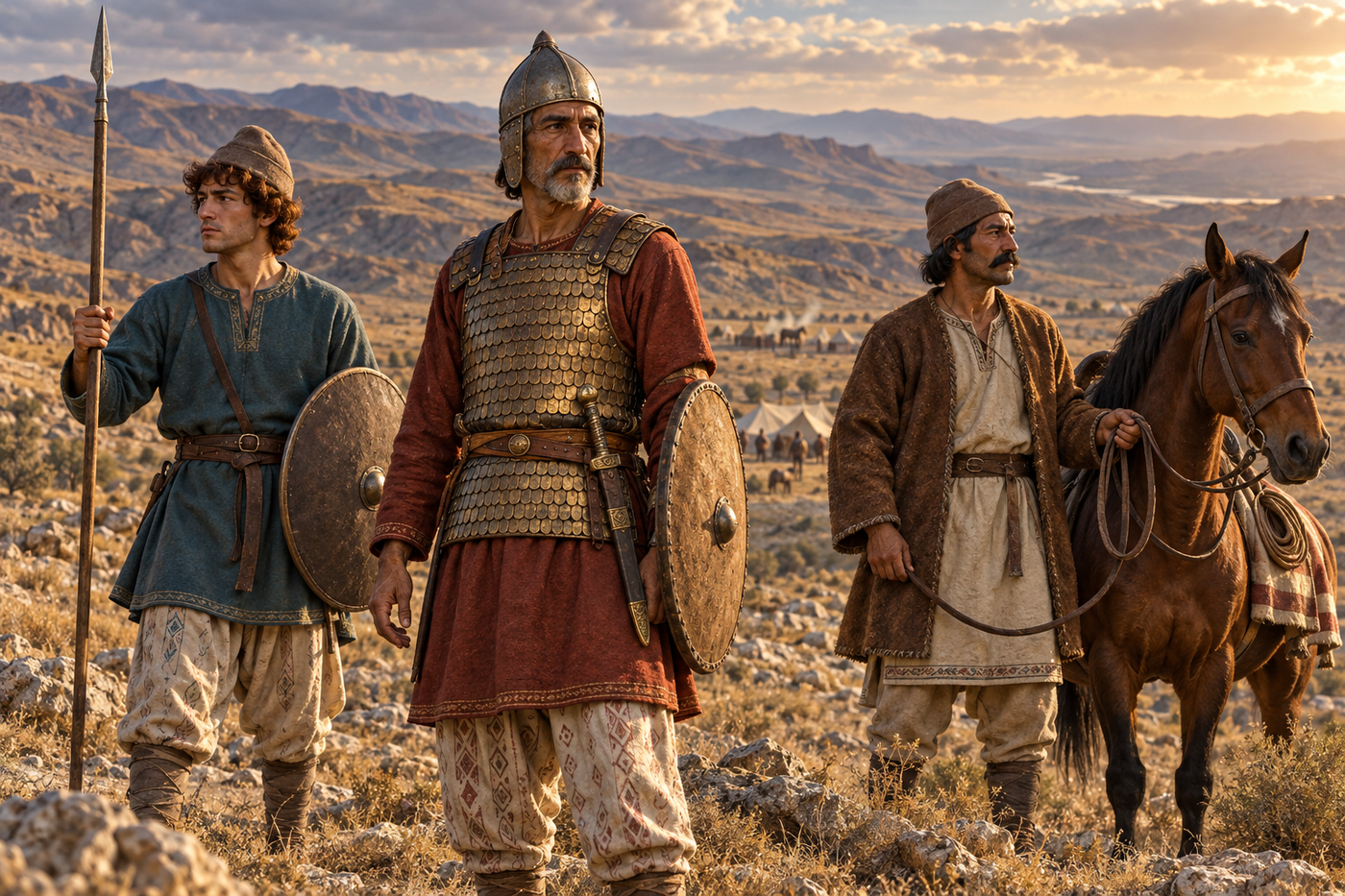
Sagartians
A claimant to the Median crown
When Darius I fought to secure his throne, a Sagartian named Tritantaechmes raised a claim of his own. He proclaimed himself king in Sagartia and invoked descent from Cyaxares, the great Median ruler. His challenge belonged to the wave of rebellions that followed the crisis of 522 BC, when the future of the Persian monarchy was still being decided by armies.
Darius sent Persian and Median troops against him under a Median commander, Takhmaspada. Tritantaechmes was defeated and captured. The king's inscription at Behistun records his mutilation, public exposure and execution at Arbela. Darius intended the story to warn anyone who might raise another royal banner. It also preserved the name of a people whose ambitions had reached beyond service to the Persian throne.
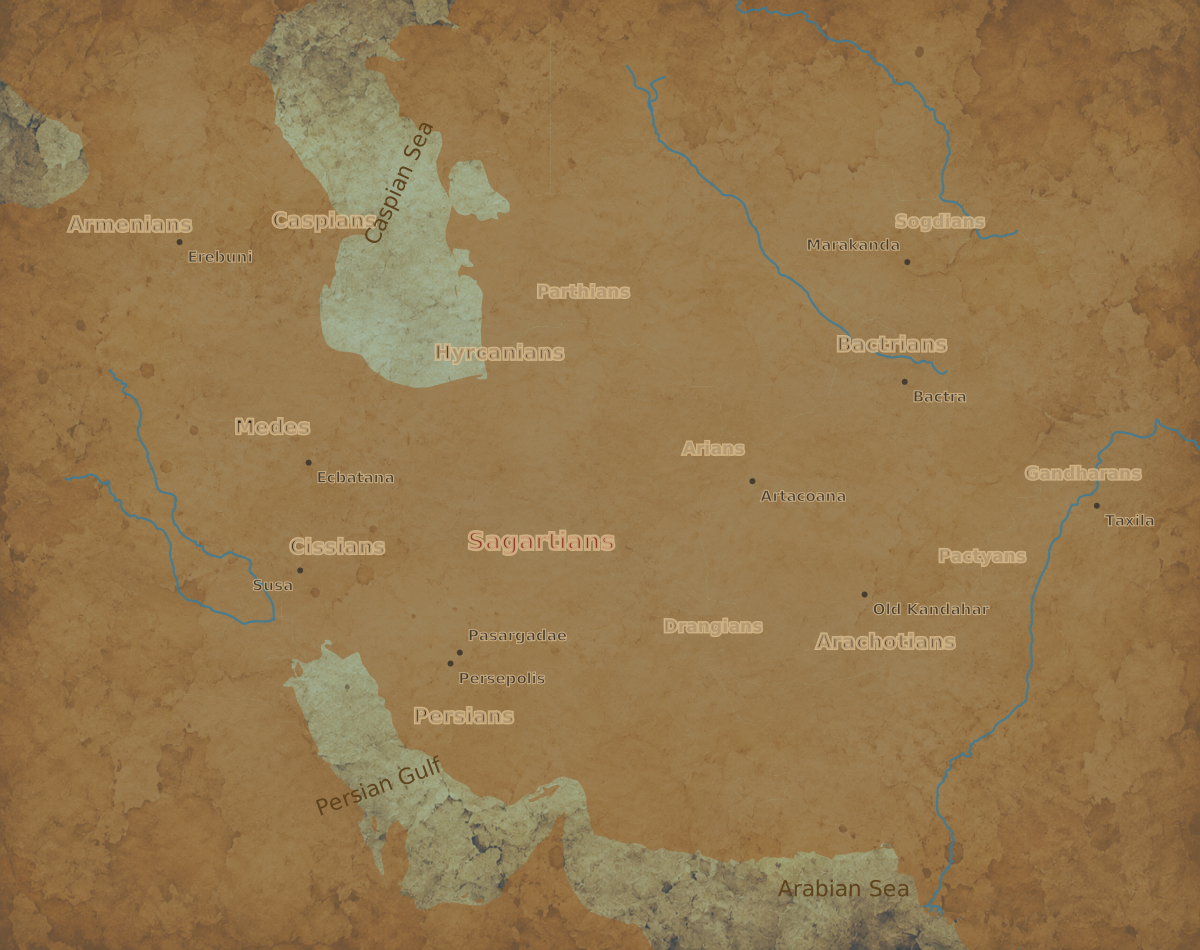
Pastures across the Iranian world
The Sagartians belonged to the Iranian peoples of the Achaemenid realm. Herodotus describes them as nomads sharing the language of the Persians. Their world was organised around movement and herds, rather than a single celebrated capital. The locations associated with them in ancient accounts stretch across different parts of Iran and towards the Median west.
Royal lists name Sagartia among the lands acknowledging Persian power. Other traditions connect the people with Media, while Herodotus places them within a tribute grouping that also includes populations farther south and east. These references evoke communities drawn into several networks of imperial government, seasonal movement and provincial relationships.
For herding families, access to grazing and water shaped the year's demands. Their animals represented subsistence and wealth, while horses gave mounted men the ability to travel, guard herds and answer a summons to war. A people could live through such movements and still possess strong political loyalties, leaders and memories of royal ancestry.
The name of Cyaxares
Tritantaechmes' appeal to Cyaxares placed his rebellion within the inheritance of the Median kings. Cyrus had overthrown Astyages, Cyaxares' successor, roughly a generation before Darius' accession. The prestige of the older dynasty therefore remained a resource that an ambitious claimant could use against the new ruler.
His followers were asked to recognise a king whose authority came from that ancestry. Darius answered with a different account of legitimate rule: the rebels were liars, and Ahuramazda had granted victory to the rightful monarch. At Behistun, religious sanction and military success became inseparable parts of the king's explanation.
The punishment at Arbela made that explanation visible. Captured rulers were displayed as defeated bodies before they became examples in the inscription. The royal message crossed the empire in written form, but its first audience included people who could see what had happened to a man who claimed kingship without the power to keep it.
The horseman and the rope
Herodotus' most distinctive Sagartian scene belongs to Xerxes' invasion of Greece in 480 BC. He describes mounted men carrying daggers and ropes, casting loops to entangle their opponents. Their clothing combined features he associated with Persian and Pactyan dress. In his great catalogue of the imperial army, the Sagartians were remembered through a fighting method immediately recognisable to his readers.
A rope was familiar equipment in a pastoral world. In Herodotus' account, the horseman's skill with it became a weapon against men as well as animals. The danger lay in capture and loss of freedom of movement: a rider who could close, entangle an opponent and exploit the confusion brought a very different threat from a line of spearmen.
Service in Xerxes' army carried these men far beyond their usual grazing grounds. The expedition gathered peoples whose own concerns and ways of life differed widely, then placed them within one royal enterprise. To a Greek observer, the variety of clothing and weapons helped express the immense reach of the Persian king.
Tribute and service
Herodotus also names the Sagartians among the populations contributing to one of the empire's revenue divisions. His total belongs to the combined grouping, which included the Sarangians and other communities. The entry places them within the fiscal world of the monarchy as well as its military one.
Imperial government required both resources and relationships. A ruler who could call upon mounted followers offered something useful to the king, while royal recognition could reinforce his standing among neighbouring communities. The same arrangement could become dangerous when a local leader believed he possessed an independent right to rule. The careers of Tritantaechmes and Takhmaspada show both sides of that political world: one invoked an older dynasty, the other secured his position by defeating its claimant.
The age of Alexander
By the time Alexander invaded Asia, the Sagartians had been part of the Achaemenid world for generations. The empire still depended on provincial commanders and the mounted strength of its Iranian peoples. Darius III's defeat at Gaugamela in 331, followed by his death the next year, broke the royal structure within which those relationships had operated.
Alexander's advance then carried the war through Media and towards the eastern provinces. His rule depended on securing submissions, appointing governors and keeping routes open while resistance shifted from one region to another. Across the Iranian country, communities that had supplied the Persian monarchy faced new demands and new holders of royal authority.
The Sagartians' earlier history gives that change a particular resonance. Their remembered king had once challenged Darius I in the name of Cyaxares; their horsemen had later served Xerxes in the invasion of Greece. They belonged to a world in which pastoral mobility, imperial service and the ambition of local leaders could meet in a single generation. At the end of the Achaemenid age, the throne changed hands again, while the pastures and the people who moved between them remained.
Sources
Royal inscriptions and ancient accounts
- Darius I, Behistun inscription, II.79–91: the rebellion of Tritantaechmes and his punishment; Persepolis inscription DPe, list of countries.
- Herodotus, Histories, I.125; III.93, tribute; VII.85, the mounted contingent.
- Arrian, Anabasis, III.19–25, the conquest of the Iranian provinces.
Historical geography and classical reference works