






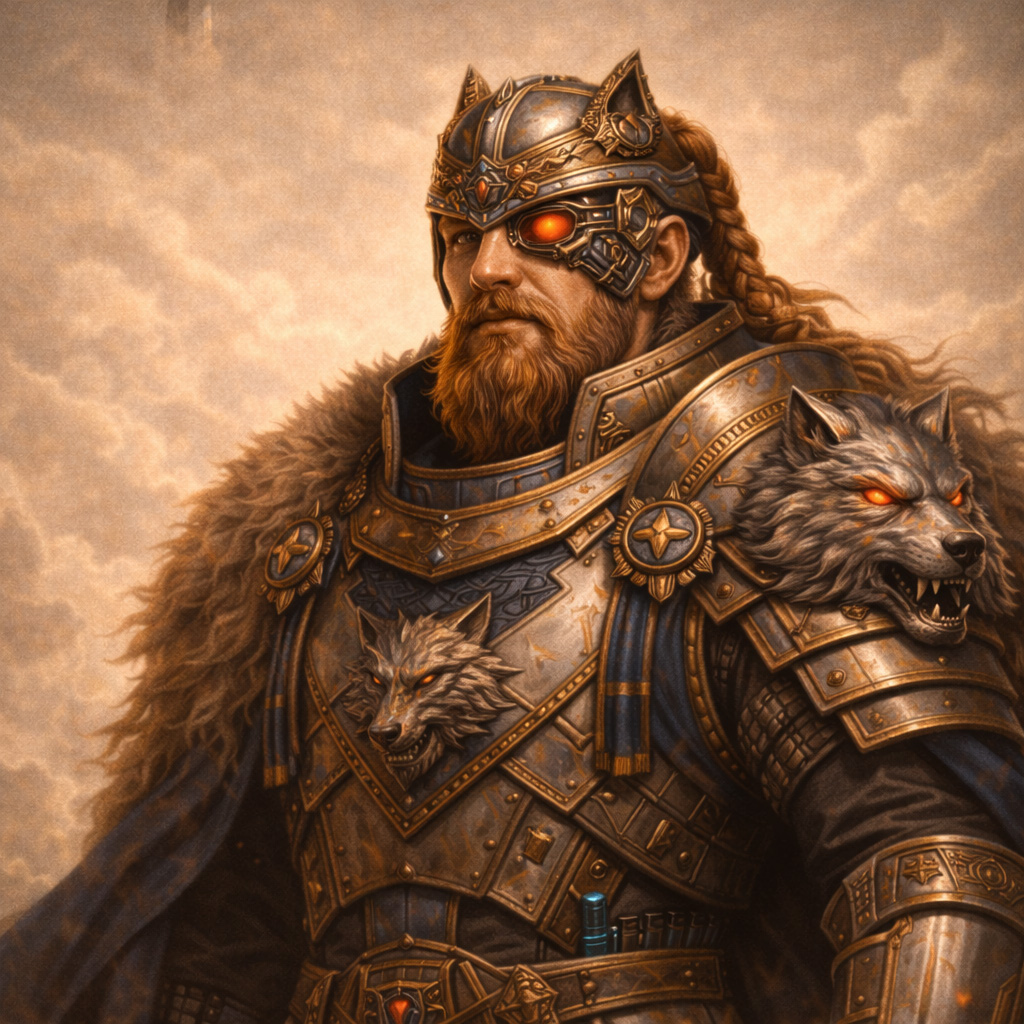
Swolves, from intergalactic pillars to unexpected saviours
Long before they became rulers in Tohei, the Swolfs were known on the imperial frontier as a dangerous and useful problem. Officially, they were a noble war-clan in service to the Supreme Empire. In practice, they lived in the blurred space between sanctioned conquest, private enterprise, and outright piracy.
They specialized in raids against weak or isolated worlds beyond firm imperial control. Sometimes these campaigns were legal punishments against tax defaulters or rebellious colonies. Just as often, they were simply profitable opportunities wrapped in respectable language. A world rich in resources, slaves, relics, or strategic position could suddenly discover an ancient legal dispute had been remembered in a Swolf court.
Their methods became famous. When they held clear superiority, they struck with overwhelming violence. Ports were burned, defenses shattered, elites executed or bought, and tribute imposed before resistance could organize. But when strength was uncertain, the Swolfs could become unexpectedly flexible. They negotiated, divided enemies, offered favorable terms, sponsored rival claimants, and withdrew when the cost of victory exceeded the value of the prize.
This gave them a mixed reputation across the frontier. Enemies called them opportunists without honor. Admirers called them realists who understood war better than romantics did. Imperial authorities often distrusted them, yet repeatedly relied on them where regular bureaucratic governance had failed.
Swolf society itself was shaped by this harsh environment. Nobility was respected, but competence mattered more than ceremonial purity. Officers were expected to command, adapt, and enrich the clan. Cowardice was despised, but pointless sacrifice was considered stupidity. Oaths were sacred, so long as they served survival and victory rather than vanity.
By the time the Damocles campaign was launched, the Swolfs were not the largest imperial force involved, nor the most prestigious. But they possessed something many greater houses lacked: a culture built for uncertain wars far from home.
Part II – The Landing and Survival
The invasion of Damocles began in chaos. The priesthood of the old order struck first with catastrophic weapons, destroying transports, crippling communications, and severing the invading coalition from the wider galaxy. Armies meant to descend in coordinated waves instead arrived fragmented, isolated, or not at all.
Many imperial factions never recovered from that first disaster. Some landed without supplies. Others without officers. Rival houses fought one another before they had secured a single province. Entire commands disappeared into hostile territory and became little more than cautionary tales.
The Swolfs survived because their command structure survived. Their senior officers, logistics planners, and household leadership reached the surface largely intact. This did not make them strong enough to conquer Damocles outright. It made them coherent, which in those first months mattered far more.
Recognizing their limited numbers, the Swolfs refused the suicidal arrogance that doomed stronger rivals. Instead of rushing into the richest and most contested lands, they advanced into the harsher northern regions of Tohei, where populations were scattered, resources modest, and resistance less concentrated. It was not the most glorious path, but it was the path that remained open.
There they established defended footholds, restored discipline, and began the slow work of turning survival into power. Roads were secured. Supply chains improvised. Local chiefs identified, bribed, threatened, or protected depending on circumstance. While other invaders chased spectacular victories and bled themselves dry, the Swolfs were building a state.
Their greatest weapon in this phase was not force of arms, but patience. They understood that on Damocles the faction that endured the first storm would inherit the future.
Part III – Winning the North
The northern lands of Tohei were not rich enough to inspire universal conquest, but they were rich in one thing the Swolfs understood well: political opportunity. Local clans feared war, distrusted distant masters, and wanted above all to preserve their lands, customs, and dignity.
The Swolfs offered them exactly that, at least in appearance.
Unlike more rigid imperial houses, they did not attempt to redesign society overnight. They demanded taxes, military cooperation, and formal recognition of supremacy, but left day-to-day administration largely in local hands. Village councils continued to function. Noble families retained titles. Traditional laws were often preserved so long as they did not threaten Swolf interests.
This light touch was deeply appreciated after the brutal examples set elsewhere on the continent. For many Tohei clans, Swolf rule seemed less like conquest than a harsh but acceptable protectorate. Pay tribute, keep order, and live largely as before.
The arrangement benefited both sides. Local houses gained protection from raiders, rival clans, and more radical imperial factions. The Swolfs gained manpower, supplies, legitimacy, and a widening political base without paying the cost of direct occupation.
They also proved skilled judges in inter-clan disputes. By mediating border conflicts, inheritance quarrels, and trade disagreements, they made themselves indispensable. Each clan that sought Swolf arbitration surrendered a little independence while believing it had preserved peace.
In time, many northern communities ceased to see the Swolfs as temporary conquerors. They became the authority one appealed to when trouble began. That transformation, from feared outsiders to accepted referees, was the true foundation of Swolf power in Tohei.
Part IV – Violence with Good Public Relations
The Swolfs did not build their reputation through kindness. They built it through comparison. Next to openly brutal rivals, measured brutality can look like mercy.
Once their northern base was secure, the Swolfs began eliminating factions whose excesses threatened regional stability or offered profitable opportunities. Radical imperial warlords who ruled through indiscriminate slaughter were denounced as dangers to order. Fanatics of the Celestial Peace who refused all compromise were labeled obstacles to peace. Rebellious chiefs who challenged Swolf authority were described as bandits endangering honest communities.
Each campaign followed a familiar pattern. First came negotiations, amnesties, and carefully publicized offers of surrender. Then, when resistance predictably continued, came swift and overwhelming force. Fortresses were stormed, treasuries seized, arsenals redistributed, and surviving elites replaced by more cooperative figures.
The genius of the Swolfs lay in presentation. They rarely described conquest as conquest. It was pacification, arbitration, restoration, or emergency intervention. Looted relic stockpiles became “secured assets.” Annexed roads became “protected corridors.” Destroyed enemies became examples of what happened when ideology overruled reason.
This strategy won them more than territory. Moderate clans began to see Swolf intervention as unpleasant but preferable to chaos. Even those who distrusted them often accepted that when radicals rose too far, the Swolfs were the power most capable of ending the crisis.
Thus violence became one of their diplomatic tools, sharpened by discipline and hidden beneath respectable language.
Part V – Balancing Tohei
Once the great wars settled into a new order, the Swolfs faced a different challenge: no longer how to survive, but how to remain necessary. Their answer was balance.
They understood that a unified Tohei under another banner could eventually expel them. So no rival was allowed to become dominant for long. Palter was encouraged when industrial strength was needed, then quietly restrained when its influence expanded too far. Ritolia was contained but not always destroyed, useful as a permanent warning against disorder and as a pressure point against neighboring clans. Lesser houses were rewarded, divided, reconciled, or isolated according to circumstance.
The Swolfs became judges of disputes they had often helped shape. Border quarrels, succession crises, merchant conflicts, and military incidents repeatedly passed through Swolf hands. Every side sought their recognition. Every petition increased their leverage.
They rarely needed to command openly. A delayed shipment here, a marriage endorsement there, a frontier patrol moved at the right moment, an envoy heard before another. Through a thousand such decisions, the political map of Tohei bent around them.
This system also made rebellion difficult. Few enemies confronted only the Swolfs. Most faced coalitions, neutralized allies, economic pressure, or rivals suddenly strengthened at their expense.
Where cruder powers ruled through fear alone, the Swolfs ruled through managed dependence. Many hated them. Many more needed them.
Part VI – Blood and Legitimacy: The Kento Strategy
For all their success, the Swolfs knew one truth could not be ignored: they were still outsiders in the memory of Tohei. They could arbitrate disputes, win wars, and collect taxes, but ancient legitimacy remained attached to native houses, above all the Kento.
So they pursued what conquest by steel had failed to secure: conquest by blood.
The most visible expression of this strategy was the marriage between the current Kento Daimyo Kenji and Lady Leonora of the Swolfs. Publicly, it symbolized unity between protector and tradition. Privately, it represented something far more ambitious. If bloodlines merged deeply enough, future generations might no longer distinguish where Kento heritage ended and Swolf authority began.
Leonora herself became a central figure in this project. Unlike ceremonial brides traded for peace, she is known as a committed political actor who understands the historic importance of her role. Her presence at the Kento court is both reassurance and reminder: alliance has entered the family itself.
The Swolfs support marriages, fosterage agreements, shared military academies, and elite cultural exchange wherever possible. They know identities can be softened over generations more effectively than they can be broken in battle.
Many in Kento see the danger clearly. Some believe the clan is being embraced so tightly it may one day disappear inside the embrace. Others argue the alliance is necessary for survival in a harsher age.
The Swolfs need not resolve that debate. As long as it continues, time works for them.
Part VII – The Buccaneer Confederation
When the great continental campaigns ended, the Swolfs turned south. Beyond the core lands of Tohei lay the maritime confederation of the Buccaneers, heirs to smugglers, raiders, mercenary captains, and frontier traders who had long profited from the sea lanes linking the peninsula to the wider world. They were too dangerous to ignore and too useful to destroy.
Rather than attempt direct annexation, the Swolfs imposed layered control. Strategic ports were garrisoned, tribute schedules enforced, and key channels patrolled by loyal fleets. Local captains kept their ships, customs, and internal rivalries, but major decisions increasingly required northern approval.
Rebellions never truly ceased. Whenever tribute rose too sharply or a charismatic corsair united too many islands, violence followed. The Swolfs answered with punitive expeditions, hostage taking, selective pardons, and the replacement of troublesome leaders with more practical ones. Entire pirate bands were sometimes destroyed, while others were legalized as auxiliary patrol forces the next season.
This arrangement gave the Swolfs control over one of the most valuable chokepoints in the region. Trade could be taxed, contraband redirected, enemies harassed, and southern threats intercepted before reaching Tohei. It also extended their influence far beyond their northern homeland.
The Buccaneers curse Swolf domination in tavern songs and private councils. Yet many have grown rich under the order it imposed. As so often in Swolf politics, resentment and dependence now live side by side.
Part VIII – Economy of the Swolf Order
The Swolfs do not possess the finest industry of Tohei, nor the richest farmlands, nor the largest population. Their wealth comes from position, extraction, and leverage. They rule crossroads more efficiently than others rule provinces.
Taxes from subordinate clans form the first pillar of their economy. These are rarely ruinous by design. The Swolfs learned early that moderate tribute paid reliably over generations is worth more than plunder that leaves ashes behind. Local rulers often keep enough prosperity to remain useful, while the center grows stronger through consistency.
Tolls and transit rights form the second pillar. Northern roads, military corridors, escorted caravan routes, and southern maritime chokepoints all generate revenue. Goods moving between rival states often enrich the Swolfs whether peace reigns or war begins.
The third pillar is captured value. Over two centuries, confiscated arsenals, seized estates, inherited titles, and absorbed treasuries have flowed into Swolf hands. They are experts at converting political victories into durable economic advantage.
Military industry exists, though on a more selective basis than in Palter. Rather than mass produce everything themselves, the Swolfs prioritize elite systems: noble exo-armor maintenance, walker platforms, command vehicles, naval strike craft, and regenerative medical infrastructure reserved for ruling bloodlines and critical officers.
Finally, there is brokerage. Favors, access, licenses, arbitration fees, protected contracts, and discreet political services generate wealth impossible to measure cleanly. In many cases, the most profitable thing the Swolfs sell is not a product, but permission.
They are not the workshop of Tohei. They are its toll gate.
Part IX – Armed Forces of the Swolfs
The armies of the Swolfs are built around a simple principle: decisive force applied at the right point is worth more than endless attrition. They prefer campaigns that break enemies politically as much as militarily.
At the summit stand the Swolf nobles themselves. Unlike many tributary forces raised from local populations, pure Swolf warrior houses fight as elite heavy troops equipped with advanced exo-armors, powered assault frames, and battlefield command systems inherited from imperial doctrine. Senior lords and chosen heirs may even deploy in towering mecha platforms used as symbols of authority as much as engines of war.
The ruling dynasty and certain ancient bloodlines benefit from regeneration technology unavailable to most of Damocles. Wounds that would end another commander may merely delay a Swolf lord. This continuity gives them centuries of accumulated experience and explains the uncanny patience of their high strategy.
Beneath these elites serve local auxiliaries, allied clan contingents, professional infantry, and tributary levies. The Swolfs use native manpower pragmatically, assigning it to garrison duty, screening operations, convoy security, or supporting offensives led by core troops.
They also maintain feared special operations cadres. These units suppress rebellions, eliminate troublesome nobles, sabotage enemy logistics, and intervene quietly where open war would be inconvenient. In many states of Tohei, a political crisis becomes more serious the moment rumors spread that Swolf agents have arrived.
At sea, their fleets combine disciplined marines, fast strike vessels, boarding specialists, and command ships designed to project authority over tributary waters. They do not need the largest navy if every key harbor fears what their smaller navy can do.
The Swolfs are not the strongest military force on Damocles. The Lioners command greater brute power and broader imperial resources. But in Tohei, no army uses force more intelligently.
Part X – Society, Culture, and the Mask
Swolf society presents itself as orderly, honorable, and pragmatic. To a degree, this image is true. Oaths matter. Service is respected. Cowardice is despised. Competence can elevate a lesser-born officer above a useless aristocrat. Their ruling culture values endurance, discipline, and the ability to make hard decisions without theatrical emotion.
Public life is shaped by a northern martial ethos. Feasting halls celebrate victories, winter campaigns are remembered in sagas, and family lineages are recorded with obsessive care. Young nobles are trained early in command, logistics, negotiation, and personal combat. A Swolf heir is expected to govern war as naturally as breathing.
Yet the defining feature of their civilization is not strength alone. It is presentation. The Swolfs understand that fear creates resistance, while respect mixed with dependence creates longevity. They therefore cultivate the image of fair overlords who ask only taxes, stability, and reasonable obedience.
In many cases, this moderation is genuine compared with harsher powers. But it is also strategic. Beneath the language of partnership lies a cold imperial project: to absorb local elites, redirect economies, shape succession, and make independent identities slowly indistinguishable from Swolf order.
Even their tolerance has limits. Communities that cooperate may keep customs for generations. Those that threaten strategic interests discover very quickly that the smiling wolf still has teeth.
This duality defines them. They are not hypocrites pretending to be rulers. They are rulers who know masks are among the most useful tools of power.
Part XI – Relations Beyond Tohei
To the north, the Swolfs enjoy unusually warm relations with the Wulfsons. Shared wolf symbolism, compatible warrior traditions, and long familiarity have created a frontier more cooperative than hostile. Trade, military observation, and occasional elite exchanges occur with far less tension than on most borders of Damocles.
With the Lioners, relations are more delicate. The Lioners possess greater raw military strength and command the broader common Imperial forces on the continent. The Swolfs therefore avoid direct confrontation, preferring usefulness over rivalry. They present themselves as reliable managers of Tohei whose regional stability benefits the wider imperial order.
Within Tohei, their diplomacy is constant labor. They mediate disputes between local clans, restrain Palter when industry becomes ambition, contain Ritolia without always destroying it, and court Kento through blood ties and prestige. Every unresolved conflict is a danger, but also an opportunity to remain indispensable.
They also conduct covert operations beyond formal borders. Rebel leaders vanish, merchant blocs fracture unexpectedly, border incidents erupt at convenient moments, and dangerous alliances sometimes collapse before signatures dry. Rarely can such events be proven to involve the Swolfs, which is part of their elegance.
In the southern seas, they must regularly suppress Buccaneer unrest while ensuring the confederation remains profitable enough not to explode into permanent revolt. Even piracy, under Swolf supervision, can become policy.
Their greatest diplomatic strength is flexibility. They can speak as imperial loyalists, regional protectors, traditional allies, commercial guarantors, or patient friends depending on what the listener most wants to hear.
Part XII – The Six Named Figures
High Jarl Edvard Skallsen is the ancient ruler of the Swolfs and the architect of their supremacy in Tohei. More than six centuries old thanks to regeneration technology, he has outlived enemies, allies, and several political eras. Calm, courteous, and terrifyingly patient, he rarely makes a move that does not serve three purposes at once.
Prince Bjorn Edvardson, his eldest son, is the heir of war. A giant in heavy exo-armor and veteran of dozens of campaigns, he commands the armored hosts and noble battle cadres. Many soldiers adore him for his directness. Courtiers fear that his victories make him impatient with slower forms of conquest.
Prince Leif Edvardson, the second son, is the heir of politics. Less imposing than his brother but no less dangerous, he oversees treaties, succession games, and elite integration across Tohei. Where Bjorn breaks gates, Leif prefers to inherit the city behind them.
Lady Leonora Skallsdottir, now consort to Daimyo Kenji of Kento, is the living bridge between dynasties. Intelligent, disciplined, and fully aware of her historic role, she represents the blood strategy at the heart of Swolf long-term ambitions. Many underestimate her because they mistake ceremony for passivity.
Rurik Vane directs covert operations throughout the northeast. His official title changes often; his real work does not. Rebellions are redirected, rivals compromised, and useful rumors born wherever he travels. Few can prove he exists, which suits him perfectly.
Admiral Solveig Thorne governs the southern Buccaneer Confederation on behalf of the Swolfs. Hard, pragmatic, and impossible to bribe cheaply, she balances punishment and profit across the pirate seas. Under her rule, corsairs complain constantly and pay on time.
Part XIII – The Swolfs Today
Today, the Swolfs stand as the most powerful political force in Tohei, though not the greatest power on all of Damocles. That distinction still belongs to larger continental actors such as the Lioners, whose brute strength and command of the common Imperial armies surpass anything the Swolfs can field directly. Yet power is not measured only in armies, and in the northeast no faction has converted influence into durable control more effectively than they have.
They sit at the center of nearly every important equation. Kento grants them legitimacy. Palter provides industrial weight. Ritolia justifies vigilance and intervention. The Buccaneer Confederation enriches their southern flank while extending their reach across the sea lanes. Lesser clans seek their arbitration even while fearing dependence upon it.
Their long strategy remains unchanged: fuse with Kento, keep Palter useful but subordinate, contain or exhaust Ritolia, and ensure that every regional crisis ends with the Swolfs more necessary than before. If this design succeeds, Tohei may one day awaken to discover that no dramatic conquest ever occurred because conquest was completed through marriages, treaties, debts, and habits of obedience.
Yet danger surrounds them as much as opportunity. A united resistance among native clans could slow their ascent. A Palter too strong to manage could become a rival rather than a partner. A desperate Ritolia might ignite a war costly to all sides. And should the Lioners decide that Swolf autonomy has grown excessive, the wolf may be reminded that larger predators still roam Damocles.
For now, however, they remain what they have always been: patient hunters who prefer to let others exhaust themselves first.
Many fear the armies of stronger states. The wise fear the day the Swolfs no longer need to pretend they are friends.