






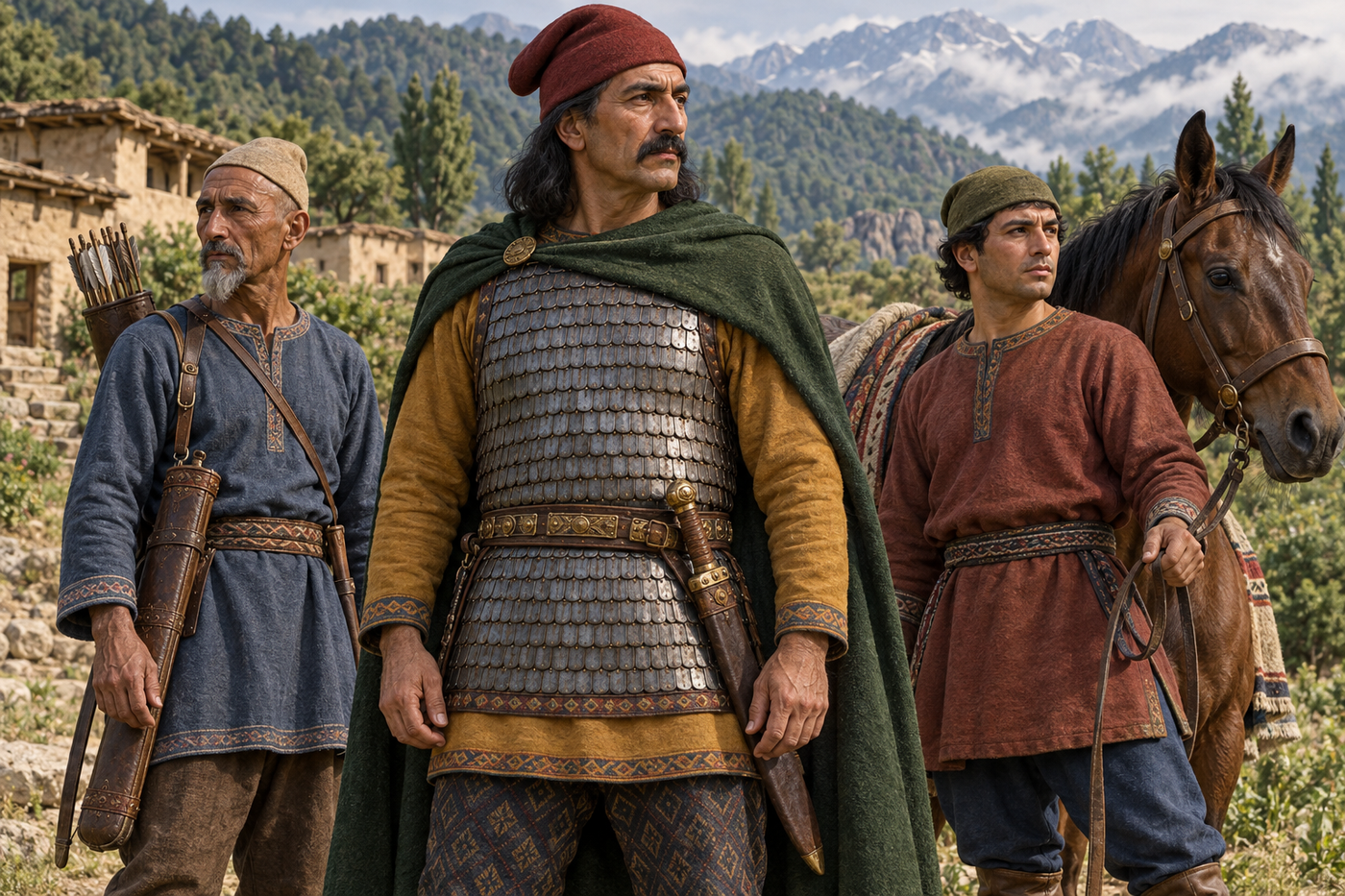
Hyrcanians
Down from the mountains
In 330 BC, after the death of Darius, Alexander turned towards Hyrcania. His army left the routes of the Iranian interior and crossed into country where densely wooded mountains descended towards a fertile plain beside the Caspian Sea. The change of landscape also brought a change in the struggle for power.
Persian nobles arrived to surrender, among them Phrataphernes, the governor who had served Darius in Parthia and Hyrcania. Other forces remained in the mountains, and local communities still had to decide whether to resist. The conquest was becoming a negotiation over men and provinces left behind by the collapse of the royal army.
The land beside the Hyrcanian Sea
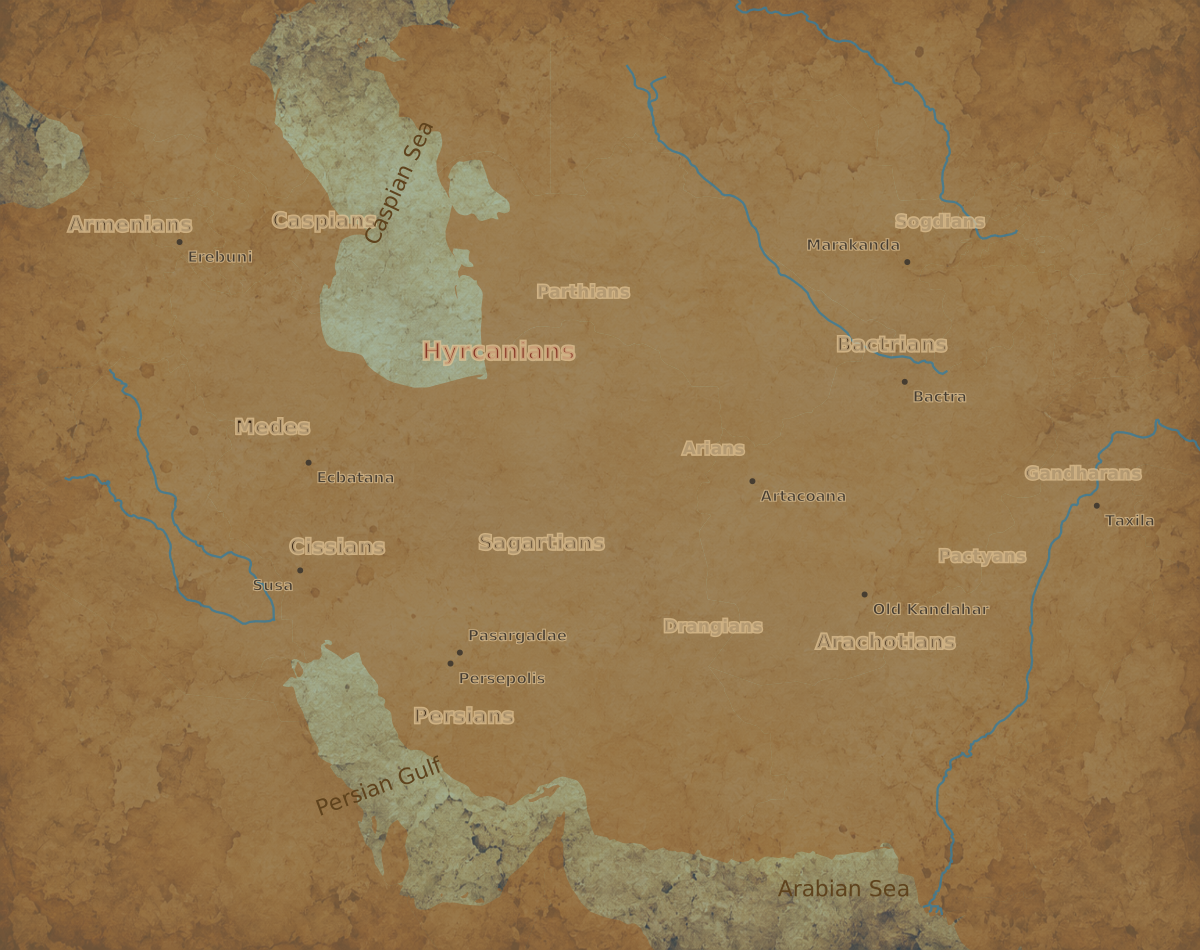
Hyrcania occupied the south-eastern Caspian region, connected with the country of Gorgan. The coastal plain and the northern slopes of the mountains differed sharply from the drier plateau beyond them. Woodland, water and cultivation gave it a character that impressed visitors coming from the interior.
Strabo later celebrated its fertility through vines, figs, grain and honey. His description made prosperity a defining feature of the country. Behind the extravagant abundance of ancient geographical writing lay an agricultural landscape capable of supporting settlements and supplying the rulers who commanded them.
The sea carried the country's name in Greek usage. Its southern shores met a succession of mountain districts, while routes towards Parthia and the Iranian plateau connected Hyrcania with imperial movement. The region belonged to a meeting of environments rather than to one uniform expanse.
Service under the Great King
Hyrcania formed part of the Achaemenid imperial world. Its governors maintained connections with neighbouring provinces and with the court. Persian authority drew upon local resources while giving leading men positions in a monarchy extending far beyond the Caspian shore.
Phrataphernes brought troops to Darius before Gaugamela in 331 BC. Arrian groups Hyrcanians with Parthians and Tapurians under his command and identifies them as mounted forces. Men from the region therefore participated in the final great royal muster, fighting far from the wooded country of their homeland.
Defeat did not immediately settle their governor's future. Phrataphernes remained among those accompanying Darius until the royal following fractured. His later surrender required a decision about how to preserve standing and usefulness when the king he had served was dead.
The army divided
Alexander entered Hyrcania with his forces moving by separate routes. He took a lighter body through difficult ground, sent Craterus towards the Tapurians and directed the baggage and less mobile elements along the longer public road. The division answered the practical demands of a landscape in which not every path could carry the whole army.
Columns separated by mountains needed to reunite with their equipment and supplies. The arrangement gave Alexander speed, but exposed parts of the force to local attack. Arrian records mountaineers striking the Agrianians guarding the rear before withdrawing after a skirmish.
The king reached Zadracarta, which Arrian calls the Hyrcanian capital. There the arrival of commanders, baggage and delegations brought the campaign's scattered movements together. The place became a meeting point between the conqueror and men seeking a settlement after Darius' fall.
Those who came to Zadracarta
Phrataphernes was not the only prominent figure to submit. Nabarzanes, formerly a leading cavalry commander in Darius' following, also arrived. Artabazus came with sons and was received with honour, his loyalty to Darius and his family's standing helping to secure his position beside Alexander.
Greek mercenaries who had continued with the Persian king now sought terms of their own. Their envoys faced a ruler who regarded service against him differently according to the circumstances in which it had begun. The end of the royal cause did not make every former opponent's prospects identical.
The gathering exposed the personal structure of the fallen empire. Governors, aristocratic households and hired soldiers possessed different claims to consideration. Alexander needed to decide which relationships could be carried into his new order and which men remained dangerous.
The neighbouring mountain peoples
The Tapurians and Mardians occupied districts adjoining the country through which Alexander moved. Autophradates retained authority over the Tapurians after submitting. The Mardians, however, became the target of a separate expedition.
Arrian describes their withdrawal into steep mountains when the Macedonians entered their country. Alexander followed until they too sent envoys, then placed them under Autophradates. The episode joined force to an administrative settlement, extending the authority of an accepted ruler over another defeated community.
Forest and mountain terrain offered refuge and made movement difficult for an invader. It did not place every settlement beyond reach. Local resistance depended on how effectively people could protect their homes and resources when a royal army was willing to leave the main road.
Phrataphernes survives the conquest
Phrataphernes became a useful servant of the new monarchy. His subsequent career included responsibilities in the northern Iranian provinces and action against disobedient officials. Experience, local connections and an ability to carry out orders gave him a place after his earlier service to Darius.
His household also entered Alexander's following. Sons could serve with the king, linking the family's future to the success of the Macedonian regime. Such relationships helped turn a provincial surrender into a longer partnership.
The transition did not remove the risks of office. A governor now answered to a conqueror campaigning at great distances, whose return could bring accusations and punishment. Surviving the first submission was only the beginning of maintaining favour.
Help after the desert
In 325 BC, Alexander's army emerged from the disastrous passage through Gedrosia. Phrataphernes and Stasanor had anticipated the difficulties and arranged animals and supplies. Their assistance helped a force exhausted by the march recover its ability to move.
The episode displayed a different kind of service from a cavalry charge. A governor who could assemble beasts of burden and deliver resources at the right moment could be indispensable to an imperial army. The connections retained in the provinces became a means of sustaining the king far from them.
Arrian's account places Phrataphernes and his family within that network of assistance. A man who had once brought horsemen to Darius was now supporting the army that had destroyed the Achaemenid monarchy. His value lay in capabilities that remained useful when allegiance changed.
After Alexander
At the division of provinces in 323 BC, Phrataphernes was still associated with Parthia and Hyrcania. The settlement acknowledged an experienced Iranian ruler within the inheritance of the conqueror. Later struggles among the successors would disturb those arrangements.
Hyrcania's resources and position continued to matter. Its plains could sustain communities and armies, while the mountain routes connected it with larger contests in Iran. The contrast between productive lowlands and difficult approaches remained central to the country's strategic character.
The events at Zadracarta had made that character visible during Alexander's reign. Surrendering nobles and resisting mountaineers occupied the same campaign landscape, but followed different paths through it. Phrataphernes' survival shows how local power could endure the fall of a dynasty by becoming necessary to the one that replaced it.
Sources
Ancient narratives and geography
- Arrian, Anabasis, III.8, III.23, III.24 and VI.27.
- Strabo, Geography, XI.7.
- Diodorus Siculus, Library of History, XVIII.3.
Historical studies and reference works