






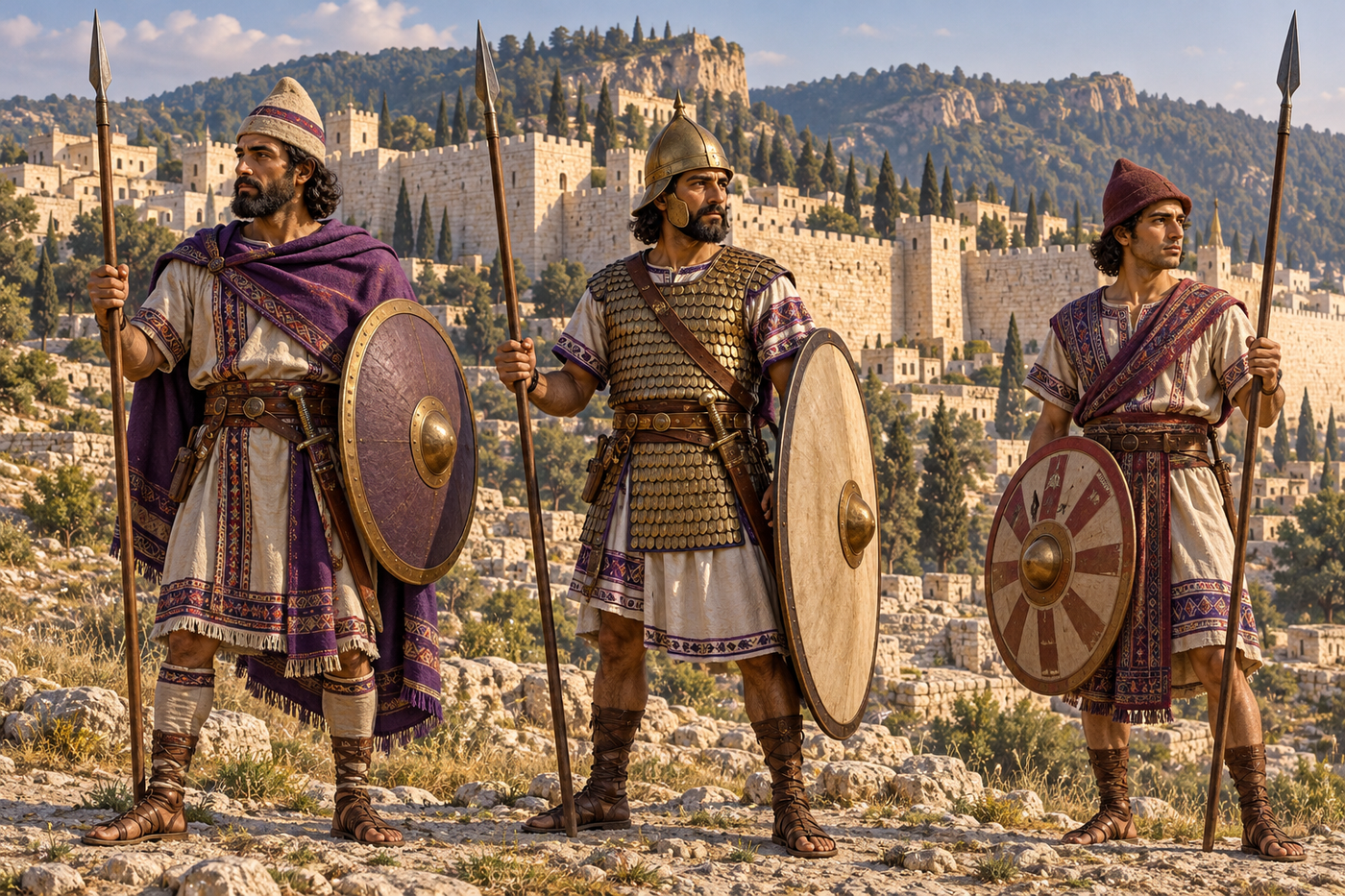
Phoenicians
The sacrifice that became a siege
In 332 BC, Alexander demanded entry to Tyre to sacrifice to the city's god, whom Greeks identified with Heracles. The Tyrians offered obedience on other matters but refused to admit either Macedonians or Persians within their island city. Darius still lived, and the outcome of the war remained uncertain.
Alexander rejected the answer. A request expressed in religious terms became a struggle over sovereignty, access and the security of his campaign. Seven months of siege followed, drawing into the attack ships from other Phoenician cities. Communities linked by language, trade and religious traditions found themselves on opposite sides of the same walls.
Cities facing the sea
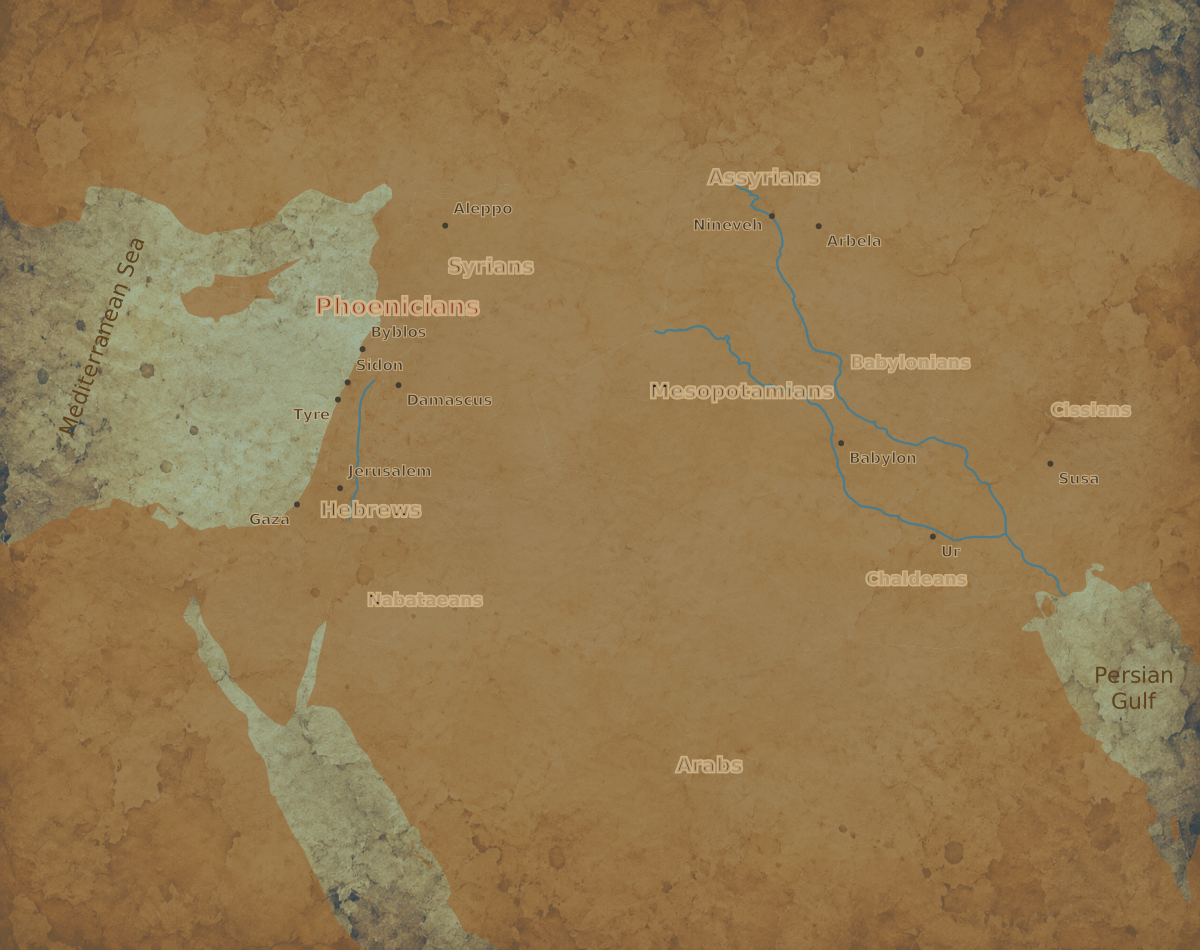
Phoenicia occupied a narrow strip of the eastern Mediterranean coast, with important centres at Tyre, Sidon, Byblos and Arwad. Mountains and limited coastal land shaped the development of cities whose wealth reached outward through their harbours. Islands and projecting sites offered shelter and defence while placing the sea at the heart of urban life.
Each city possessed its own institutions, ruling families and gods. There was no single king whose decision bound all Phoenicia. Rivalry could coexist with shared customs, and a city's overseas relationships might be as important to its ambitions as those with its immediate neighbours.
Ships connected this coastline with Cyprus, Egypt, the Aegean, North Africa and the western Mediterranean. Their movements carried artisans, merchants, settlers and objects whose designs combined influences from several regions. The Phoenician cities became important participants in a world of exchange extending far beyond their small territories.
Wealth made and carried
Highly prized purple dye was one of the products associated with the coast. Workshops also supplied fine metalwork, carved ivory and other goods for powerful consumers. The value of such work rested on skilled production as well as access to raw materials and distant markets.
The hinterland mattered to this maritime world. Timber from Lebanon could support construction and shipbuilding, while cultivated land sustained the people working in the ports. Control over roads and supplies linked the ambitions of city rulers to communities beyond the shore.
Overseas foundations created further centres of wealth and local power. Carthage grew into an exceptional state in its own right, while retaining a recognised relationship with Tyre. By Alexander's time, the Phoenician world included both eastern cities subject to Persia and western communities pursuing their own wars and policies.
Kings beneath greater kings
The coastal cities had long confronted rulers whose armies came from the interior. Assyrian pressure brought tribute, treaties and interventions in local government. One surviving agreement between Esarhaddon and Baal of Tyre reveals how commercial privilege could be linked to the presence of an imperial representative in political decisions.
Such arrangements placed limits upon a king without necessarily removing him. A local dynasty might continue to govern, command ships and manage sacred obligations while acknowledging a distant sovereign. Its survival depended on the ability to satisfy demands without exhausting the resources or support of its own city.
Under Persia, Phoenician rulers became particularly important to naval power. Their fleets gave the Achaemenids experienced crews and warships for campaigns in the Mediterranean. Service to the Great King could offer standing and opportunity, but it also carried men away to wars whose direction was decided elsewhere.
The destruction of Sidon
In the 340s BC, Sidon rebelled against Artaxerxes III. Its king Tennes sought support from Egypt, and Greek mercenaries under Mentor helped oppose the Persian response. The revolt made a coastal city part of a struggle involving Egyptian independence and the Persian king's determination to recover obedience.
Diodorus tells how Tennes eventually sought to save himself by betraying the city, while the inhabitants faced the approach of overwhelming force. His account ends in catastrophic destruction and death. The king who had raised resistance was himself executed after the surrender.
The disaster remained within living memory when Alexander arrived. Sidon's experience demonstrated how dangerous opposition could become and how little safety a ruler might purchase by abandoning his people. It also left the city with reasons to welcome a power capable of ending Persian domination.
Melqart and the royal city
At Tyre, Melqart occupied a central place in the city's sacred identity. Greeks recognised him through Heracles, and worship of the Tyrian god extended across maritime connections. Religious observance could make an overseas relationship visible through offerings and visiting representatives.
Admission to the sanctuary was therefore a matter of more than private devotion. Alexander's presence inside the island city would demonstrate his ability to enter and act as sovereign. The Tyrian refusal attempted to preserve control of the space in which their own authority was expressed.
The king's heroic associations sharpened the encounter. Alexander traced his ancestry to Heracles, and Arrian records a dream in which the god welcomed him into Tyre. The interpretation promised success through labour, turning the difficulties of the siege into a trial consistent with the hero's example.
A road across the water
Tyre's island position protected its walls from an ordinary land assault. Alexander answered by ordering a mole built from the mainland. Stone and timber advanced into the shallows, carrying the labour of an army towards a city whose defenders could attack from both walls and ships.
Progress became more difficult as the works reached deeper water and came within effective missile range. Men engaged in construction were exposed to attack. Towers and protective coverings helped defend the builders, while siege engines attempted to keep Tyrian vessels away.
The defenders fought the structure itself. A fireship helped destroy the attacking towers, and damage to the works forced Alexander to renew the effort. The siege became a contest of engineering and countermeasures, with craftsmen and crews as necessary as the men who would eventually carry the walls.
Phoenician ships against Tyre
The naval balance changed when the rulers of Arwad and Byblos learned that their cities had passed into Alexander's hands. They left the Persian fleet and brought their ships to him, joined by Sidonian vessels. Kings from Cyprus also arrived with a substantial naval force.
Alexander accepted their service and pardoned their earlier participation on the Persian side. The landward advance had produced maritime consequences: rulers whose home cities were now exposed could no longer act as though the Great King's fleet alone determined their future.
Tyre now faced a force capable of threatening its harbours as well as supporting engines against the walls. Its own ships still made attacks, but the arrival of neighbouring fleets narrowed the room in which they could operate. The city's defence had become more isolated while the siege gathered resources from across the eastern Mediterranean.
The city taken
In the final assault, breaches and attacks from the water brought Macedonians into the city. Phoenician vessels forced one harbour while Cypriot ships entered the other. The fighting spread beyond the walls, and Tyrian resistance continued within the streets.
The capture brought slaughter and enslavement. Arrian describes the attackers' anger after the long siege and the execution of captured Macedonians by the defenders. Those who found refuge in the sanctuary of Heracles received an amnesty, including the king Azemilcus and visiting Carthaginian envoys.
Alexander then performed the sacrifice he had demanded, accompanied by a procession involving troops and ships. A siege engine and a captured sacred vessel became offerings. The ceremony announced victory in the very religious setting over which the confrontation had begun.
The coast after the siege
The fall of Tyre secured an essential part of Alexander's route towards Egypt and greatly weakened the Persian position at sea. Phoenician ships now served the conqueror whose army had taken their home coast. Their crews continued to possess skills that imperial power needed.
The cities' futures were unequal. Some had made terms early, while Tyre bore the immense cost of resistance. The damaged city nevertheless survived and recovered its place in maritime exchange. The conquest had changed its political position without ending the advantages of its site or the relationships carried by its ships.
After Alexander's death, Phoenicia again became a prize for rival commanders. Harbours, shipyards and experienced sailors remained valuable to men seeking mastery of the eastern Mediterranean. The coastal kingdoms had been drawn into Alexander's empire through their separate decisions, and their resources would continue to shape the wars fought over its inheritance.
Sources
Ancient narratives and documents
- Arrian, Anabasis, II.15–24, particularly the refusal of admission, the mole, the allied fleets and the capture.
- Diodorus Siculus, Library of History, XVI.41–45: Sidon.
- Assyrian Empire Builders, Tyre and the Phoenician cities, including the treaty of Esarhaddon and Baal.
Historical and museum studies