






Babylonians
The gates after Gaugamela
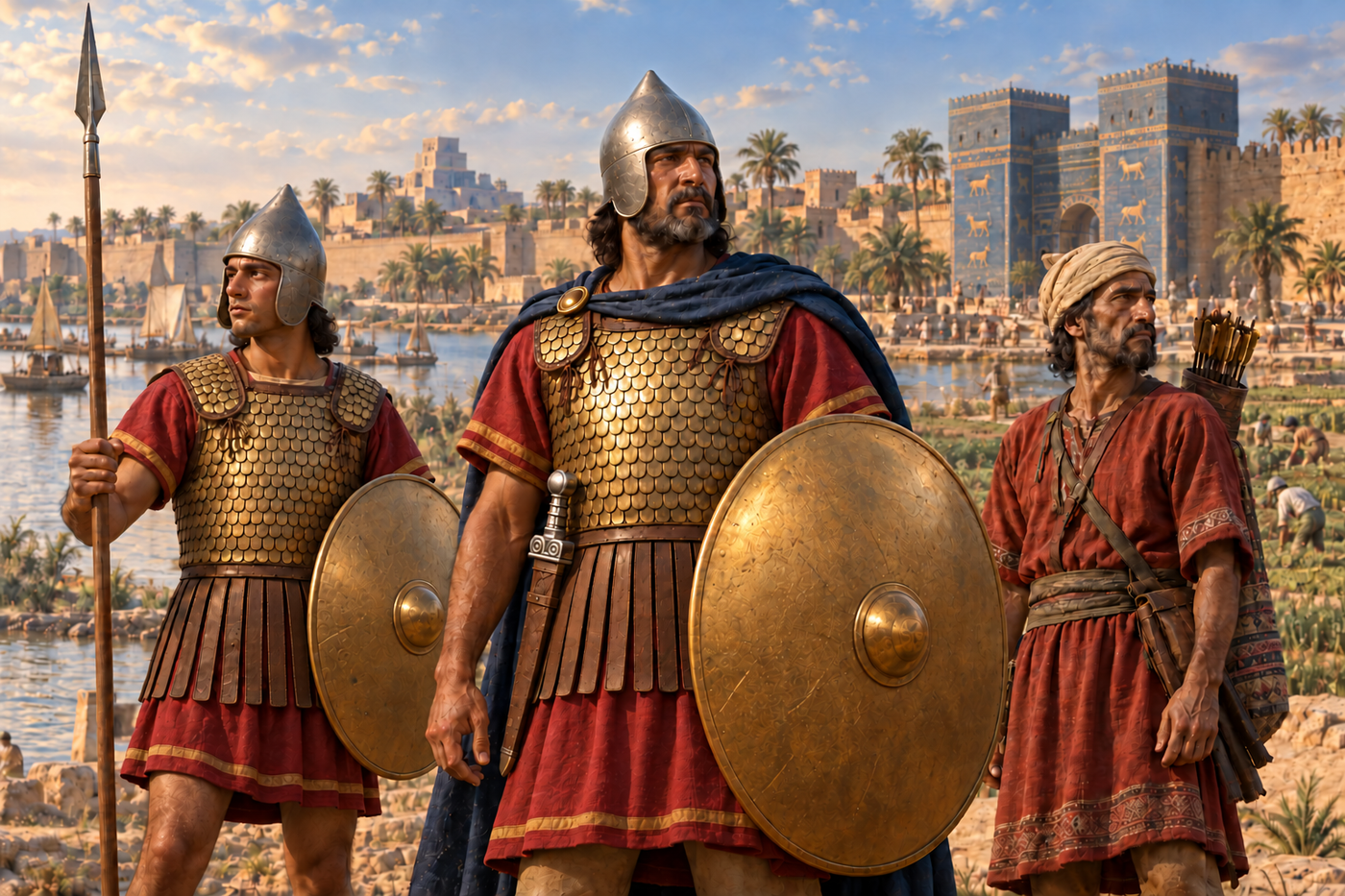
In the autumn of 331 BC, Alexander approached Babylon after defeating Darius at Gaugamela. He brought his army forward ready for battle. Instead, the city's priests and leading men came to meet him with gifts and an offer of surrender. The resources of one of the greatest centres of the ancient world passed into his hands without a siege.
Mazaeus, who had fought for Darius, helped secure the settlement and became Alexander's governor of Babylonia. The conqueror also honoured Bel-Marduk according to the direction of the local religious specialists. Victory in the field was followed by a public accommodation with men whose authority and knowledge were essential to ruling the country.
A city on the Euphrates
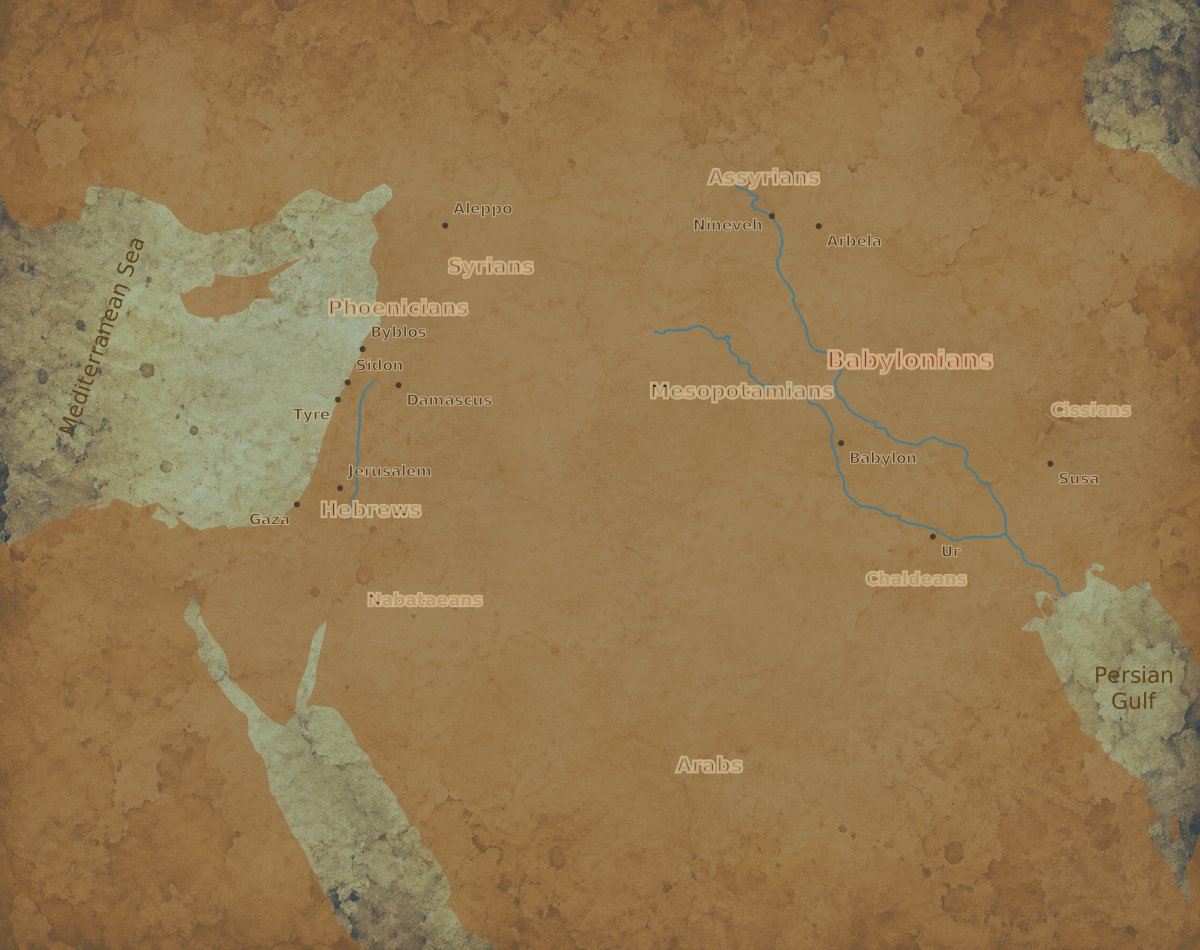
Babylon stood on the Euphrates within the irrigated plains of southern Mesopotamia. Its walls, gates, palaces and sanctuaries made an extraordinary impression on visitors. Beyond them lay the fields, canals and settlements whose production supported urban life and the revenues sought by successive kings.
The river was both a route and a task of government. Water had to be directed through a landscape in which agriculture depended on its controlled movement. Canals connected cultivation and transport, while changes to their courses could alter the fortunes of communities that relied on them.
Babylon's position also brought routes together. The Euphrates valley connected it with the west; roads towards the Tigris and the Diyala led into other parts of the empire. Merchants, officials and armies used a country whose prosperity had been cultivated through generations of labour.
The inheritance of kings
The city carried a royal past extending far beyond the Persian conquest. Hammurabi had made Babylon the centre of a kingdom in the second millennium BC. Much later, Nebuchadnezzar II transformed the imperial city with building works that gave its name a lasting association with splendour.
The Neo-Babylonian Empire reached across Mesopotamia and the Levant. Its campaigns could bring wealth to the capital while carrying disaster to defeated cities. Captives and displaced populations entered Babylonia, where their descendants became part of the region's social and economic life.
Monumental royal ambition rested upon a complex inhabited country. Palaces and temples required goods, labour and administration; landholders and institutions managed obligations recorded by scribes. The surviving clay documents preserve transactions that seldom entered the great narratives of conquest but sustained the world in which kings operated.
Cyrus and Marduk
Cyrus took Babylon in 539 BC, ending the reign of Nabonidus. His cylinder presented the conquest through a Babylonian account of legitimate kingship: Marduk rejected an unworthy ruler and chose Cyrus to restore proper order. The Persian king's name entered a tradition older than his own dynasty.
The text describes the new ruler's concern for sanctuaries and communities. It addressed the expectations through which a foreign sovereign could make himself acceptable to influential groups. Holding the city meant taking responsibility for a sacred and political inheritance.
Persian rule retained Babylon as a major imperial centre. Kings used its palaces and resources, while local institutions continued their work under changed authority. Rebellions showed that submission could be challenged, but the city remained important throughout the Achaemenid period.
The god's household
At the centre of religious life stood Bel-Marduk, whose great temple complex was known as Esagila. Its personnel maintained worship and the learned traditions attached to the sanctuary. Royal support for the god's house carried significance for the city as a whole.
A temple was an institution with land, revenues, dependants and obligations. Its fortunes could be affected by the demands of a king as well as by the prosperity of the surrounding country. Priests therefore had reasons to seek a favourable relationship with a new ruler and to secure recognition for the sanctuary's claims.
When Alexander entered Babylon, his promise of restoration and his participation in local rites addressed those expectations. The conqueror could present victory as the beginning of renewed benefaction. The specialists who directed his sacrifice supplied the knowledge through which he could perform the appropriate acts.
Scribes watching the sky
Babylonian scholars maintained records in which celestial observations stood alongside matters of earthly concern. Weather, river levels, commodity prices and political events could enter the same tablet. The sky offered signs bearing on the fate of rulers, and the record of a military crisis belonged within that learned undertaking.
A surviving diary for 331 BC places the battle of Gaugamela within this contemporary framework. It records the defeat and the desertion of Darius by his troops. The account gives the catastrophe a terse form, far removed from the elaborate battlefield scenes developed in later narratives.
For its writers, the change of ruler was an event to be understood through established categories of observation and omen. Alexander's victory entered the intellectual life of Babylon as well as its political history. Men who had recorded the skies under Darius continued to work when another king claimed the world.
Mazaeus changes allegiance
Mazaeus had served the Persian monarchy at high rank before the Macedonian invasion. His career linked Cilicia, Syria and the wider imperial leadership. At Gaugamela he commanded on the Persian right, where his forces pressed the Macedonian left before the collapse of Darius' army determined the outcome.
After the defeat, Babylon offered a place in which he could make a new settlement. Surrender protected the city from assault and provided Alexander with an experienced intermediary. The appointment of a former enemy to govern the province signalled the conqueror's willingness to use Persian aristocratic service.
Military and financial responsibilities were also assigned to other officers. Alexander distributed the means of control while retaining a man capable of helping the new regime operate within an established society. Mazaeus' survival in office joined personal adaptation to the continuity of provincial administration.
Men and resources for empire
Babylonia contributed to the military power of the Achaemenid kings. Arrian includes Babylonians under Bupares in Darius' army at Gaugamela, associated with other contingents assembled for the defence of the monarchy. The province's obligations extended beyond supplying the city in which a king might reside.
Revenues, food and transport were necessary to sustain armies moving through Mesopotamia. The same agricultural wealth that made the region attractive to rulers made its inhabitants vulnerable to demands from passing forces. An army's arrival could transform markets and place new pressure on stores and producers.
Local expertise mattered to those demands. Officials and scribes understood holdings, accounts and the institutions from which resources could be obtained. Conquest transferred the right to require service more easily than it supplied the knowledge needed to organise it.
Alexander returns
In 323 BC, Alexander came back to Babylon after years of campaigning farther east. The city became a meeting place for envoys, officers, recruits and preparations for further expeditions. His plans turned towards Arabia, with ships assembled and exploration already under way.
The river landscape again required his attention. Arrian describes work and journeys involving the Euphrates and the channels around Babylon. Managing water served both the country's productive life and the king's wider ambitions. A capital of conquest needed routes through which men, supplies and vessels could move.
The preparations were interrupted by illness. Alexander died in Babylon in June 323 BC, leaving the question of succession unresolved. A Babylonian astronomical diary recorded the king's death, placing the end of his reign within the same tradition of observation that had registered the fall of Darius.
The inheritance contested
After the death, the palace and the army became the setting for disputes over the monarchy's future. Commanders argued over the succession and divided provinces whose resources would support their own ambitions. Babylon remained a prize and a base rather than the secure centre of a united empire.
Seleucus eventually established his position in Babylonia. Driven away during the conflicts among the successors, he returned in 312 BC and rebuilt his power. Diodorus attributes his reception in part to the goodwill he had cultivated while governing the country before his departure.
The city had received Cyrus, Darius and Alexander into a landscape of institutions older than their rule. Its learned men continued to copy and observe; its temples and households pursued their claims under new sovereigns. Babylon's history endured through the victories that made conquerors famous and the succession struggles that followed their deaths.
Sources
Contemporary documents and ancient narratives
- Babylonian Astronomical Diary for 331 BC, translation and commentary.
- British Museum, astronomical diary mentioning Alexander's death.
- Arrian, Anabasis, III.16, III.8 and VII.17–28.
- Diodorus Siculus, Library of History, XIX.90–92: Seleucus' return.
Archaeology and historical studies