






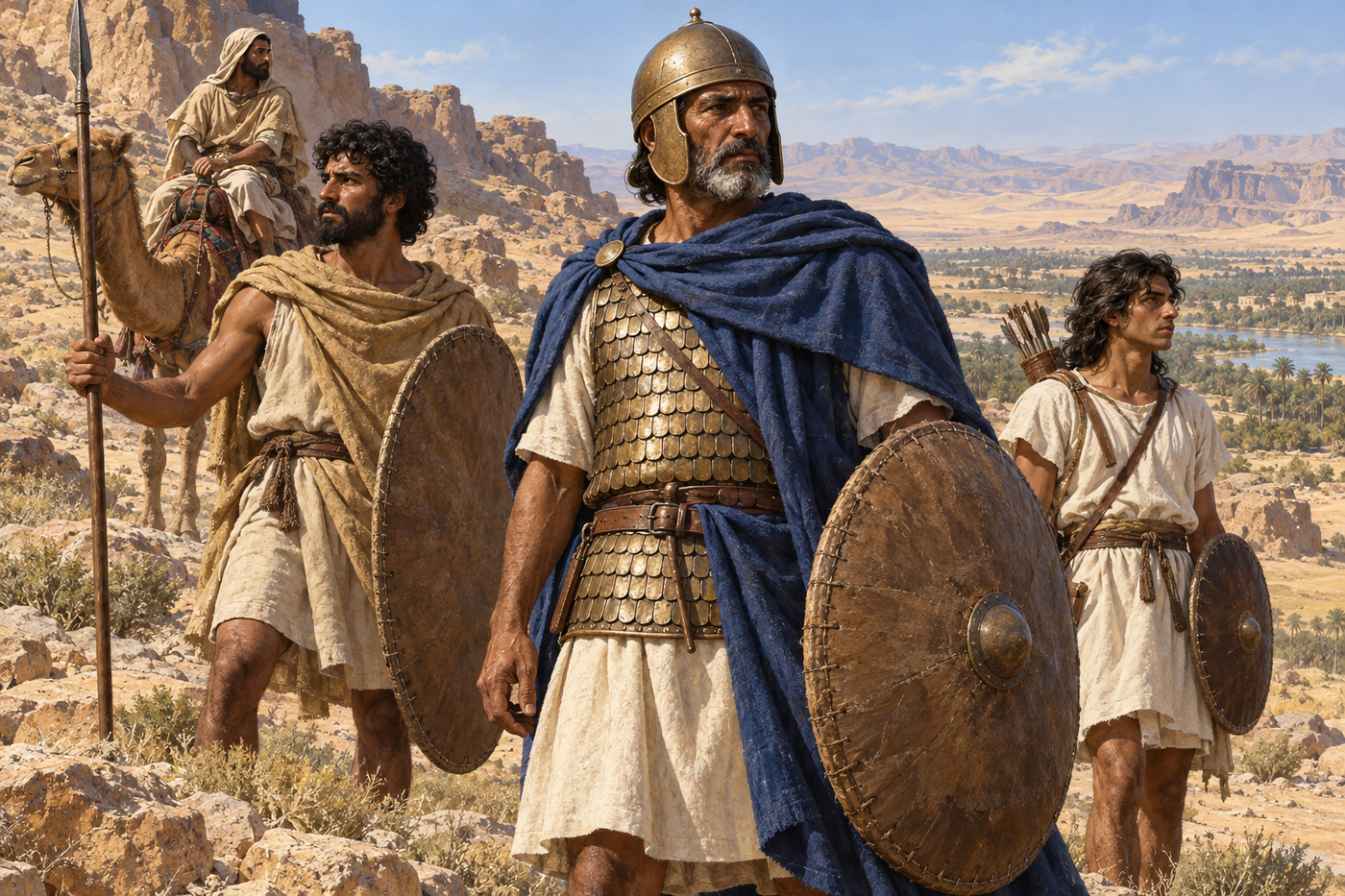
Arabs
The campaign Alexander never began
In Babylon in 323 BC, Alexander prepared ships for a new undertaking against Arabia. Explorers had begun to investigate the shores of the Persian Gulf, and reports described islands, harbours and the wealth of aromatic plants. The king who had returned from India was again looking beyond the limits of the country he controlled.
His death stopped the expedition before it began. Arabia remained an ambition rather than another completed conquest. Yet Arab communities were already familiar participants in the world he had overturned: guides and allies on imperial routes, suppliers of precious resins, pastoralists, traders and soldiers whose knowledge of difficult country could make an agreement more useful than an invasion.
Several worlds across a peninsula
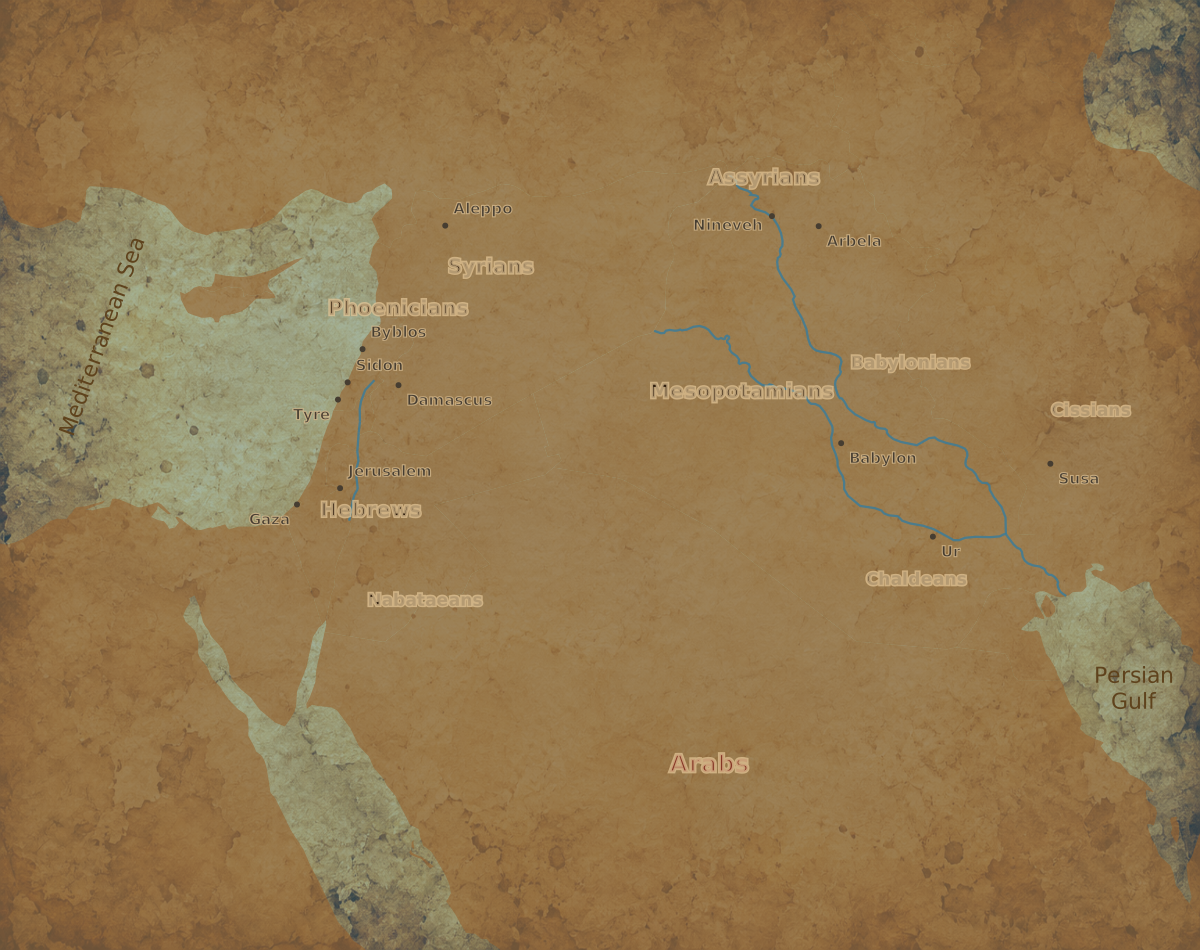
The lands described as Arabian stretched across very different environments. Northern deserts and oases connected the Levant and Mesopotamia with routes leading south. The Persian Gulf linked coastal settlements with maritime exchange. Farther south-west, agricultural kingdoms supported cities, temples and written traditions within the landscapes of present-day Yemen.
Mobility was an important part of life in the arid interior. Camels and sheep could be moved between grazing grounds, while knowledge of wells and stored water made otherwise forbidding routes usable. A community's security might depend on being able to leave a threatened place with its people and herds.
Settled agriculture and pastoral movement existed within a wider network of exchange. Traders needed access to water and safe passage; rulers and local leaders could draw wealth from the routes crossing their territory. The desert separated some communities while connecting others through the paths known to those who travelled it.
The incense kingdoms
In southern Arabia, kingdoms including Saba, Qataban, Ma'in and Hadramawt developed around agriculture, sanctuaries and trade. Their inscriptions recorded dedication and authority in related languages using the South Arabian script. Political competition took place among established societies capable of supporting substantial building and public religious life.
Frankincense and myrrh connected these lands with distant consumers. Their resins were burned in temple ceremonies and funerary rites in Egypt, Mesopotamia and the Greek world. The demand gave substances gathered in particular southern regions a value far beyond their place of production.
Transport required a chain of relationships. Goods could pass through several territories before reaching a Mediterranean port. Communities along the route participated as carriers, intermediaries or protectors, while others might threaten the same traffic. Wealth accumulated through control of movement as well as possession of the producing land.
Persia and the northern routes
The Achaemenid imperial term Arabaya referred to a northern region rather than to the whole peninsula. Persian dealings with Arab leaders were shaped by the routes between Egypt, the Levant and Mesopotamia. Control could involve agreements and obligations rather than the same administration imposed in a settled provincial centre.
Herodotus describes Cambyses securing an arrangement with an Arab ruler before marching against Egypt. Water was supplied for the crossing, making local cooperation part of the Persian invasion. The empire's army depended on knowledge and resources held by people along its route.
Arab soldiers also entered Persian service. In the account of Xerxes' expedition, their bows and belted mantles distinguish them within the great catalogue of peoples. Their participation placed men from arid country in an imperial campaign far from the places where their skills and connections had first acquired value.
The desert as a refuge
The Nabataeans became particularly important among the northern Arabian communities. Diodorus describes them in the early wars of Alexander's successors as herders and traders, some handling frankincense, myrrh and other valuable goods brought from the south. Their wealth attracted the attention of rulers commanding much larger armies.
Water helped preserve their freedom of action. Concealed reservoirs supplied people who knew their positions, while pursuers risked thirst in country without dependable surface streams. Retreat could preserve a community's strength and draw an invader away from the supplies needed to maintain his army.
A defended rock also offered protection for people and possessions. Such a refuge could concentrate valuables and those unable to accompany every movement of the fighting men. Its security depended both on the strength of the approach and on the readiness of the community to respond when threatened.
The raid of Athenaeus
In 312 BC, Antigonus sent Athenaeus against the Nabataeans with a fast-moving force. The expedition sought plunder and exploited an opportunity when many of the fighting men were absent. It captured people and valuables before withdrawing.
The success did not last. The Nabataeans pursued and attacked the raiders at night, destroying much of the force and recovering what had been taken. Knowledge of the country and speed of response reversed an apparently profitable operation. A commander who had reached the target had still to bring his men and booty safely home.
Antigonus then sent his son Demetrius. The new expedition met a population already warned and prepared. Its outcome turned towards negotiation, gifts and hostages rather than the easy destruction of the community. The successors' armies had inherited Alexander's ambitions, but local conditions continued to set limits to what those ambitions could achieve.
The Gulf before the king
Alexander's own plans had focused on another approach to Arabia. At Babylon, ships and crews were assembled for operations through the waterways towards the Gulf. Arrian connects these preparations with the king's desire for further territory and with reports that Arabia offered opportunities comparable to the prosperous Phoenician coast.
Exploration preceded conquest. Archias reached Tylos, the island associated with modern Bahrain; Androsthenes investigated another part of the coast. Hieron of Soli received the most ambitious instructions, to sail around the peninsula towards Egypt, but returned without completing them.
The voyages expanded information while revealing the scale of the undertaking. Shorelines could be surveyed a little at a time, and a report of useful anchorages did not supply complete knowledge of the country behind them. The distance between an imperial intention and a practicable campaign remained considerable.
Gods, gifts and authority
Arabian religious life belonged to the same diversity as its political landscape. Southern kingdoms maintained their own deities and sanctuaries, with dedications through which individuals and communities made their relationships with divine power visible. Sacred institutions could gather wealth and help express the standing of rulers.
Greek reports translated unfamiliar beliefs into their own divine names. Arrian relates a tradition that Alexander associated Arabian worship with Uranus and Dionysus. That account made the region part of a story about the king's heroic ambitions, joining another prospective conquest to the divine comparisons surrounding his reign.
For local leaders, authority also operated through visible generosity and obligation. Gifts could establish a relationship with a stronger neighbour or secure the withdrawal of an army. An agreement might preserve the people and resources upon which future independence depended.
Freedom beyond a victory
The events of 312 BC followed Alexander's lifetime, but they brought his former commanders into direct conflict with communities he had not conquered. The Nabataeans defended their possessions, used the desert's resources and negotiated when negotiation offered an advantage. Their success depended on coordinated action rather than on matching an imperial army in every kind of battle.
Across Arabia, towns, oases, sanctuaries and mobile households remained connected with the great states surrounding them. The demand for incense reached distant temples; a northern ruler's agreement could open an army's road; a coastal voyage could carry reports back to Babylon.
Alexander's unfinished fleet belongs to that history of encounters. His preparations made Arabia a new horizon of conquest, but his death left the project to imagination. The people beyond that horizon continued their own contests over routes, herds, water and the wealth passing between them.
Sources
Ancient narratives
- Diodorus Siculus, Library of History, XIX.94–100.
- Arrian, Anabasis: VII.19; VII.20.
- Herodotus, Histories, III.4–9 and VII.69.
Historical and museum studies
- “Arabia i. The Achaemenid Province Arabaya”, Encyclopaedia Iranica.
- National Museum of Asian Art, Caravan Kingdoms: Yemen and the Ancient Incense Trade.
- Metropolitan Museum of Art, Arabian Peninsula, 1000 BC–AD 1.
- François Sabbathier, Dictionnaire pour l'intelligence des auteurs classiques grecs et latins, notice on the Nabataeans.