






Part I – The Imperial Idea
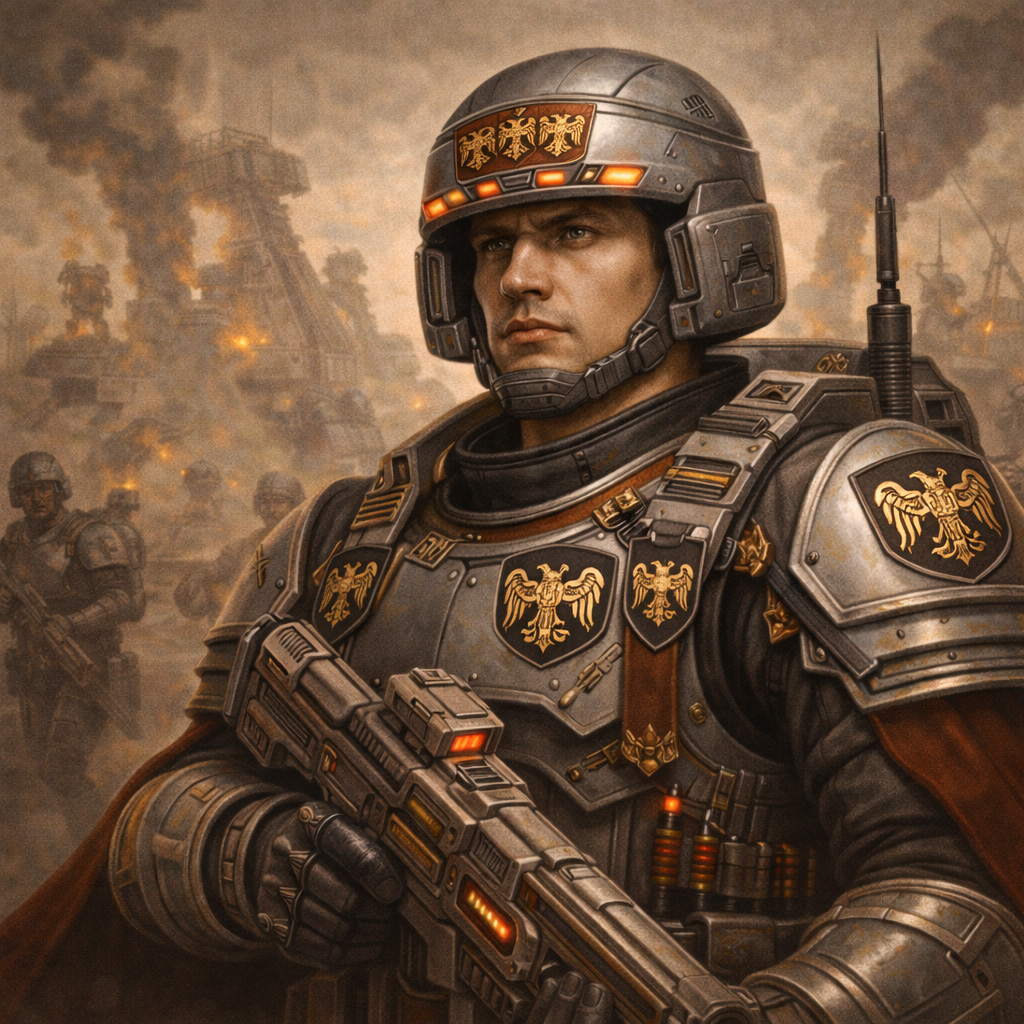
The Supreme Empire is not merely a state. It is a civilizational machine built on the conviction that humanity is strongest when ordered beneath a single hierarchy. Where lesser realms see borders, the Empire sees unfinished administration. Where rivals see independence, it sees inefficiency awaiting correction.
Its core myth begins on Tetrapolis, cradle of imperial legitimacy and seat of the Emperor. From there emerged the doctrine that endless conflict between human powers could be transformed into productive competition if all accepted one final authority above them.
The Empire therefore unites opposites. It prizes discipline yet tolerates rivalry. It rewards ambition yet punishes disobedience. It glorifies conquest while presenting conquest as the path to peace. To enemies this appears hypocrisy. To imperial thinkers, it is realism.
Citizens are taught that order is mercy. Roads, law, stable currency, secure trade, technological progress, and protection from chaos are offered as proof that imperial rule benefits even those who resisted it yesterday.
Whether this vision is noble mission or magnificent self-justification depends largely on whether one speaks from the palace—or from the conquered frontier.
Part II – Rule Through Rival Powers
The Empire does not eliminate internal competition. It organizes it. Noble houses, military orders, commercial blocs, frontier clans, and political factions all struggle for prestige, contracts, governorships, and the right to shape newly opened worlds.
This rivalry is not considered a flaw but a source of strength. Ambitious powers innovate faster when competing. Generals fight harder when victory brings promotion. Merchant dynasties invest more aggressively when profit can elevate a family for generations.
Yet competition has strict limits. No faction may challenge the imperial center itself. When disputes threaten systemic stability, the Emperor intervenes through law, force, or selective favor. The message is clear: contend fiercely beneath the throne, never against it.
On frontier planets, this creates a distinctive pattern. Multiple imperial actors pursue overlapping agendas, form temporary alliances, sabotage one another, and race to claim resources or local loyalties—while all still speaking in the name of one Empire.
The result can be dynamic, brutal, and astonishingly effective. It can also produce disasters when rival ambition outruns coordination.
Part III – The Stages of Conquest
Imperial expansion usually follows recognizable phases rather than a single moment of victory. First comes military entry: landings, orbital strikes, seizure of strategic sites, and rapid attempts to break organized resistance before local powers can unify.
Once momentum is established, human factions on the target world are offered a choice. Submit, retain status under imperial law, and gain access to larger systems—or resist and face progressive destruction. Many rulers decide loyalty is cheaper than heroism.
Non-human populations are treated under harsher doctrine. Officially, dangerous or incompatible species are to be defeated, confined, studied, or displaced. In practice, policy varies with circumstance and usefulness.
After major resistance ends, the real work begins. Taxes are assessed, roads and ports secured, trade standardized, local elites reorganized, and productive sectors tied into imperial supply chains. Garrisons replace expeditionary armies. Administrators follow conquerors.
If a world becomes stable, profitable, and politically reliable over time, it may eventually advance to direct high-level oversight under an Imperial Avatar. Until then, conquest remains incomplete no matter how many banners have fallen.
Part IV – Humans, Non-Humans, and Imperial Pragmatism
Imperial doctrine distinguishes sharply between humanity and everything else. Human societies, even hostile ones, are usually seen as recoverable branches of a greater family. They may be conquered, punished, reorganized, and taxed—but they can also be integrated into the imperial project.
Non-human peoples face a colder logic. Official policy often describes them as threats, curiosities, labor sources, or biological subjects rather than sovereign civilizations. In theory, dangerous species are to be broken and confined to reserves where they can be monitored and studied.
Reality is less tidy. Distance from the core, local shortages, military necessity, and economic value all bend doctrine. Peaceful non-humans in remote regions may be ignored for generations. Useful auxiliaries may be tolerated unofficially. Genetically close or culturally assimilable populations often receive treatment far different from openly hostile alien powers.
This flexibility allows the Empire to function across wildly different worlds. It also ensures that imperial morality appears selective wherever convenience is visible.
To administrators, that is adaptation. To critics, it is prejudice disguised as policy.
Part V – Tribute, Trade, and Extraction
Conquest is expensive, and the Empire expects conquered worlds to repay the cost of joining history. Once order is established, planets begin paying the imperial tithe: taxes in resources, manufactured goods, strategic materials, military service, or financial transfers depending on local capacity.
In return, worlds are connected to larger commercial networks. Standardized currency, regulated contracts, navigational systems, technical knowledge, and access to interstellar markets can generate prosperity impossible in isolation. Many provincial elites grow richer under imperial rule than they ever were before it.
Infrastructure follows profit. Roads, ports, depots, relay systems, mining complexes, and urban expansions are built where returns justify investment. Regions deemed unproductive may wait decades for the same attention.
This creates the central bargain of empire: wealth in exchange for autonomy, opportunity in exchange for obedience. Some worlds embrace it. Others comply while dreaming of revolt.
The Empire does not need every subject to love it. It only needs enough of them to profit from its continuation.
Part VI – The Imperial Avatar
When a world becomes sufficiently stable, wealthy, and strategically important, it may receive the highest form of imperial governance: an Avatar of the Emperor. This is not a ceremonial governor, but the Emperor made locally present through advanced cloning, memory engineering, and sovereign authority.
An Avatar is grown from the imperial genetic line and shaped with the memories, decision frameworks, and governing instincts of the original Emperor of Tetrapolis. Where previous Avatars of that world existed, selected memory archives may also be integrated, creating continuity across centuries.
Regenerative technologies can extend an Avatar’s life for millennia under favorable conditions. Cognitive augmentation, protective systems, and secure external memory storage make them more than human in practical terms, though they remain politically framed as fully legitimate embodiments of imperial will.
Once installed, local clans lose significant autonomy. Major disputes no longer end through regional bargaining but through direct sovereign arbitration. What was frontier politics becomes internal administration.
To loyalists, the Avatar is civilization perfected. To ambitious local rulers, it is the moment history closes above their heads.
Part VII – Why Damocles Is Different
Damocles has never followed the normal imperial script. What should have become a profitable frontier world instead turned into a prolonged fracture zone where conquest succeeded only partially and peace never fully stabilized.
The first invasion shattered more than local resistance. Catastrophic losses during the landings, broken communications, and the fragmentation of imperial command prevented the swift consolidation seen on easier worlds. Local clans survived in strength, adapted to new realities, and preserved rival centers of power beneath nominal loyalty.
Since then, Damocles has remained too valuable to abandon and too unstable to normalize. The Lioners dominate much of the formal imperial structure, but Swolfs, Taiping, guild powers, frontier peoples, sects, and regional dynasties all retain enough autonomy to complicate any attempt at centralization.
New threats worsened the problem. The spread of the Fukai, the rise of the Bug Army, recurring rebellions, contested trade routes, and the persistence of ancient rivalries consume resources that might otherwise build true imperial order.
For these reasons, Damocles is nowhere near ready for an Imperial Avatar. Some strategists in distant circles speak instead of something harsher: a second invasion designed not to negotiate with the existing balance, but to replace it entirely.
Part VIII – The Imperial Presence on Damocles
From the perspective of Damocles, the Supreme Empire is represented less by distant Tetrapolis and more by the coalition forces operating on the ground. Here, “imperial power” means the combined strength of clans and factions that accepted imperial allegiance after the conquest.
Its armies therefore are highly mixed. Standard imperial troops serve beside Lioners formations, Swolfs specialists, local auxiliaries, guild contractors, frontier levies, and subject contingents drawn from many peoples. Uniform doctrine exists, but battlefield reality is often improvised and political.
This diversity can be a strength. Different forces bring unique terrain knowledge, technologies, traditions, and tactical methods impossible for a purely centralized army to replicate. When coordinated well, the coalition is formidable.
It is also fragile. Rival commanders distrust one another, supply priorities become political battles, and local ambitions frequently distort strategic planning. A campaign may fail not because the enemy was stronger, but because allies wanted different outcomes.
Thus on Damocles, the Empire appears as both a mighty machine and an uneasy compromise—powerful enough to shape the continent, divided enough to leave it unfinished.
Part IX – Named Figures
Emperor Aurelian Prime of Tetrapolis is the distant sovereign from whom all imperial legitimacy flows. Whether seen as enlightened architect, perfected autocrat, or carefully curated institution embodied in one man, his authority binds rival houses into a single system. Few on Damocles will ever see him, yet countless lives are shaped in his name.
High Marshal Cassian Vortigern commands the current imperial coalition on Damocles. Veteran of multiple frontier theaters, he is respected for imposing discipline on forces that would rather pursue their own agendas. He knows victory on this world depends less on defeating enemies than on forcing allies to cooperate long enough to matter.
Part X – The Supreme Empire Today
The Supreme Empire remains one of the greatest powers imaginable: technologically advanced, administratively sophisticated, militarily formidable, and capable of coordinating resources across worlds that would consider themselves civilizations alone.
Its greatest strength is scale. Losses that would destroy smaller states can be absorbed. Failures on one frontier may be compensated by prosperity elsewhere. Rival elites who might collapse lesser systems are turned into engines of competition under imperial supervision.
Yet scale also creates distance, inertia, and arrogance. Peripheral suffering can vanish inside vast ledgers. Ambitious factions mistake private gain for public strategy. Worlds pacified on paper may remain unstable in reality for generations.
Damocles embodies these contradictions perfectly. It has been conquered, but not mastered. Integrated, but not normalized. Claimed, but not fully possessed.
If the Empire chooses renewed commitment, the planet may yet be brought into true order. If it hesitates—or if deeper crises emerge elsewhere—Damocles may become proof that even star-spanning systems have limits.
Part XI – Damocles and the War Beyond the Stars
To understand why the Empire cannot simply abandon Damocles, one must look beyond the planet itself. Damocles is not only a troubled frontier world—it is a strategic line in a far greater intergalactic struggle against the remnants and return of the Celestial Peace.
The old priesthood on Damocles was never fully destroyed. Hidden sects, relic networks, secret refuges, and surviving technologies continue to operate in shadow. Assassinations, artifact thefts, sabotage, and sudden appearances of impossible weapons remind imperial authorities that the enemy beneath the soil may be as dangerous as any force descending from the sky.
Worse still, the Celestial Peace exists beyond Damocles. Across distant regions of space, its surviving powers, successor states, allied species, and ideological heirs remain a long-term threat to imperial supremacy. Every recovered relay, every reopened route, and every rediscovered world may strengthen one side or the other.
In that larger war, Damocles occupies a vital position. Its resources, industries, hardened warrior cultures, and geographic location make it an ideal fortress-world, logistics center, and staging ground for future campaigns. Properly secured, it could become the Empire’s spearpoint against renewed Celestial expansion.
This is why the struggle for Damocles matters so much. To locals, it is home. To ambitious clans, it is a prize. To rebels, it is unfinished history. But to the Supreme Empire, it may become something greater still: the bridgehead from which the next age of war begins.