






Part I – Born of Forgotten Experiments
The distant origins of the Gotuz and Smogu lie not in nature, but in design. Long ago, the elves sought to replicate fragments of lost Atlante sciences whose principles they only partially understood. Among many dangerous experiments emerged new servant species shaped for labor, war, and utility.
What began as accident soon became policy. The first orc strains proved strong, resilient, fast-breeding, and remarkably suited to dangerous work that their creators preferred not to perform themselves. Mines, fortifications, siege works, and brutal frontier campaigns all made use of them.
They were employed especially heavily during the ancient wars against the Cinans. In those conflicts, expendable strength had enormous value. Orc hosts were thrown into tunnel assaults, attritional battles, hazardous engineering tasks, and the bloodiest phases of campaigns where losses among more valued troops were considered unacceptable.
Alongside them came smaller goblin strains designed with greater cunning and adaptability. These creatures served as assistants, handlers, scavengers, logisticians, and opportunists able to function where brute force alone was insufficient.
Over ages of collapse, migration, and forgotten empires, some of these created peoples escaped control or were abandoned entirely. In Botaï, isolated populations evolved for millennia without masters. There, shaped by harsh land and endless violence, they became the Gotuz and Smogu known today.
Part II – The Gotuz
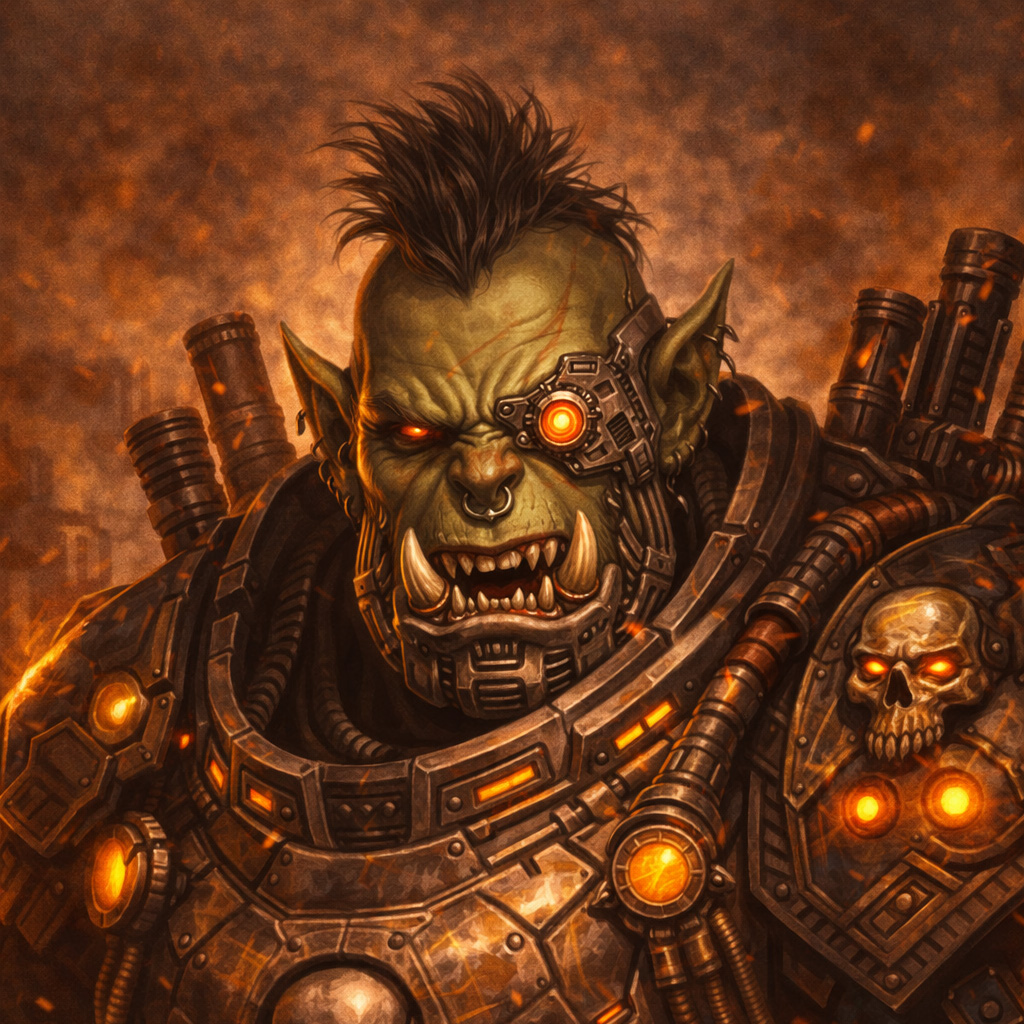
The Gotuz are the dominant orc breed of Botaï: massive, brutal, and built for direct violence. They are broader, denser, and physically more imposing than the orcs still used elsewhere by elven powers. Where their distant cousins resemble engineered soldiers, the Gotuz resemble living battering rams.
Their strength is unquestionable. A mature Gotuz can tear through crude barricades, overpower most human warriors in close combat, and endure wounds that would cripple smaller beings. In raids or sudden charges, they are terrifying opponents.
Yet this power comes with limits. Their lives are relatively short, long-term planning is weak among many tribes, and internal violence destroys as much potential as enemy action. Ambitious leaders are often challenged before their victories can be consolidated.
Gotuz society tends to revolve around immediate dominance, visible courage, and access to food, mates, and loot. Authority belongs to those who can seize it and keep it. Mercy is respected less than strength, though practical chiefs know when fear alone becomes wasteful.
To outsiders, they seem little more than monsters. But beneath the brutality lies the shattered legacy of a people bred for war and left to define itself in a world that expected only violence from them.
Part III – The Smogu
The Smogu are the smaller cousins of the Gotuz, descendants of goblin strains originally designed for agility, improvisation, and practical intelligence rather than battlefield dominance. Where the Gotuz were made to break obstacles, the ancestors of the Smogu were made to solve them.
Physically, they are weaker, lighter, and far less imposing than the orcs they often live beside. In open combat, a single trained human soldier may cut through several careless Smogu. For this reason, they rarely seek glory through direct confrontation.
What they lack in strength, they compensate for in cunning. Smogu are natural scavengers, mechanics, trappers, traders, animal handlers, and thieves. They notice what others overlook, salvage what others discard, and survive in places stronger peoples consider worthless.
Their life span is generally longer than that of the Gotuz, allowing some individuals to accumulate considerable knowledge over decades. This makes elder Smogu valuable as advisors, quartermasters, poison-makers, and keepers of grudges remembered long after Gotuz chiefs are dead.
Many outsiders dismiss them as vermin. Those who do often discover too late that a weak enemy with patience, numbers, and ingenuity can be more dangerous than a strong fool.
Part IV – Life in the Reserves
The reserves of Botaï are lands granted without respect and watched without compassion. There the Gotuz and Smogu live in uneasy semi-freedom, permitted to exist so long as they remain contained and divided.
Conditions are harsh. Food is uncertain, resources limited, and violence common. Tribes raid one another for territory, animals, tools, and captives. Seasonal hardship can kill as effectively as war. What little stability exists is usually local and temporary.
Relations between Gotuz and Smogu vary from tribe to tribe. Some warbands function through rough cooperation: Gotuz providing strength, Smogu providing craft and cunning. Elsewhere they exploit or prey upon one another with enthusiasm.
When groups stray too far beyond the reserve borders, Botaï riders, militias, or hired hunters often respond with lethal force. Entire bands can vanish without record. This constant pressure ensures that outward expansion remains difficult and unity even harder.
Yet the reserves also preserve something dangerous: numbers, anger, and generations raised knowing that the wider world fears them before it knows them.
Part V – Named Figures
Gorvak Bonebreaker is the largest Gotuz war-chief of his generation and the terror of several reserve frontiers. Scarred from a hundred victories and twice left for dead, he dreams of smashing the border fences, seizing herds, and carving a kingdom from lands that once hunted his kind.
Skritch Cog-Crown is a Smogu inventor-king whose workshops produce ramshackle artillery, armored wagons, traps, powder engines, and devices that are either brilliant or catastrophically unstable. Often both at once.
Magra Wolf-Mother leads mixed hunting packs of Gotuz and Smogu bound by personal loyalty rather than tribe. Master of beasts and ambush warfare, she has survived long enough to become a legend in territories where legends usually die young.
Urgash the Voice of Ash is a prophet who preaches that Gotuz and Smogu were not born to rot in reserves but to inherit the lands stolen from them. His followers mix religious frenzy with disciplined preparation, making them more dangerous than ordinary raiders.
Rikket Blackcoin is a mercenary chieftain who sells tribal fighters to outside powers as guards, shock troops, miners, or deniable killers. He claims gold can achieve what rage never has.
Part VI – Gotuz & Smogu Today
Most years, the Gotuz and Smogu remain divided by hunger, rivalry, and the daily struggle to survive. This fragmentation reassures their neighbors, who prefer to think the reserves contain only scattered violence rather than a future threat.
But from time to time, a rare leader gathers enough tribes, weapons, beasts, fuel, and scavenged machinery to form something far more dangerous: a true horde. Under such banners, workshops run without rest, old stockpiles are unearthed, stolen engines are repaired, and crude fleets of armored wagons, siege towers, and improvised war machines roll toward the open lands.
When this happens, the ordinary clans of Botaï are often unable to stop it alone. Rival tribes flee, submit, or are crushed in detail. Caravan routes collapse. Border towns burn. Panic spreads faster than any rider can carry warning.
Then the wider powers are forced to intervene. Imperial garrisons, coalition armies, and hired mercenaries must assemble to break the advancing mass before it grows beyond control. Such campaigns are costly, brutal, and often remembered long after the horde itself is shattered.
So the Gotuz and Smogu are treated as backward and disposable—until the day they unite. On that day, everyone remembers why they were feared in the first place.