




Part I – Heirs of the Northern Kingdom
The Voltrmens trace their ancestry to the ancient Kingdom of the North on Wanyue, a harsh realm of cold seas, mountain halls, and warrior dynasties whose memory still survives in song, oath, and bloodline. Long before the modern empires of Damocles, their forebears were already known as navigators, miners, and stubborn defenders of lands others considered too unforgiving to matter.
When the great portals opened during the first human passage to Damocles, many peoples crossed into a new world. Among them were northern clans seeking space, resources, and freedom from older rivalries. They settled the western shores of Damocles, where rugged coastlines, iron-rich mountains, and storm-lashed waters reminded them of the lands they had left behind.
There they built fortified harbors, timber halls, cliff citadels, and road networks linking coast to mine. Their settlements became gateways between sea trade and inland extraction, giving them influence greater than their numbers.
Unlike later arrivals who tried to recreate distant courts, the Voltrmens adapted quickly to local realities. They mixed old northern customs with what survival demanded on a frontier world. This flexibility helped them endure centuries of upheaval that destroyed many more refined societies.
By the time newer powers rose across Damocles, the Voltrmens were already ancient inhabitants of the west—weathered, prosperous, and deeply rooted in stone.
Part II – A People Apart
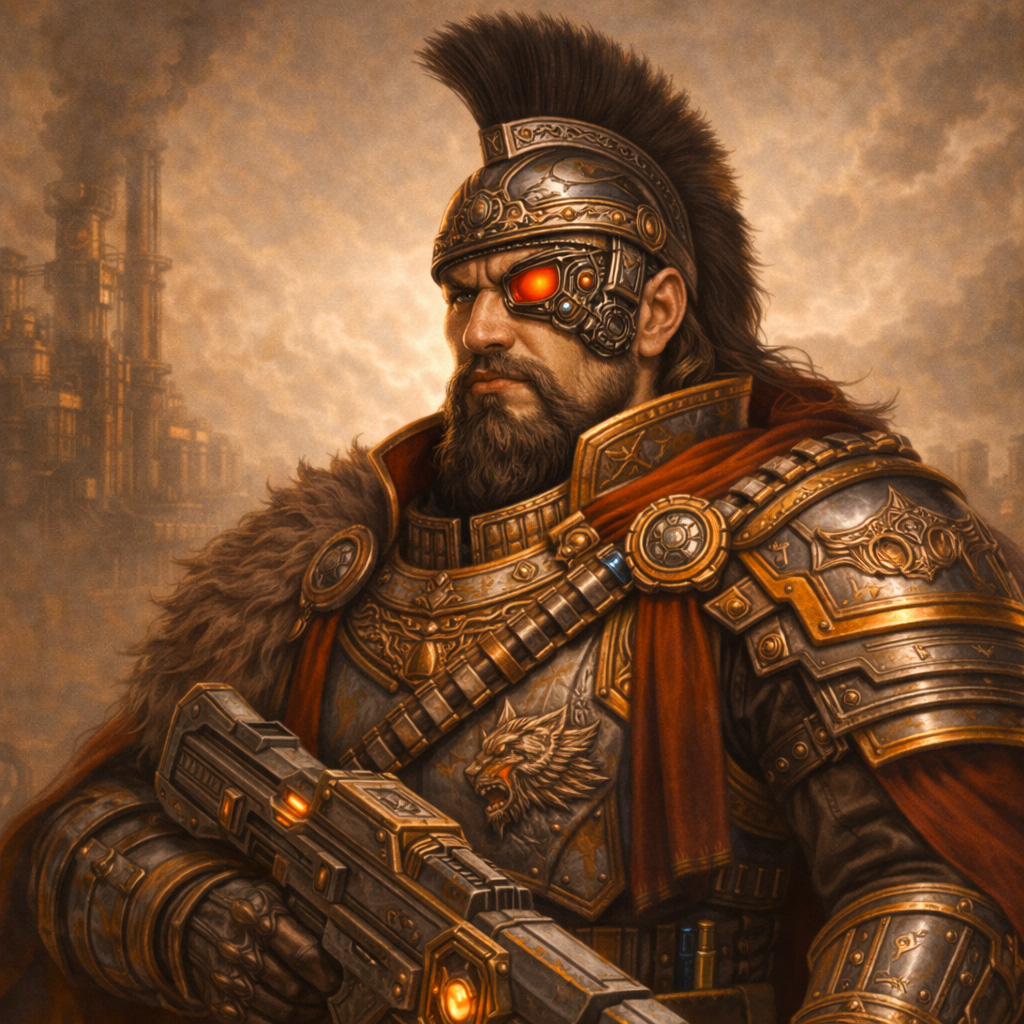
Despite their age on Damocles, the Voltrmens were rarely treated as fully equal by many other clans. Their distinct appearance, direct manners, and fiercely preserved customs marked them as different in courts that prized polished etiquette and carefully coded prestige.
They also worshipped old powers unfamiliar or suspect to others. While neighboring realms embraced newer doctrines or elaborate state cults, the Voltrmens continued to honor the Dragon God of the Forge and the memory of the mountain dwarves said to have taught sacred craft to humanity. To outsiders, such beliefs could seem provincial, archaic, or dangerously independent.
Their social habits reinforced this distance. Voltrmen leaders preferred blunt negotiation to ritualized flattery. Feasts mattered more than salons. Oaths spoken before witnesses carried more weight than elegant documents. Respect had to be earned visibly, not inherited quietly.
Economic rivalry played its part as well. Their mines, shipyards, and metalworking made them valuable partners but inconvenient competitors. Many powers preferred Voltrmen steel in their armories while keeping Voltrmen influence at arm’s length.
So the Voltrmens became something familiar in Damoclean politics: indispensable outsiders. Needed in war, courted in trade, yet rarely embraced without reservation.
Part III – The Forge Coast Civilization
Over centuries, the Voltrmens transformed the western coast into one of the most resilient regional civilizations on Damocles. Their cities were rarely the largest, but they were among the hardest to break. Built around natural harbors, cliff defenses, and access to ore routes, each stronghold was designed to survive siege as much as to prosper in peace.
Harbor towns linked maritime trade to inland production. Ships brought timber, grain, and luxury goods; caravans descended from the mountains carrying iron, coal, rare stone, and crafted metalwork. Wealth flowed through the ports, but always through communities that understood abundance could vanish with one bad season or one defeated fleet.
Road building became a Voltrmen specialty. Mountain tracks were widened into engineered passes, rope bridges replaced by stone spans, and supply depots established where other peoples saw only wilderness. This logistical culture later made them invaluable allies in large-scale war.
Their reputation as builders matched their reputation as defenders. Coastal batteries, sea walls, layered gates, and fortress districts gave rise to an old saying: a Voltrmen city does not fall quickly, and if it falls at all it was already burning from within.
Though often dismissed as provincial by richer courts, the Forge Coast proved that durability can be a form of greatness.
Part IV – Faith of Stone and Fire
Religion among the Voltrmens is centered on labor, endurance, and transformation. At its highest level stands the Dragon God of the Forge, master of flame, metal, and disciplined strength. To shape raw ore into a blade, or chaos into order, is considered a sacred act reflecting divine will.
Alongside this worship survives deep reverence for the mountain dwarves of legend. Whether ancient allies, forgotten teachers, or purely mythic beings, they are honored as first masters of craft and guardians of hidden knowledge beneath the peaks. Many workshops keep shrines to both dragon and dwarf traditions side by side.
Smiths therefore occupy unusual status. They are not mere artisans, but custodians of inherited mysteries. A master forge-priest may bless weapons, arbitrate disputes, preserve genealogies, and advise war leaders on matters both practical and spiritual.
Warrior guilds also play an important role. Fighters often dedicate themselves to a hall, banner, or sacred forge whose symbols they carry into battle. Discipline, reliability, and the keeping of oaths are treated as religious virtues rather than simple military habits.
To outsiders, Voltrmen faith can seem austere. To believers, it is straightforward truth: stone endures, fire reveals, and weak metal must be reforged.
Part V – The Coming of the Lioners
The Imperial invasion changed Voltrmen history more than any event since the first migration from Wanyue. When the Lioners landed in the western territories, many local leaders did not see strangers descending from the stars. They saw a powerful people whose bearing, appearance, and martial culture echoed distant northern kin.
More importantly, the Lioners arrived as enemies of the Celestial order that many Voltrmens had long distrusted. Old grievances, cultural affinity, and practical opportunity combined quickly. Chiefs who might have resisted another invader instead offered alliance, supplies, and warriors.
This partnership was not based on equality, but it was mutually beneficial. The Lioners gained secure territory, industry, and disciplined manpower. The Voltrmens gained access to advanced military systems, new markets, and elevation within the emerging political order of Damocles.
Large portions of the western coast were gradually integrated into what became the Lioners Triumvirate. Local customs survived, many elites retained influence, and Voltrmen officers rose through imperial structures. Yet not all accepted this path.
In the harsher northern reaches, independent jarldoms and mountain communities remained outside direct control. Some trade with the Triumvirate, some cooperate when threatened, and some still regard all external authority as temporary weather that will eventually pass.
Part VI – Industry, War, and Divided Loyalties
Once integrated into the western power structure, Voltrmen industry became one of the engines of Lioners dominance. Their mines fed furnaces, their furnaces fed foundries, and their foundries armed armies. Armor, artillery, transport frames, engines, hull plating, and siege equipment poured from workshops that rarely slept.
Generations of Voltrmens found wealth and status through this system. Engineers became indispensable. Merchant houses prospered. Military families earned land and titles through service in imperial campaigns. Entire cities expanded around contracts tied to war production.
But success carried a cost. Some traditions weakened under court influence and imported values. Younger elites spoke more of imperial advancement than ancestral duty. Rural clans complained that their sons died in distant wars while nobles in polished halls claimed the glory.
This created divided loyalties still visible today. Loyalists argue that alliance with the Lioners brought security and greatness impossible in isolation. Traditionalists answer that prosperity purchased dependence is only a refined form of submission.
The Voltrmens are therefore not split between love and hatred of the Triumvirate, but between two competing truths—both of which contain enough evidence to endure.
Part VII – Named Figures
Forge-Lord Magnus Haldor is the wealthiest industrial magnate of the western coast and the strongest Voltrmen ally of the Lioners. His foundries arm half the frontier, his caravans cross every major pass, and his advice reaches courts that publicly pretend not to need it. He believes power belongs to those who can build it.
Jarl Eirik Stormvein rules one of the northern independent jarldoms beyond direct Triumvirate control. Stern, pragmatic, and fiercely protective of local autonomy, he trades with the Lioners when useful and blocks them when necessary. Many traditionalists see him as proof the old ways still breathe.
Lady Astrid Ironshield became a living legend during repeated frontier campaigns where she held breached fortifications long enough for entire populations to evacuate. Decorated by Lioners generals and praised in village songs alike, she is one of the few figures respected across nearly every factional divide.
Master Engineer Torvald Grimm designs heavy engines, fortress guns, and armored systems used throughout the west. Brilliant and notoriously difficult, he treats politics as an obstacle between himself and better machines. Several rulers tolerate insults from him because his weapons keep them alive.
High Smith Runa Emberhand is a forge-priestess of immense authority whose judgments can settle disputes between clans more effectively than armed patrols. She teaches that steel without honor eventually turns against its wielder.
Leif Marren is a young merchant reformer seeking wider Voltrmen influence beyond serving Lioners priorities. He advocates independent trade leagues, naval expansion, and stronger civic institutions so his people become decision-makers rather than indispensable assistants.
Part VIII – Voltrmens Today
Today the Voltrmens are richer, better armed, and more influential than at any earlier point in their long history. Their ports matter, their metals matter, their engineers matter, and no serious western strategy can ignore them.
Yet success has not answered the oldest question of their identity. Are they equal partners within the Lioners order, or simply the most respected subjects inside it? The debate runs through noble houses, worker districts, temples, and frontier halls alike.
Some see a future of deeper integration, shared greatness, and continental leadership. Others want renewed independence built on industry and maritime power. Many ordinary citizens simply want stability, wages, and fewer sons sent to die for someone else’s grand design.
What no one disputes is this: the days when the Voltrmens could be dismissed as peripheral outsiders are over. They helped forge the west as it exists today. If that west ever breaks apart, they may be the ones who decide what replaces it.