




Darkholm, The Fallen Kingdom of Stone
Long before it became a realm of chaos, savagery, and fractured power, Darkholm stood as one of the greatest achievements of dwarven civilization, a vast subterranean kingdom carved deep within the bones of the mountains. It was not merely a stronghold, but a monument to mastery, a place where stone itself had been shaped into towering halls, endless forges, and labyrinthine tunnels that stretched far beyond what any outsider could comprehend. Every wall, every arch, every corridor bore the mark of dwarven precision, a testament to a people who had bent the mountain to their will and transformed it into a living empire of iron and fire.
To those who walked its halls in those ancient days, Darkholm was a symbol of order, of control, and of unchallenged dominance. The forges burned without rest, the mines reached ever deeper into the earth, and the wealth extracted from its depths flowed endlessly into the coffers of its rulers. Steelhalls, then the ruling power of this domain, stood at the height of its influence, commanding not only the resources of the mountains but the lives of those who labored within them.
Yet beneath this grandeur, beneath the illusion of prosperity and perfection, lay a foundation built not on unity, but on oppression. For countless generations, the dwarves had enslaved the native gnome populations of the mountains, exploiting their agility, endurance, and skill to push ever deeper into the veins of the earth. These gnomes, though intelligent and capable, were reduced to tools of production, their lives measured only by what they could extract, build, or maintain.
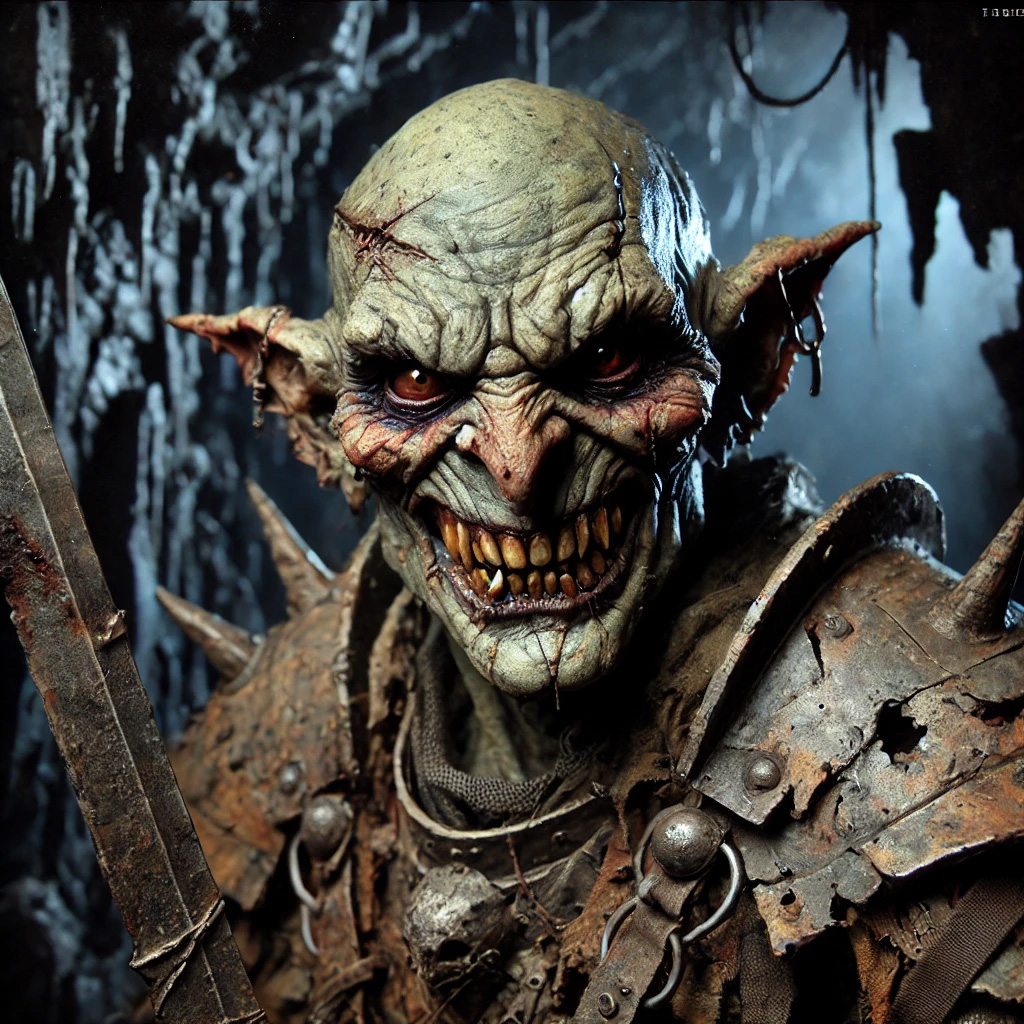
But even this was not enough to satisfy the dwarves’ hunger for expansion. Seeking to create a workforce that was both stronger and more resilient, they turned to darker methods. Orc slaves, acquired through trade with the elves, were forced into unnatural breeding with the gnomes, giving rise to a new race, the goblins. Born of manipulation and necessity, the goblins became the backbone of Darkholm’s industrial machine, stronger than gnomes, more adaptable than orcs, and entirely bound to the system that had created them.
Trolls, ancient inhabitants of the mountains, were not spared either. Captured and chained, they were reduced to beasts of burden, forced into the most brutal and punishing labor. Where the goblins dug and built, the trolls carried, crushed, and endured, their immense strength turned against their own survival.
Together, these enslaved races formed the unseen foundation of Darkholm’s power. They dug its tunnels, fed its forges, and built its wealth, all while the dwarves stood above them, masters of a system that seemed unbreakable. For a time, it truly was. Darkholm grew, expanded, and thrived, its influence reaching far beyond the mountains.
But such systems do not endure forever. Beneath the weight of centuries of oppression, something began to change. Resentment took root, slowly at first, then spreading like a fire through dry timber. The dwarves, confident in their dominance, failed to see what was forming beneath them, a force not yet unified, not yet organized, but already inevitable.
Darkholm was not only a kingdom of stone and steel. It was a kingdom built on suffering. And suffering, when left to grow unchecked, does not remain silent forever.
The Great War and the Rise of the Enslaved Armies
When the Great War against Agramon erupted across the world, few realms were prepared for the scale of destruction that followed. Entire kingdoms burned, alliances shattered, and civilizations that had stood for centuries were brought to the brink of extinction. Yet within the mountains, Darkholm endured. Shielded by stone, sustained by its vast industrial network, and driven by the relentless output of its forges, it remained one of the few strongholds capable of resisting the tide of chaos.
The dwarves of Steelhalls, rulers of Darkholm at the time, responded not with desperation, but with calculated adaptation. They understood that survival in such a war required more than tradition, more than pride, it required numbers, resilience, and a willingness to use every resource at their disposal. And so, for the first time on such a scale, they turned fully to the enslaved populations that had long sustained their empire.
Goblins, bred for labor and endurance, were armed and armored, transformed from miners into soldiers. Trolls, once chained to the deepest tunnels, were unleashed upon the battlefield as living engines of destruction. What had once been a workforce became an army, and what had been tools became weapons. Under dwarven command, these forces were disciplined, structured, and integrated into a war machine that could absorb losses and continue advancing without hesitation.
The results were devastating. Time and again, the armies of Darkholm repelled the forces of Agramon, holding their ground where others faltered. The combination of dwarven engineering, fortified positions, and expendable yet increasingly capable troops allowed them to withstand assaults that would have shattered lesser realms. While the surface world was scarred and broken by the war, Darkholm emerged battered, but largely intact, its forges still burning, its production uninterrupted.
Yet within this apparent success lay the seeds of its eventual downfall. War is a teacher, and those who survive it are never the same as those who entered it. The goblins and trolls, once seen as nothing more than extensions of dwarven will, had now learned the art of war. They had fought, bled, adapted, and endured. They had seen the weaknesses of their masters, understood their strategies, and experienced what it meant to stand not as laborers, but as warriors.
More importantly, they had begun to change. No longer isolated in mines or confined to endless labor, they had fought side by side, forming bonds, recognizing shared suffering, and discovering a sense of identity that had long been denied to them. They were no longer just tools of a system. They were participants in it, and that realization could not be undone.
The dwarves, focused on the external threat, failed to grasp the full extent of this transformation. To them, the war had proven the effectiveness of their methods, the strength of their control, and the necessity of their hierarchy. They believed they had reinforced their dominion.
In truth, they had done something far more dangerous.
They had created an army that no longer needed them.
The Revolution of Fire and Stone
When the Great War finally subsided and the echoes of distant battle faded beyond the mountains, the dwarves of Darkholm believed they had endured the worst. Their forges still burned, their halls still stood, and their dominion over the depths appeared unshaken. But the war had not ended for those beneath them. For the goblins and trolls, it had only just begun.
What had once been a scattered and silent resentment had, over years of forced service and shared suffering, grown into something far more dangerous. The enslaved races had fought together, bled together, and survived together. In doing so, they had discovered not only their strength, but their unity. They had learned the tactics of war, the weaknesses of their masters, and the truth that the dwarves were not invincible.
The spark of rebellion did not come from a single act, but from an accumulation of centuries of oppression finally reaching its breaking point. When it came, it spread with terrifying speed. Mines became battlegrounds, forges became armories for the enslaved, and the tunnels of Darkholm, once symbols of dwarven control, turned into pathways of uprising and slaughter.
At the heart of this rebellion stood Spartatroll, a figure whose presence alone was enough to unite what had long been divided. A troll of immense strength and brutal charisma, he embodied both the fury of his people and the possibility of something greater than chaos. Where others might have turned on each other, Spartatroll forged a temporary unity, rallying goblins, trolls, and all who had suffered under dwarven rule into a single force driven by one purpose, to end their enslavement forever.
The dwarves were not unprepared for conflict, but they were unprepared for this. They had built their empire on the assumption of control, on the belief that those beneath them could be managed, directed, and suppressed. What they faced instead was an enemy that knew their structures, their defenses, and their methods as intimately as they did themselves. The very systems that had once ensured their dominance now became vulnerabilities.
The fighting was relentless and unforgiving. Entire sections of the underground kingdom were lost in brutal clashes, as dwarven soldiers struggled to contain a rebellion that erupted simultaneously across multiple fronts. The enslaved forces, armed with weapons they had forged and strategies they had learned, pressed their advantage with ruthless determination. What had begun as uprising became war, and war became collapse.
Despite their resilience and discipline, the dwarves could not hold. Years of external war had weakened them, and now they faced an internal enemy that could not be easily isolated or crushed. One stronghold after another fell, one defensive line after another broke, until the inevitable could no longer be denied.
The dwarves of Darkholm were driven out.
For the first time in its long history, the kingdom no longer belonged to those who had built it. It had been taken by those who had suffered beneath it, claimed through blood, fire, and the unyielding force of rebellion. Yet victory did not bring order.
Spartatroll, for all his strength and leadership, could not hold the fragile unity he had created. The bonds forged in war began to fracture once the common enemy was gone. Old instincts returned, rivalries resurfaced, and the question of what Darkholm should become proved far more difficult than the question of who it should be taken from.
What followed was not the birth of a new kingdom, but the descent into something far less stable.
Darkholm had been freed.
And in that freedom, it began to tear itself apart.
A Kingdom in Endless Chaos
In the years that followed the fall of dwarven rule, Darkholm did not rise as a unified realm, nor did it rebuild itself into a new order. Instead, it fractured. What had once been a kingdom defined by structure, hierarchy, and relentless industry became a landscape of competing factions, each driven by its own ambitions, its own survival, and its own vision of what the future of the mountains should be.
The great halls of the dwarves still stand, but they no longer echo with the rhythm of organized labor or the precision of master craftsmen. They are now filled with the noise of conflict, with rival warbands clashing in endless disputes, with creatures that were once enslaved now fighting among themselves for control of the very ruins they helped create. The tunnels that once connected a unified empire have become contested corridors of power, each passage held, lost, and retaken in a cycle that never truly ends.
Darkholm exists now in a state of perpetual war. No single faction has been able to claim lasting dominance, and no alliance has endured long enough to impose stability. Leadership is temporary, power is constantly challenged, and strength alone is never enough to secure lasting control. Every victory plants the seeds of the next conflict, as rivals rise, betrayals unfold, and new warlords emerge from the chaos.
Yet even within this fragmentation, patterns have begun to form. Certain figures have risen above the others, not because they have unified Darkholm, but because they have learned how to survive within its instability. These leaders command factions that shape the balance of power, influencing not only the internal struggles of the mountains, but also the way the outside world perceives and interacts with this broken realm.
The Rise of Infernalor
Among these figures, none casts a longer shadow than Lord Infernalor. Born of monstrous origin, a fusion of drakoth and wyvern, he represents something new within Darkholm, not merely a survivor of the rebellion, but a force seeking to impose order through domination. Where others thrive in chaos, Infernalor seeks to control it, to bend it to his will, and to forge from it a unified power under his command.
His army, composed of flamefiends and other hybrid horrors, stands apart from the more fragmented forces of the other factions. It is disciplined, directed, and driven by a singular purpose. Infernalor does not merely fight to survive or to raid, he fights to conquer. His ambition is clear, to bring all of Darkholm under his rule and to rebuild it into a kingdom of darkness that rivals the ancient dwarven empire.
Yet even his strength is tested by the nature of the realm he seeks to dominate. The chaos of Darkholm resists control, and the very forces he wishes to unite are those that have never accepted authority for long. His campaigns have brought him power, territory, and fear, but not yet total victory.
Geopolitical Isolation and External Pressure
Beyond the mountains, the world watches Darkholm with a mixture of caution and grim relief. Its isolation has limited its direct influence, but it has not removed the threat it represents. Raids still emerge from its depths, unpredictable and often devastating, reminding neighboring realms that the chaos within has not remained entirely contained.
The elven outposts of Everspring experience these incursions only rarely, and when they do, they respond swiftly, ensuring that such threats do not take root. For them, Darkholm is a danger, but not yet a priority. The situation is different for Mirelm Haven, whose proximity to the mountains makes it a constant target. There, vigilance is not a choice but a necessity, as sudden raids can strike with little warning, testing the resilience of its defenses time and time again.
To the south, the orc kingdom of Grimstone observes Darkholm with calculated interest. Its rulers recognize both the opportunity and the risk presented by such instability. On occasion, they push into weaker border territories, annexing fractured factions that cannot defend themselves. Yet they stop short of full invasion, understanding that conquering Darkholm is not the same as controlling it. The chaos that defines the realm would resist occupation as fiercely as it resists unity.
For the surrounding powers, this fragmentation is a dark kind of blessing. So long as Darkholm remains divided, it cannot rise as a singular threat. Its warlords are too consumed by their internal struggles to project sustained power beyond the mountains. But this balance is fragile. Should one force ever succeed in uniting the factions, the consequences would be felt far beyond the depths of the fallen kingdom.
The Dark Legacy
Darkholm stands now as both a warning and a wound upon the world. It is a place where the consequences of greed and domination have taken root and grown into something uncontrollable. The dwarves who once ruled it are gone, their empire reduced to ruins, yet the systems they created have not vanished, they have transformed.
The legacy of oppression remains, not in chains, but in the violence that replaced them. Those who were once enslaved now fight for dominance, repeating in new forms the cycles of power that once bound them. The mountains still echo with industry, but it is fractured, unstable, and driven by conflict rather than unity.
And beneath it all, in the deepest and darkest reaches of Darkholm, there are whispers of something more. Something older, something that has endured through the rise and fall of empires, waiting, watching, and perhaps preparing to emerge once more.
Darkholm is no longer a kingdom.
It is a wound that has never healed.
A Kingdom in Endless Chaos
In the years that followed the fall of dwarven rule, Darkholm did not rise as a unified realm, nor did it rebuild itself into a new order. Instead, it fractured. What had once been a kingdom defined by structure, hierarchy, and relentless industry became a landscape of competing factions, each driven by its own ambitions, its own survival, and its own vision of what the future of the mountains should be.
The great halls of the dwarves still stand, but they no longer echo with the rhythm of organized labor or the precision of master craftsmen. They are now filled with the noise of conflict, with rival warbands clashing in endless disputes, with creatures that were once enslaved now fighting among themselves for control of the very ruins they helped create. The tunnels that once connected a unified empire have become contested corridors of power, each passage held, lost, and retaken in a cycle that never truly ends.
Darkholm exists now in a state of perpetual war. No single faction has been able to claim lasting dominance, and no alliance has endured long enough to impose stability. Leadership is temporary, power is constantly challenged, and strength alone is never enough to secure lasting control. Every victory plants the seeds of the next conflict, as rivals rise, betrayals unfold, and new warlords emerge from the chaos.
Yet even within this fragmentation, patterns have begun to form. Certain figures have risen above the others, not because they have unified Darkholm, but because they have learned how to survive within its instability. These leaders command factions that shape the balance of power, influencing not only the internal struggles of the mountains, but also the way the outside world perceives and interacts with this broken realm.
The Rise of Infernalor
Among these figures, none casts a longer shadow than Lord Infernalor. Born of monstrous origin, a fusion of drakoth and wyvern, he represents something new within Darkholm, not merely a survivor of the rebellion, but a force seeking to impose order through domination. Where others thrive in chaos, Infernalor seeks to control it, to bend it to his will, and to forge from it a unified power under his command.
His army, composed of flamefiends and other hybrid horrors, stands apart from the more fragmented forces of the other factions. It is disciplined, directed, and driven by a singular purpose. Infernalor does not merely fight to survive or to raid, he fights to conquer. His ambition is clear, to bring all of Darkholm under his rule and to rebuild it into a kingdom of darkness that rivals the ancient dwarven empire.
Yet even his strength is tested by the nature of the realm he seeks to dominate. The chaos of Darkholm resists control, and the very forces he wishes to unite are those that have never accepted authority for long. His campaigns have brought him power, territory, and fear, but not yet total victory.
Geopolitical Isolation and External Pressure
Beyond the mountains, the world watches Darkholm with a mixture of caution and grim relief. Its isolation has limited its direct influence, but it has not removed the threat it represents. Raids still emerge from its depths, unpredictable and often devastating, reminding neighboring realms that the chaos within has not remained entirely contained.
The elven outposts of Everspring experience these incursions only rarely, and when they do, they respond swiftly, ensuring that such threats do not take root. For them, Darkholm is a danger, but not yet a priority. The situation is different for Mirelm Haven, whose proximity to the mountains makes it a constant target. There, vigilance is not a choice but a necessity, as sudden raids can strike with little warning, testing the resilience of its defenses time and time again.
To the south, the orc kingdom of Grimstone observes Darkholm with calculated interest. Its rulers recognize both the opportunity and the risk presented by such instability. On occasion, they push into weaker border territories, annexing fractured factions that cannot defend themselves. Yet they stop short of full invasion, understanding that conquering Darkholm is not the same as controlling it. The chaos that defines the realm would resist occupation as fiercely as it resists unity.
For the surrounding powers, this fragmentation is a dark kind of blessing. So long as Darkholm remains divided, it cannot rise as a singular threat. Its warlords are too consumed by their internal struggles to project sustained power beyond the mountains. But this balance is fragile. Should one force ever succeed in uniting the factions, the consequences would be felt far beyond the depths of the fallen kingdom.
The Dark Legacy
Darkholm stands now as both a warning and a wound upon the world. It is a place where the consequences of greed and domination have taken root and grown into something uncontrollable. The dwarves who once ruled it are gone, their empire reduced to ruins, yet the systems they created have not vanished, they have transformed.
The legacy of oppression remains, not in chains, but in the violence that replaced them. Those who were once enslaved now fight for dominance, repeating in new forms the cycles of power that once bound them. The mountains still echo with industry, but it is fractured, unstable, and driven by conflict rather than unity.
And beneath it all, in the deepest and darkest reaches of Darkholm, there are whispers of something more. Something older, something that has endured through the rise and fall of empires, waiting, watching, and perhaps preparing to emerge once more.
Darkholm is no longer a kingdom.
It is a wound that has never healed.
Gorguk, Tyrant of the Caverns
In the deepest reaches of Darkholm, far beneath the shattered halls and contested tunnels, Gorguk reigns over a domain carved in brutality and maintained through unrelenting force. A towering troll of immense strength and terrifying presence, he embodies the raw, oppressive power that defines the most unforgiving aspects of the fallen kingdom. His rule is not built on loyalty or ideology, but on dominance, absolute, unquestioned, and constantly reinforced through violence.
His faction, known as the Cavern Tyrants, is composed primarily of trolls and goblins who serve both as soldiers and laborers, continuing the cycle of extraction and production that once defined dwarven rule, but now under far harsher conditions. In the depths he controls, resources are pulled from the earth not for prosperity, but for war, feeding a machine driven by conquest and expansion rather than stability. Every aspect of his domain reflects his nature, harsh, efficient, and devoid of mercy.
Gorguk rose during the chaos of the rebellion, when the old order collapsed and opportunity emerged from destruction. Leading a contingent of trolls, he turned against his former masters with unstoppable fury, slaughtering dwarven overseers and seizing control of key forges deep within the mountains. From that moment, he did not merely survive the fall of Darkholm, he claimed a piece of it, shaping it into a stronghold that few can challenge directly.
Under his command, the Cavern Tyrants have transformed their territory into a nearly impenetrable bastion. Defensive positions are reinforced, access routes are controlled, and any who attempt to challenge his authority are met with overwhelming force. His ambition is clear and uncompromising, to expand his control and ultimately bring all of Darkholm beneath his rule, replacing fragmentation with domination.
Yet Gorguk is not merely a brute. Beneath his monstrous strength lies a calculating mind capable of manipulation and long-term strategy. He understands the nature of the factions around him and uses both fear and cunning to maintain his position. However, this same reliance on fear breeds instability. His rule is constantly threatened by ambitious underlings, and his paranoia ensures that loyalty is never fully trusted. In a realm where betrayal is inevitable, his greatest strength may also be his greatest vulnerability.
Dralgash, Theocratic Visionary
Where Gorguk rules through force, Dralgash commands through belief. A goblin shaman of immense charisma and dangerous ambition, he has reshaped a portion of Darkholm not through conquest alone, but through ideology. His faction, the Faithful Flame, is built upon devotion, fear, and the promise of divine purpose, transforming scattered followers into a unified force bound not by strength, but by faith.
Dralgash’s rise began in the aftermath of the rebellion, when the chaos of victory left many without direction. Into that uncertainty, he introduced a new vision, one in which fire was sacred, power was divine, and unity could only be achieved through submission to a higher will, his will. Through impassioned sermons and displays of shamanic power, he gathered followers who saw in him not merely a leader, but a prophet.
His domain is marked by shrines, temples, and ritual spaces where his followers gather to worship the elemental forces he claims to command. These structures are not merely symbolic, they reinforce his authority, shaping a society in which obedience is not enforced solely through fear, but through belief. Those who follow him do so with conviction, convinced that they are part of something greater than the endless cycle of violence that defines the rest of Darkholm.
Once a slave, Dralgash discovered his abilities in secrecy, using them first to survive, then to inspire rebellion. His transformation from captive to spiritual leader mirrors the transformation of Darkholm itself, a shift from imposed order to chaotic self-determination. Yet unlike others, he does not accept chaos as inevitable. He seeks to replace it with a new form of control, one rooted in faith rather than force.
His methods, however, are no less dangerous. Dralgash is a master manipulator, using superstition, fear, and promises of divine favor to maintain control over his followers. His growing arrogance, fueled by his own power, has made him increasingly willing to wage holy war against rival factions. To him, they are not simply enemies, they are obstacles to a divine destiny that he believes only he can fulfill.
Gorthrak, Warlord of the Outer Reaches
While most factions of Darkholm are consumed by internal conflict, Gorthrak stands apart as a leader who looks beyond the mountains. A goblin warlord defined by pragmatism and vision, he has rejected the endless cycle of infighting in favor of outward expansion, turning his attention toward the wealth and vulnerability of the surface world.
His faction, the Bloodfang Raiders, operates on the fringes of Darkholm, using its instability not as a weakness, but as a shield. While other warlords exhaust their strength against each other, Gorthrak strikes outward, launching calculated raids against human territories. These operations are not random acts of violence, but disciplined campaigns designed to extract resources, weaken external enemies, and elevate his position within the fractured hierarchy of Darkholm.
Unlike many goblin leaders who rely on fear alone, Gorthrak commands through competence. His forces are organized, responsive, and highly effective, earning both respect and envy among other factions. His success has positioned him as something rare within Darkholm, a leader associated not only with destruction, but with progress, at least from the perspective of those who follow him.
His origins as a slave-turned-rebel shaped his perspective. Rather than seeking to dominate a single territory within the mountains, he recognized the greater opportunity presented by a divided world beyond them. By focusing outward, he has avoided many of the traps that have consumed his rivals, though his growing influence has inevitably drawn attention.
Gorthrak’s ultimate vision is not limited to survival or local dominance. He seeks to unify Darkholm through conquest of the surface, to give its people a purpose beyond internal war. This ambition sets him apart, but it also places him in direct opposition to those who see his expansion as a threat to their own power.
Grornak, The Jester King
In a realm defined by brutality, Grornak stands as an anomaly, a ruler whose strength does not lie in armies or conquest, but in symbolism, perception, and survival through wit. As the leader of the Crownless Court, he commands one of the weakest factions in Darkholm in terms of military power, yet his influence extends far beyond what his forces alone would suggest.
At the heart of his authority lies an artifact of immense significance, the ancient dwarven crown once worn by the kings of Darkholm. Stolen during the chaos of the rebellion and passed down through his lineage, it grants him a form of legitimacy that no other faction can claim. In a land where the past still lingers in ruins and memory, this symbol carries weight, even among those who would otherwise dismiss him.
Grornak himself does little to resemble the tyrants and warlords that surround him. He rules with humor, irony, and an almost theatrical detachment, presenting himself as a jester rather than a king. Yet this appearance is deceptive. Beneath the facade lies a mind that understands the precarious balance of Darkholm better than most. He survives not by strength, but by positioning himself where he cannot easily be crushed.
Other factions view him with a mixture of disdain, curiosity, and cautious interest. Some see him as a pawn to be manipulated, others as a potential figurehead who could unify the fractured realm under a symbolic banner. Grornak encourages these perceptions without ever fully committing to any of them, maintaining a delicate equilibrium that allows him to endure.
Though he lacks the ambition of other leaders, he is far from irrelevant. In a world where power is constantly shifting, symbols can be as dangerous as armies, and Grornak understands this better than anyone. His continued survival in the chaos of Darkholm is not an accident, but a testament to a different kind of strength, one that does not conquer, but persists.
Skarruk, The Goblin Lord
Among the countless warlords that plague Darkholm, none command numbers as vast or as overwhelming as Skarruk, the Goblin Lord. At the head of the Iron Claw Horde, he rules through terror, paranoia, and an insatiable drive for domination. His faction sprawls across great portions of the ruined kingdom, a chaotic mass of goblins bound together not by loyalty, but by fear and shared bloodlust.
Skarruk did not inherit his power, nor did he earn it through diplomacy or vision. He seized it. Rising through violence, he slaughtered rival leaders, absorbed their followers, and consolidated his control through relentless brutality. Each victory strengthened his position, not by creating stability, but by reinforcing a system where only the strongest could survive under his rule.
The Iron Claw Horde reflects its master. It is vast, aggressive, and constantly expanding, using sheer numbers to overwhelm opposition and claim territory. Where more disciplined factions rely on strategy or cohesion, Skarruk relies on momentum, crushing resistance under waves of attackers driven forward by fear of him as much as by hatred of their enemies.
Yet his strength is inseparable from his weakness. Skarruk trusts no one. His paranoia drives him to purge his own ranks regularly, eliminating any who might challenge him. This ensures his control, but it also prevents lasting alliances, isolating him in a realm where unity could otherwise grant him dominance. His dream is clear, to unite all of Darkholm beneath a single goblin empire, one that would eclipse even the dwarves of old. But the very methods that brought him power may ultimately prevent him from achieving it.
Spartatroll, Guardian of Darkholm
In a land consumed by ambition, Spartatroll stands as a rare and paradoxical figure, a leader who does not seek to conquer Darkholm, but to preserve it. A legendary troll whose name is woven into the very history of the rebellion, he represents not only strength, but restraint, a quality almost unheard of within the fractured realm.
It was Spartatroll who once united the oppressed during the uprising against the dwarves, rallying trolls and goblins under a shared cause. Though that unity did not endure, his legacy remains. Unlike the warlords who followed, Spartatroll chose a different path after the victory, one defined not by expansion, but by protection. His faction, the Mountain Sentinels, is dedicated to defending Darkholm from external threats rather than dominating its internal divisions.
He views the ambitions of leaders such as Lord Infernalor with deep suspicion, seeing in them echoes of the tyranny that once enslaved his people. To Spartatroll, the danger is not merely conquest, but the rebirth of oppression under a different form. For this reason, he has clashed repeatedly with Infernalor’s forces, accepting heavy losses in order to prevent the rise of another absolute ruler.
Living in a secluded stronghold high within the mountains, Spartatroll leads through example rather than fear. His followers are fewer than those of other factions, but they are disciplined, loyal, and committed to his vision. While he avoids unnecessary conflict, he does not hesitate to act when Darkholm itself is threatened. In a realm where chaos is constant, he remains one of the few forces striving, however imperfectly, to prevent it from becoming something even worse.
Lord Infernalor
Where Spartatroll seeks balance, Lord Infernalor embodies domination. A creature born of unnatural fusion, part drakoth, part wyvern, he stands as one of the most terrifying beings to emerge from the depths of Darkholm. His presence alone is enough to inspire fear, but it is his ambition that makes him truly dangerous.
As the leader of the Infernal Legion, Infernalor commands forces unlike any other faction. His armies, composed of drakoth and flamefiends, are not merely savage, they are organized, directed, and shaped into a force capable of sustained conquest. Where others are bound by chaos, he imposes structure, using fear as both weapon and foundation.
He rose to power in the aftermath of the rebellion, when the fractured state of Darkholm allowed figures of immense strength to carve out dominion. Unlike many who were content to control a portion of the ruins, Infernalor sought more. His goal is absolute, to unite Darkholm under his rule and rebuild it into a kingdom that rivals, and surpasses, the dwarven empire that came before.
His campaigns are relentless. Rival factions are crushed, absorbed, or annihilated, their resources turned toward his expanding war machine. Yet his ambition extends beyond the mountains. To Infernalor, the surface world is not separate, but simply the next stage of conquest, a realm waiting to be brought under his dominion.
Despite his monstrous nature, he is no mindless force. Infernalor is a cunning strategist, capable of forming temporary alliances when it serves his purpose, only to betray them when they are no longer useful. His vision is clear, a unified Darkholm ruled through absolute authority, where no force remains capable of challenging him. Whether such a vision can ever be realized in a land defined by chaos remains uncertain, but his pursuit of it is reshaping the balance of power with every campaign.
Vrakash, Master of Beasts
Not all power in Darkholm is tied to territory or armies. Some figures move between factions, shaping conflicts without ever claiming dominion for themselves. Vrakash is one such figure, a goblin shaman whose influence comes not from rule, but from mobility, knowledge, and the creatures he commands.
Unlike other leaders, Vrakash has no permanent allegiance. He roams the wilds of Darkholm, offering his services to those willing to meet his price. His ability to tame and control the monstrous beasts of the mountains, from giant spiders to cave drakes, makes him a valuable and unpredictable asset in any conflict. Wherever he appears, the balance of power shifts.
His origins lie in survival. Born into a minor goblin tribe, he discovered his shamanic abilities early, using them not to dominate, but to endure. Over time, he transformed those abilities into influence, becoming a figure known across Darkholm as both a mercenary and a force of nature. He has fought alongside nearly every major faction, yet belongs to none.
Vrakash thrives in instability. Where others seek to end the chaos, he sees opportunity. Every war, every rivalry, every shifting alliance offers him a chance to gain wealth, knowledge, and influence. Leaders respect him for his power, but distrust him for his nature, knowing that his loyalty is never permanent. In a realm where alliances are fragile, Vrakash is the embodiment of that truth.
Valthar Ironmind, Liberator of the Gnomes
Amid the brutality and ambition of Darkholm, Valthar Ironmind stands as a different kind of leader, one driven not by conquest alone, but by a vision of liberation. A gnome who once lived under dwarven enslavement, he now seeks to free his people from the cycle of domination that has defined their existence for generations.
Before the fall of the dwarves, the gnomes occupied a complex position within Darkholm. Though enslaved, they were valued for their intelligence and craftsmanship, entrusted with intricate tasks that required precision and ingenuity. This relative status, however, did not grant them freedom. When the goblins rose to power, the gnomes simply exchanged one master for another, their condition changed, but not their fate.
Valthar refused to accept this continuation of oppression. Escaping captivity, he fled to the abandoned regions of the northwest, where the remnants of dwarven industry still lingered. There, he began to rebuild, gathering other escaped gnomes and forming what would become the Free Goats, a faction dedicated not only to survival, but to independence.
Under his leadership, the abandoned forges were brought back to life, repurposed and improved to serve a new purpose. The Free Goats became an industrial power in their own right, producing weapons, armor, and war machines capable of rivaling those of larger factions. Their warriors, clad in heavy armor and often mounted on trained mountain goats, combine mobility with resilience, allowing them to strike and withdraw with precision.
Yet their existence is constantly threatened. Surrounded by hostile factions, Valthar must rely on a combination of diplomacy, strategy, and technological superiority to endure. He has formed temporary alliances when necessary, but his ultimate goal remains unchanged, the complete liberation of his people. This ambition places him at odds with nearly every major power in Darkholm, each of whom benefits, in one way or another, from the continuation of the current order.
Despite these challenges, Valthar persists. His faction is more than a military force, it is a symbol, a reminder that even within the depths of oppression and chaos, the desire for freedom can survive and take form. In a land defined by domination, he represents the possibility of something else.
A Realm Without Unity
Darkholm is no longer a kingdom in the traditional sense. It is a fractured domain where power is contested, alliances are temporary, and survival depends on constant adaptation. Each of its leaders embodies a different path, domination, faith, expansion, survival, preservation, or liberation. None have yet succeeded in uniting the realm, and perhaps none ever will.
Yet the possibility remains. Should one of these forces rise above the others, should chaos give way to control, Darkholm could once again become something greater than the sum of its parts. Whether that future would bring stability or a new form of tyranny is a question that none within the mountains can yet answer.
For now, the fires still burn, the tunnels still echo with war, and the legacy of the fallen kingdom continues to shape all who dwell within it.
Darkholm endures.
Not as a kingdom of order, but as a crucible of power.