






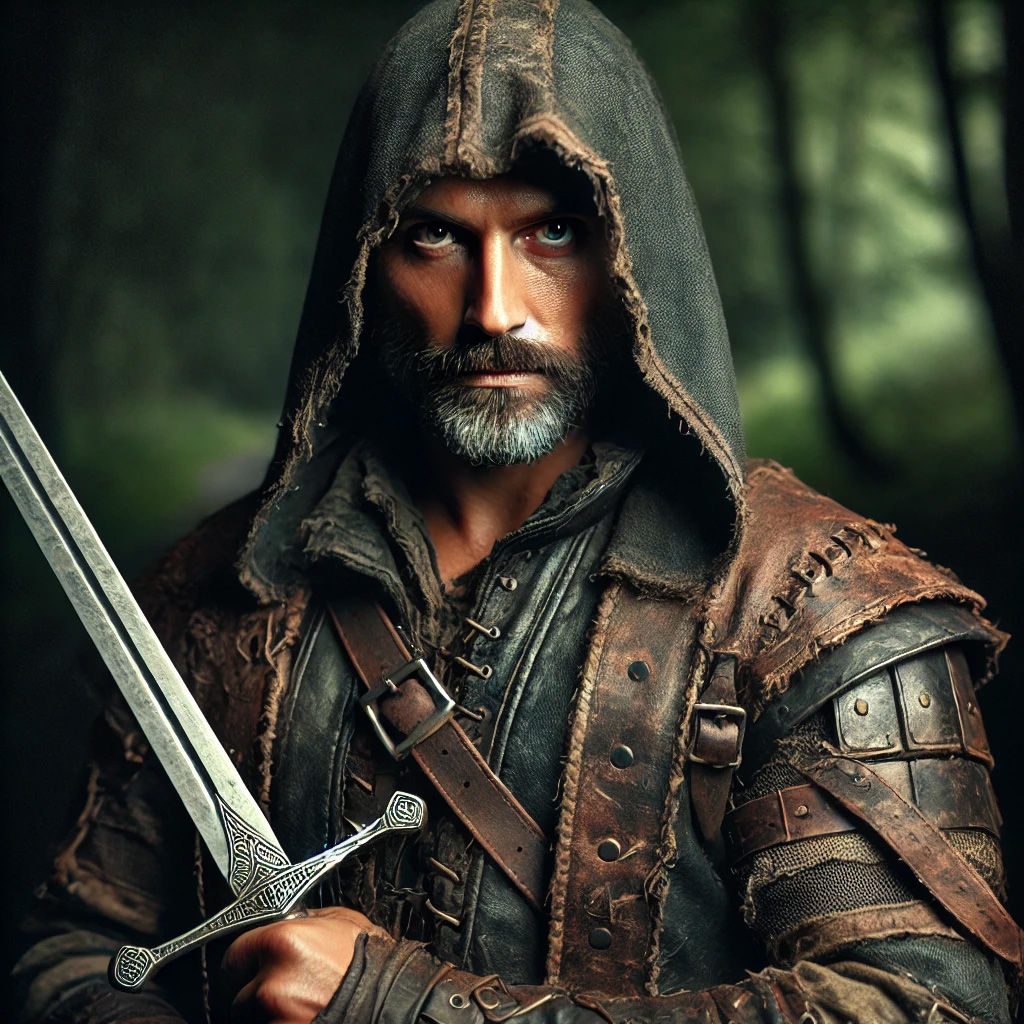
The Outlaws, Lords of the Lawless Plains
The Scattered Kingdom of the Damned
The Outlaws of the southern plains are not a people in the traditional sense. They are not a nation, nor a unified force, nor an army that marches beneath a single banner. They are something far more unstable, more fragmented, and more dangerous, a living consequence of collapse, a gathering of everything that remains when order fails and civilization fractures beyond repair. :contentReference[oaicite:0]{index=0}
The Outlaw Plains stretch from the foothills of Ironwatch to the distant coastal edge of the continent, a vast and wind-swept expanse marked by ruined villages, abandoned fortresses, and scattered encampments where survival is the only law that endures. No ruler governs this land. No throne commands loyalty. Power belongs only to those who can seize it, hold it, and defend it through blood and violence.
For years, these plains were nothing more than a battlefield of fractured warbands, remnants of Vlandor’s broken armies mingling with bands of raiders, slavers, deserters, and killers who preyed upon the weak and exploited the chaos left behind. There was no justice here, no structure, only the law of the blade and the certainty that weakness meant death.
It was into this brutal and unstable land that Rumon the Pale arrived, leading the desperate exodus of the Kragars. He did not come seeking dominion, nor conquest, but survival. He needed passage, a refuge from the genocidal purge unleashed by Vlandor. Yet the Outlaw Plains offered no sanctuary. To the warbands that roamed them, the Kragars were not refugees. They were prey.
And so, Rumon did what few others could. He did not attempt to destroy the chaos. He understood it, studied it, and reshaped it. Where others saw disorder, he saw opportunity. Where others saw endless conflict, he saw a system waiting to be bent into something more controlled, more deliberate, more dangerous.
The League of Outlaws
Rumon knew from the beginning that the Outlaws could never be conquered in the traditional sense. They were too numerous, too divided, too entrenched in their rivalries and blood feuds to be unified by force alone. Instead of trying to impose order upon them, he chose a different path, one built not on domination, but on manipulation.
The League of Outlaws was never a kingdom, nor an empire. It was a fragile and ever-shifting network of alliances, threats, bargains, and calculated fear, woven together from desperation and necessity. Rumon did not seek to rule every warband, but to ensure that none could rise high enough to challenge him.
The Kragar warbands, hardened by years of persecution and exile, quickly proved themselves stronger, more disciplined, and more ruthless than many of the fractured groups already inhabiting the plains. One by one, weaker factions were absorbed, broken, or erased entirely. Yet even at the height of his growing influence, Rumon resisted the temptation of total control.
Instead, he turned the Outlaws against themselves, maintaining a delicate balance of power in which every warlord remained both ally and potential enemy. Protection was offered to those who bent the knee, while annihilation awaited those who resisted. Some followed him because they believed he alone could bring a semblance of order to the chaos. Others followed because survival demanded it, knowing that without the strength of Ironwatch, they would be crushed between the ambitions of Vlandor and Mirelm Haven.
And then there were those who followed for a different reason entirely, those who saw in Rumon not a leader, but an opportunity to wage war without restraint, to thrive in a world where violence was not punished, but rewarded.
The Lords of the Lawless Lands
Though the Outlaw Plains remain ungoverned in name, they are not without structure. Power has consolidated into the hands of numerous warlords, each controlling their own territory, each ruling through fear, strength, or cunning, and each holding authority only so long as they can defend it.
Among these figures stands Garruk the Ravager, a former Vlandorian commander who has transformed into a butcher king ruling over a brutal dominion of slavers and raiders. He recognizes no authority, not even Rumon’s, and his followers are among the most savage forces in the plains. As long as Garruk remains unbroken, true unity will remain beyond reach.
Selka the Widow, once a noblewoman of Mirelm Haven, has carved out her own power through manipulation rather than brute force. Leading a network of assassins, spies, and poisoners, she operates in shadows and whispers, playing a long and calculated game that extends even into the courts of distant powers.
Uthric the Blackfang, an orc warlord shaped by the legacy of Agramon, commands one of the last true orcish strongholds in the region. Though he refuses to submit to the Kragars, he understands that Ironwatch is the only barrier standing between his people and annihilation, a truth that binds him reluctantly to a fragile coexistence.
Dregas One-Eye, master of the coastal routes, has built his influence not through conquest, but through control of trade. Smuggler, corsair, and opportunist, he profits from war rather than participating in it, yet his survival is tied directly to the fragile stability Rumon maintains.
Beneath these figures lie countless lesser warlords, each commanding smaller bands, each shaping the ever-changing balance of power that defines the plains.
A Powder Keg on the Edge of Collapse
The League of Outlaws is not a unified state, but a prolonged ceasefire held together by tension and necessity. Some follow Rumon out of respect, others out of fear, and many do not follow him at all, waiting instead for the moment when his control weakens enough to be challenged.
Beyond the plains, external pressures continue to build. Storrhold seeks to extend its reach toward the ocean, viewing the Outlaw Plains as a strategic corridor. Mirelm Haven refuses to tolerate instability so close to its sphere of influence. Vlandor still regards the Outlaws as traitors and criminals to be erased. Even within Ironwatch, the Kragars know that many among the Outlaws would gladly see them destroyed if given the chance.
Rumon understands the reality of his position. He cannot maintain this balance indefinitely. He must either crush the remaining warlords who resist him and impose true unity, or risk watching the plains descend once more into uncontrollable chaos.
And this time, there may be nothing left to rebuild.
The Outlaws as a Fighting Force
The Outlaws do not fight as a traditional army. They are a constantly shifting mass of warbands, each bringing its own strengths, weaknesses, and ambitions to the battlefield. To command them is not simply to lead, but to control, to balance power, to ensure that no single faction grows strong enough to fracture the whole.
When united, even temporarily, they become something far more dangerous than any organized army. They strike without warning, without discipline, and without mercy, overwhelming their enemies through unpredictability and sheer aggression. When divided, they turn that same violence upon each other, tearing apart any structure they attempt to build.
Their strength lies not in unity, but in controlled chaos.
Scourge of the Wildlands
Across the fringes of civilization, the Outlaws are feared as raiders, cutthroats, and opportunists who exist beyond the reach of law and order. They prey upon the weak, seize what they can, and vanish before retaliation can take form. Their ranks are filled with those cast aside by society, former soldiers, mercenaries, laborers, and survivors of war and famine, all bound not by loyalty, but by necessity.
The wildlands they inhabit are as unforgiving as they are. Dense forests, rugged hills, and abandoned ruins provide both refuge and danger, shaping their methods of warfare. They rely on ambush, speed, and intimate knowledge of the terrain, striking where their enemies are most vulnerable and retreating before a counterattack can be organized.
Though they lack honor in the traditional sense, their existence reflects a deeper truth about the world they inhabit. They are not merely criminals. They are the inevitable result of a world in conflict, a reminder that when kingdoms fail their people, something else rises in their place.
As long as there are those who are abandoned, betrayed, or broken by the ambitions of kings, the Outlaws will endure.
And the plains will never truly be at peace.