






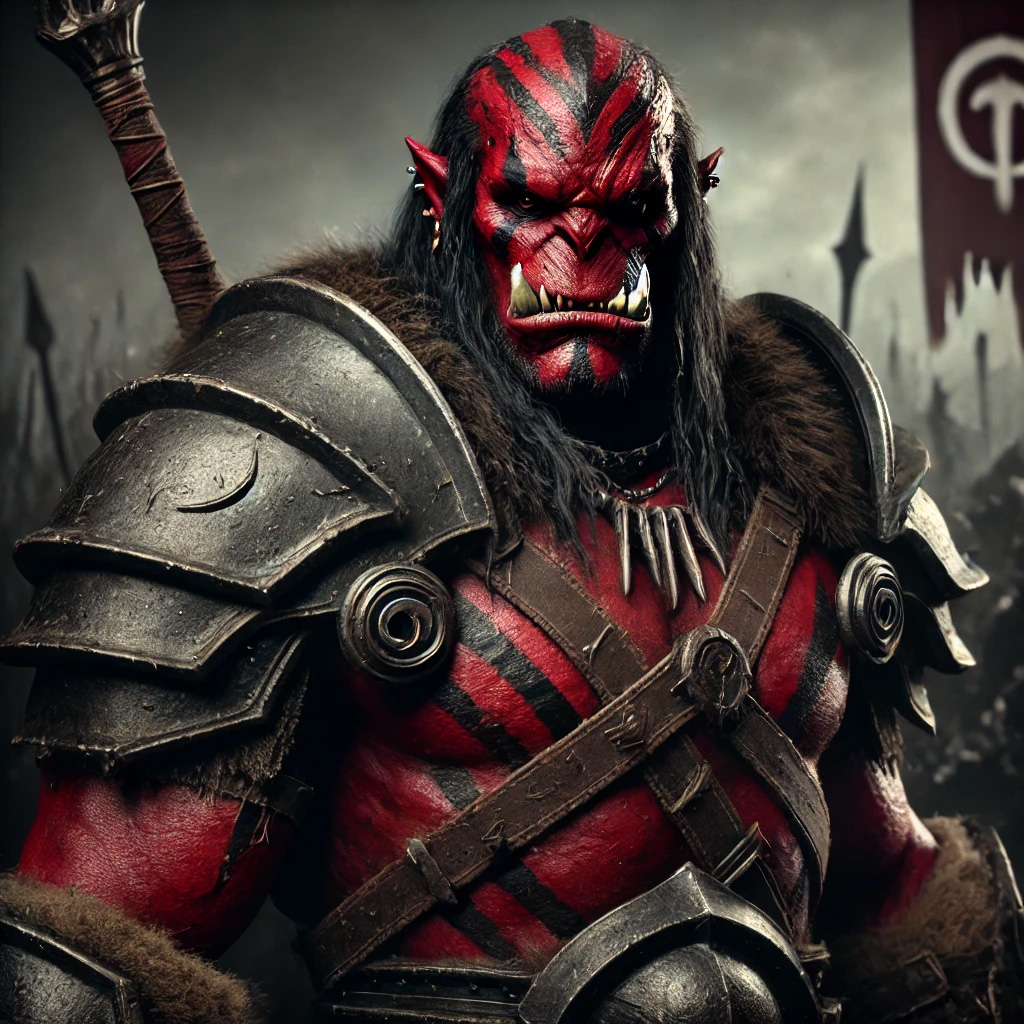
Ironwatch, The Forges of Industry
Before it became the brutal stronghold of the Kragars, before its skies were darkened by the endless smoke of its forges, Ironwatch was something entirely different. It was not a war machine, nor a bastion of rebellion, but a center of knowledge, craftsmanship, and disciplined purpose. Nestled deep within the iron-rich mountains of the east, it stood as one of the most valuable assets of Vlandor’s dominion, a fortress dedicated to the mastery of metalcraft, engineering, and alchemy.
For centuries, Ironwatch thrived as a pillar of the empire’s strength. Its mines fed the furnaces, its furnaces fed the legions, and its artisans shaped the weapons and armor that defined Vlandor’s supremacy. Yet despite its importance, Ironwatch was never a power in its own right. It was not a kingdom, nor even a political center. It was a tool, a perfectly functioning machine within a greater system. The Eldrakars of Vlandor did not see it as a city of people, but as an instrument of war. Its inhabitants were valued for their output, not their autonomy, and their existence was tied entirely to the needs of the empire.
For generations, this was enough. Ironwatch did not question its role. It existed to serve, and in that service, it prospered. But when the Great War came, the world that had defined it collapsed, and with it, the purpose that had sustained the city for centuries.
Ironwatch in the Great War
When Agramon’s legions descended upon Vlandor, Ironwatch was among the first strategic targets. Its importance was undeniable. Whoever controlled its forges would control the flow of weapons, armor, and siege engines. The armies of Dreadhold understood this well. Orcs, drakoths, and dark sorcerers advanced upon the fortress, not merely to destroy it, but to claim it.
Vlandor, stretched thin across multiple fronts, could not respond in time. Its armies were committed elsewhere, defending the heartlands and attempting to contain a war that had already grown beyond their control. Ironwatch was left to stand alone.
Its defenders fought with determination, holding the walls as long as they could against an enemy that seemed endless. The siege was relentless. Each day wore down the defenders, each assault bringing the walls closer to collapse. In the end, resistance was not enough. Ironwatch fell.
The city burned. Its great halls were reduced to ruin, its forges extinguished, its legacy shattered. Those who survived the siege either fled into the mountains or were enslaved by the conquering forces. What had once been a symbol of Vlandor’s strength became a graveyard of its ambition.
When Vlandor eventually pushed back Agramon’s forces and returned to reclaim its lost territories, they found nothing left. Ironwatch was no longer a fortress, but a ruin. Its streets were empty, its structures broken, its purpose erased. The empire, weakened and fractured, chose not to rebuild it. There were too many losses, too many fronts, too many priorities. Ironwatch was abandoned, left to decay beneath the weight of time and memory.
It was assumed that it would remain that way.
It did not.
The Geography of Ironwatch
Ironwatch lies at the heart of a harsh and unforgiving region, defined by towering mountains, jagged cliffs, and vast mineral wealth hidden beneath the surface. It is a land of extremes, where bitter winds carve through narrow valleys and where the scars of industry have already begun to reshape the natural world. Even before its rebirth, the land bore the marks of extraction and exploitation. Now, under Kragar control, these processes have only intensified.
To the west, beyond the mountain passes, lies Storrhold, the kingdom of the Horse Lords. For generations, they have viewed Ironwatch as a strategic asset, a gateway between regions, a potential anchor for expansion. Yet the terrain has always made control difficult, and now, with the rise of the Kragars, any attempt to claim it has become even more uncertain.
To the southwest stands the sacred forest of Arboryn, a place untouched by the ambitions of kingdoms, protected by the silent vigilance of the Ancients. These beings do not interfere lightly in the affairs of mortals, but the growing hunger of Ironwatch’s industry has begun to push against the limits of their patience. The relentless demand for timber, the disregard for natural balance, and the expansion of industrial activity threaten to provoke a response that few would survive.
To the north lies Mirelm Haven, a city once defined by neutrality and trade, now increasingly wary of what is rising within the mountains. The resurgence of Ironwatch has shifted the balance of power, and its growth is no longer something that can be ignored or dismissed.
To the south stretch the lawless plains, controlled not by a single power, but by scattered warbands, opportunists, and self-proclaimed rulers. Rumon the Pale has established influence here, but not dominance. Some see him as a stabilizing force, others as a threat no different from the warlords who came before him.
To the east lies the sea, an open horizon that represents both opportunity and uncertainty. Though Ironwatch has no navy, the existence of this route suggests possibilities that have yet to be realized.
The City Reforged
Ironwatch itself has become something new, a fusion of its former identity and its current purpose. At its core stands the great citadel, rebuilt and reinforced under Rumon’s command. It rises as a symbol of defiance, a structure of iron and stone that dominates the surrounding landscape.
From within its walls, smoke and ash rise constantly, carried into the sky by the ceaseless activity of its forges. The mountains are no longer silent. They are carved open, their depths exploited to feed an ever-growing industrial engine. Mines expand deeper with each passing season, and the resources they yield are immediately consumed in the production of weapons and armor.
The outer districts reflect this singular purpose. They are not places of culture or beauty, but of function. Barracks, training grounds, assembly halls, and workshops form a sprawling network dedicated entirely to preparation. Soldiers are trained, equipment is produced, strategies are refined. Every part of the city serves the same goal.
Even the orcs, remnants of the forces that once destroyed Ironwatch, now occupy a place within its structure. Though fewer in number and less disciplined than the Kragars, they serve as auxiliary forces, maintaining their own camps on the outskirts. They are not fully integrated, but neither are they excluded. They are part of Ironwatch, though not its core.
Ironwatch is not a city of ideals. It is not a city of culture, nor of legacy. It is a city of purpose. It exists to create strength, to sustain war, and to ensure that those who inhabit it will never again be at the mercy of a world that once sought to erase them.
The Legacy Reclaimed
Once abandoned, once broken, Ironwatch now stands at the threshold of something new. It has transformed from a center of knowledge and craftsmanship into a crucible of survival and ambition. Where once it served an empire, it now serves itself.
Yet its rise has not gone unnoticed. The powers that surround it do not look upon it with indifference. Storrhold sees a threat to its control of the plains. Mirelm Haven sees a destabilizing force. Arboryn sees a growing violation of balance. And Vlandor sees something far more dangerous—a mistake that was never fully erased.
Ironwatch does not fear this attention. Within its walls, there is no uncertainty. There is only preparation. For the Kragars understand what others have yet to accept. War is not a possibility. It is a certainty.
And Ironwatch will be ready.
Rumon the Pale, The Kragar Exodus, and the League of Outlaws
Before Ironwatch rose again, before the Kragars found a home within its walls, there was only exile, persecution, and the slow realization that the world they had been born into had no place for them. At the center of this transformation stood Rumon the Pale, a figure whose journey from loyal servant of Vlandor to architect of a new order would redefine the fate of an entire people. :contentReference[oaicite:0]{index=0}
The Fall of Vlandor and the Orphaned Kragars
Rumon the Pale had been many things over the course of his life, a warrior who had stood in the ranks during the Great War, a scholar who had studied the deepest arcane traditions of the Vhalan, and a sorcerer whose loyalty to Vlandor had once been unquestioned. He had believed, as many did, that despite its flaws, Vlandor remained the last bastion of order against a world that constantly threatened to descend into chaos. But when the war ended, and the kingdom turned inward, he witnessed something that shattered that belief beyond repair.
The Kragars, born in the occupied lands during the war, were not recognized as a people, but condemned as an anomaly. These hybrids, born of human and orc blood, were stronger than most men, more disciplined than the orcs from which they partly descended, and unbound by the rigid traditions that defined both. To the Eldrakars, they were not a resource to be shaped, nor a population to be integrated. They were an aberration, a disruption of the natural order they had spent centuries enforcing.
When Vlandor reclaimed its territories, the decision was not debated. The Kragars were to be erased. What followed was not a war, but a purge. Entire communities were targeted, hunted without distinction. There was no separation between those who fought and those who did not, no mercy for age or innocence. The goal was absolute, their existence was to be removed not only from the present, but from memory itself.
Rumon opposed it. He had seen the Kragars in battle, understood their resilience, their potential, and the role they could play in shaping a future stronger than the past. To him, their destruction was not only a moral failure, but a strategic one. A people forged in war, capable of adaptation and strength, could have been an asset. Instead, they were condemned out of fear.
His opposition was not tolerated. King Valtherion saw it as defiance. The Eldrakar elite saw it as weakness. When Rumon refused to take part in the massacres, he was stripped of his rank, cast out from the structures he had once served, and branded a traitor to the very kingdom he had fought to protect.
The Birth of the League of Outlaws
Rumon was not alone in his disillusionment. Others had seen the same descent into brutality, humans who had lost faith in the empire they served, commanders who had watched their soldiers die for a cause they no longer believed in, and even former enemies, orc warlords who had once fought under Agramon and found themselves without a place in the new order that followed his defeat.
From these fragments, something new began to take shape. The League of Outlaws was not a kingdom, nor an organized state, but a gathering of those who had been cast aside by every structure of power. Exiles, rebels, deserters, fugitives, and survivors came together not under a shared ideology, but under a shared necessity. They had nowhere else to go.
Their purpose, at first, was singular. They would save the Kragars.
The Exodus Through Fire and Steel
The Kragars could not remain within Vlandor’s borders. The purges were relentless, systematic, and absolute. Any delay, any hesitation, would mean extinction. Rumon understood that survival required movement, and that movement would be met with resistance at every step.
The exodus began not as an organized migration, but as a desperate flight. Kragar groups, scattered and hunted, were gathered and guided southward through forests, hills, and contested lands. The League of Outlaws did not fight battles of conquest, but of delay. They ambushed patrols, disrupted supply lines, and struck from the shadows, buying time for those who could not defend themselves.
Every mile was paid for in blood. The forces of Vlandor pursued relentlessly, determined to complete what had been started. The Outlaws, outnumbered and outmatched, relied on unpredictability, striking where they could, retreating when they must, and refusing to be drawn into direct confrontation.
As they moved south, the structure of the League began to change. What had once been scattered bands of survivors became something more coordinated. Warbands formed, leadership emerged, and territories were seized from abandoned or weakened positions left in the wake of the Great War. Villages, ruins, and isolated fortresses became temporary refuges, places where the Kragars could regroup before moving again.
But Rumon knew this was not enough. Survival in the wilds was temporary. Without a permanent stronghold, without a place that could be defended, the Kragars would eventually be hunted down and destroyed. They needed more than escape.
They needed a future.
A Vision Beyond Survival
The League of Outlaws could not become a nation. It lacked unity, structure, and long-term stability. It was a refuge, not a foundation. The warbands that composed it were bound by necessity, not loyalty. Left as they were, they would fracture, turn on each other, or be consumed by stronger forces.
Rumon understood that the Kragars needed something different. They needed a place that could transform them from fugitives into a people, from survivors into a force capable of shaping its own destiny.
That place would be Ironwatch.
The Seizure of Ironwatch
Rumon the Pale had not chosen Ironwatch by chance. Long before the exodus, long before the League of Outlaws had taken shape, he had known of the fortress and its significance. Once the greatest industrial stronghold of Vlandor, it had been abandoned after the Great War, dismissed as a lost asset too distant and too costly to reclaim. To most, it was nothing more than a ruin, a broken monument to a fallen age. To Rumon, it was something else entirely, a foundation waiting to be reclaimed.
The journey to Ironwatch was as perilous as the exodus that preceded it. The mountain passes were treacherous, the terrain unforgiving, and the remnants of war still lingered in the region. Yet the League pressed forward, driven not by certainty, but by necessity. They had no alternative. To remain in the plains meant eventual destruction. To reach Ironwatch meant the possibility of survival.
When they arrived, what they found was not a city, but a carcass. The walls still stood, but they were scarred and weakened. The great forges were silent, their fires long extinguished. The mines had collapsed in places, their tunnels unstable and abandoned. There was no infrastructure, no supply chain, no functioning system to support a population.
To many, it would have seemed like a dead end.
To Rumon, it was the beginning.
Reclaiming the Ruins
The first months were not spent building, but surviving. The Kragars and the Outlaws had to secure the fortress, clear what remained of hostile forces, and establish a minimal structure that would allow them to endure the harsh environment. Food was scarce, shelter was inadequate, and the cold of the mountains tested even the strongest among them.
Yet where others would have faltered, the Kragars adapted. Hardened by persecution and shaped by years of survival under constant threat, they approached the task with relentless determination. Every ruin became a resource. Every broken structure was repurposed. Every surviving tool, every fragment of machinery, every collapsed tunnel became part of a greater effort.
Rumon’s knowledge, combined with the skills of engineers, craftsmen, and former Vlandorian specialists among the Outlaws, allowed them to do more than simply occupy Ironwatch. They began to rebuild it.
The mines were reopened, first cautiously, then with growing confidence as the extent of the untouched iron veins became clear. The forges were restored piece by piece, their fires rekindled after years of silence. Defensive structures were reinforced, not merely repaired, but redesigned to withstand the kind of siege that would inevitably come.
This was not restoration.
This was transformation.
The Birth of a New Ironwatch
Ironwatch did not return as it had been. It did not become once again a tool of a greater empire, nor did it attempt to recreate the system that had once defined it. Instead, it evolved into something entirely new, a city shaped by necessity, forged by those who had no place in the old world.
The Kragars became the foundation of this new order. No longer scattered and hunted, they were organized, trained, and integrated into a structure that valued discipline as much as strength. The Outlaws, once divided by origin and allegiance, were forced into cohesion, their survival now tied to the success of the whole.
Ironwatch became a place where identity was no longer dictated by bloodline, but by function. Those who could contribute were valued. Those who could not adapt were left behind. It was not a system of equality, but of necessity, where every individual was measured by what they could bring to the survival of the city.
The forges became the heart of this transformation. Weapons, armor, tools, and machines were produced not in service of an empire, but for the defense and expansion of Ironwatch itself. Every blade, every piece of armor carried meaning beyond its material form. It was a symbol of independence, of defiance, of a future carved from ruin.
The Transformation of the League of Outlaws
With Ironwatch secured, the League of Outlaws could no longer remain what it had been. It had been born as a refuge, a gathering of those with no place left in the world. But within the walls of Ironwatch, it began to change.
Scattered warbands became organized units. Leadership structures emerged, not based solely on strength or reputation, but on capability and necessity. Discipline replaced chaos, and survival gave way to strategy. The League did not disappear, but it was reshaped into something far more cohesive.
The Kragars, once victims of extermination, became the core of a new military force. Their training was systematic, their equipment standardized, their role clearly defined. They were no longer merely survivors. They were soldiers.
The Outlaws, those who had followed Rumon from exile, found themselves transformed as well. Some resisted the structure, clinging to the independence they had known. Others embraced it, recognizing that what was being built in Ironwatch was more than a refuge. It was a future.
This transformation was not without tension. The transition from chaos to order created friction, particularly among those who had thrived in the lawless environment of the plains. Yet over time, necessity overcame resistance. Those who could not adapt were pushed aside, while those who could became part of something greater.
Ironwatch was no longer a ruin reclaimed.
It was becoming a power.
A Fragile Foundation
Despite its rapid transformation, Ironwatch’s position remained precarious. It was surrounded by enemies, isolated from traditional trade networks, and dependent on resources that required constant extraction and protection. Its population, though growing, was still limited, and its structures, though reinforced, were not yet tested by a full-scale assault.
Rumon understood this better than anyone. The fortress could not simply exist. It had to justify its existence. It had to become strong enough that those who would seek to destroy it would hesitate.
This required more than defense.
It required action.
The Emergence of a New Power
Ironwatch did not declare itself to the world. It did not send envoys, nor did it proclaim its rebirth through diplomacy or ceremony. Its existence became known through consequence. Trade routes shifted, scouting parties disappeared, and the balance of power in the surrounding regions began to change in subtle but undeniable ways. Those who had once considered Ironwatch a forgotten ruin were forced to reconsider. Something was growing within the mountains, something organized, deliberate, and increasingly impossible to ignore.
Rumon the Pale understood that survival alone was not enough. Ironwatch could not remain hidden indefinitely, nor could it rely solely on defense. To endure, it had to become a factor in the world beyond its walls, not through reckless expansion, but through controlled and calculated presence. Every action taken was measured, every engagement chosen with purpose. Ironwatch would not repeat the mistakes of empires. It would not overextend, nor would it expose itself before it was ready.
Storrhold and the Northern Threat
To the west, beyond the mountain passes, the Horse Lords of Storrhold observed Ironwatch with growing concern. For generations, they had viewed the region as a potential extension of their influence, a land that, while difficult to control, remained within their strategic horizon. The reemergence of a fortified and industrialized power within these mountains disrupted that assumption.
Storrhold’s strength lay in mobility, in cavalry forces that could dominate open terrain and respond rapidly to threats. Ironwatch, by contrast, was anchored, defensive, and built upon fortification and production. The two represented fundamentally different approaches to power. Where Storrhold relied on movement, Ironwatch relied on endurance.
Direct conflict between the two would not be immediate, but it was inevitable. The plains between them, unstable and contested, would become the ground upon which their influence would be tested. Raids, skirmishes, and indirect confrontations began to occur, each probing the limits of the other’s strength. Neither side committed fully, but neither withdrew.
For Storrhold, Ironwatch was a challenge that could not be ignored. For Ironwatch, Storrhold was a threat that could not be underestimated.
Mirelm Haven and the Balance of Trade
To the north, Mirelm Haven represented a different kind of power, one not built on armies or conquest, but on trade, neutrality, and adaptability. For centuries, it had maintained its position by navigating the ambitions of greater powers, positioning itself as indispensable rather than dominant.
The rise of Ironwatch disrupted this balance. An industrial power emerging outside traditional trade networks posed both a risk and an opportunity. If Ironwatch remained isolated, it would destabilize regional trade without offering any form of integration. If it engaged, it could become a new axis of commerce, reshaping the flow of resources across the continent.
Mirelm Haven did not react with hostility, but with caution. Its leaders observed, assessed, and adapted. They understood that Ironwatch was not a transient force. It was structured, purposeful, and likely to endure. The question was not whether to engage with it, but how, and under what terms.
For Ironwatch, Mirelm Haven represented something equally significant. It was a gateway, not to conquest, but to connection. A path through which resources, information, and influence could extend beyond the mountains without exposing the city to unnecessary risk.
The relationship between the two had not yet been defined, but it would become one of the key factors in shaping Ironwatch’s future.
Vlandor and the Weight of History
To the north and west, beyond the shifting frontiers and contested territories, lay Vlandor, the kingdom that had once defined Ironwatch’s existence and later abandoned it to ruin. Of all the powers observing Ironwatch’s rise, Vlandor’s perspective was the most complex.
Ironwatch was not simply a new faction. It was a consequence of Vlandor’s past decisions, a manifestation of what had been rejected, suppressed, and cast aside. The Kragars, the core of Ironwatch’s strength, were the very people Vlandor had sought to erase. Their survival, and now their resurgence, stood as a direct contradiction to the order that Vlandor had attempted to maintain.
This created a tension that went beyond strategy. It was not merely a question of territory or influence, but of identity and legitimacy. To acknowledge Ironwatch was, in a sense, to acknowledge the failure of the purge. To ignore it was to risk allowing a hostile power to grow unchecked.
For now, Vlandor did neither. It watched, assessed, and prepared. But unlike other powers, it could not approach Ironwatch as an unknown variable. It understood what Ironwatch was made of. It understood what it could become.
And that made it dangerous in a way that no other emerging power was.
Arboryn and the Limits of Expansion
To the southwest, the ancient forest of Arboryn stood as a silent but undeniable boundary. Unlike kingdoms or cities, Arboryn did not negotiate, did not trade, and did not expand. It endured. Its inhabitants, the Ancient Ones, existed outside the structures of power that defined the rest of the world.
For Ironwatch, Arboryn represented both a limit and a warning. The expansion of industry, the extraction of resources, and the transformation of the land could not continue indefinitely without consequence. The forest had tolerated the presence of civilizations before, but it had never been tested by something as relentless as Ironwatch’s growth.
Rumon understood this. He did not seek to provoke Arboryn, nor to challenge it directly. But he also knew that the needs of Ironwatch would inevitably bring it closer to the boundaries that Arboryn defended. This was not an immediate conflict, but it was a future one, waiting to be shaped by the choices yet to come.
The Doctrine of Ironwatch
At the center of all these dynamics lay Rumon’s guiding principle, a doctrine shaped not by ideology, but by experience. Ironwatch would not become an empire. It would not seek to dominate the world through expansion or conquest. It had seen what such ambition led to. It had been born from the failure of that very system.
Instead, Ironwatch would become something different, a self-sustaining power, capable of defending itself, influencing its surroundings, and shaping its own destiny without becoming dependent on the structures that had once sought to destroy it.
This doctrine emphasized control over expansion, strength over display, and preparation over reaction. Every action taken by Ironwatch reflected this philosophy. It did not rush into alliances, nor did it provoke unnecessary conflict. It observed, adapted, and acted only when the outcome could be shaped.
Yet even this restraint carried its own risks. A power that grows, even cautiously, cannot remain unnoticed. At some point, the balance it seeks to maintain will be challenged, not by its own actions, but by the reactions of others.
Rumon knew this. Ironwatch was not preparing for a single war. It was preparing for a world that would eventually turn against it.
The Kragar Identity
At the core of Ironwatch lies a people unlike any other, the Kragars. Born from the union of human resilience and orcish strength, they are not simply a hybrid race, but the product of war, exile, and survival. Their existence was once denied, their future nearly erased, yet within Ironwatch they have become something entirely new, not a remnant of the past, but the foundation of a different kind of society.
The Kragars do not define themselves by what they are made of, but by what they have endured. Their identity is not rooted in ancestry, but in experience. They are a people forged under pressure, shaped by persecution, and refined through necessity. Strength is respected, but not blindly. Discipline is valued, but not imposed without purpose. Every aspect of their culture reflects the understanding that survival is not given, it is built.
Unlike the rigid hierarchies of Vlandor or the tribal structures of the orcs, Kragar society operates on a principle of function. Individuals are not elevated by lineage, but by contribution. Those who prove their value, whether through combat, craftsmanship, strategy, or knowledge, rise within the structure. Those who cannot adapt find themselves marginalized or replaced. It is not a system of equality, but of constant evaluation, where worth must be demonstrated rather than assumed.
A Society Forged by Necessity
Ironwatch is not a place where culture developed naturally over centuries. It is a society built rapidly, under pressure, shaped by immediate needs rather than long-standing traditions. Every institution, every structure, every role exists because it serves a purpose. There is little room for excess, and even less for stagnation.
This does not mean that Ironwatch lacks identity. On the contrary, its identity is defined by its clarity. There is no ambiguity about what the city exists for. It exists to endure, to grow, and to ensure that those within it will never again be powerless. This shared understanding creates a form of unity that does not rely on shared heritage, but on shared direction.
Children of Ironwatch are not raised to inherit a world, but to build one. From an early age, they are exposed to the realities of their environment, the demands of their society, and the expectations placed upon them. Training is not reserved for soldiers, nor knowledge for scholars. Every individual is expected to understand their role within the greater structure.
Discipline and Adaptation
Discipline within Ironwatch is not enforced through fear alone, but through necessity. The environment does not allow for weakness, and the history of the Kragars has left no room for complacency. Orders are followed not because they are given, but because they are understood. Structure is maintained not through rigid control, but through collective awareness of what is required.
At the same time, adaptability remains one of the defining traits of the Kragars. They do not cling to tradition for its own sake. If something no longer serves its purpose, it is changed. If a method proves ineffective, it is replaced. This creates a society that is constantly evolving, not in pursuit of progress for its own sake, but in pursuit of efficiency and survival.
This balance between discipline and adaptability is what allows Ironwatch to function. Without discipline, it would collapse into chaos. Without adaptability, it would stagnate and fail. Together, they form the foundation upon which the city continues to grow.
The Role of Strength
Strength holds a central place within Kragar society, but it is not defined narrowly. Physical power is respected, particularly in the context of warfare, but it is not the sole measure of worth. Strength of mind, strength of will, and strength of skill are equally valued.
This creates a system in which multiple paths to influence exist. A warrior may rise through combat, a craftsman through mastery of production, a strategist through insight, and a scholar through knowledge. What unites these paths is not their form, but their contribution to the whole.
Conflict is not absent within Ironwatch. Disputes occur, rivalries form, and ambitions clash. Yet these conflicts are rarely allowed to destabilize the system. They are contained, redirected, or resolved in ways that reinforce the structure rather than undermine it. In this sense, even internal tension becomes a tool, shaping individuals and refining the society itself.
The Philosophy of Survival
At its deepest level, Ironwatch is guided by a philosophy born from its origins. The Kragars do not believe in destiny, nor in the inherent order of the world. They have seen how quickly such ideas can be used to justify destruction. Instead, they believe in control, in the ability to shape one’s environment, to build strength, and to prepare for what cannot be avoided.
War is not seen as an exception, but as a constant. It may not always be present, but it is always possible. This understanding does not lead to recklessness, but to preparation. Every aspect of Ironwatch, from its forges to its training grounds, reflects this mindset. It is a city built not in response to war, but in anticipation of it.
This does not mean that Ironwatch seeks conflict. On the contrary, it understands the cost of war more clearly than most. But it also understands that refusing to prepare for it is not a path to peace, but a path to vulnerability. In this, Ironwatch differs fundamentally from many of the powers around it.
A Future Without Illusions
The people of Ironwatch do not look to the past with nostalgia. They do not seek to restore what was lost, nor to emulate the structures that once governed the world. They understand that those structures failed them, and that survival requires something different.
This creates a society that is forward-looking, but not idealistic. The future is not seen as something to be hoped for, but something to be built. Every action taken contributes to that construction, whether it is the forging of a weapon, the training of a soldier, or the expansion of a mine.
There is no illusion within Ironwatch about what lies ahead. The world around it is unstable, the powers that surround it are watching, and conflict is not a question of if, but when. Yet this does not create fear.
It creates purpose. Ironwatch does not exist to survive the world. It exists to endure it.
The Figures Who Shape Ironwatch
Ironwatch is not governed by tradition, nor by inherited titles passed through generations. It is shaped by those who have proven their worth through survival, through action, and through their ability to adapt to a world that sought to erase them. Power within Ironwatch is neither ornamental nor symbolic, it is functional, earned, and constantly tested. The individuals who stand at its core are not simply leaders, they are the embodiment of the city itself, each reflecting a different facet of its identity, its resilience, its brutality, and its relentless will to endure.
Rumon the Pale, Architect of Survival
Rumon the Pale was not born to rule. He was never meant to become the center of a nation, nor the architect of a rising power. Once, he was a scholar of the arcane, a sorcerer of the Vhalan, a man devoted to understanding rather than commanding. He had fought in the Great War not for conquest, but for what he believed was order, standing alongside the Eldrakars in defense of a world he thought worth preserving. Yet it was in the aftermath of that war that he witnessed the truth that would define the rest of his life.
The purges of the Kragars revealed the limits of that order. What he had once seen as structure, he now saw as rigidity incapable of change. The extermination was not a necessity, but a decision rooted in fear, a refusal to accept what did not fit within the established hierarchy. When Rumon chose to oppose it, he was not acting as a rebel, but as a man who understood that the system he had served would never evolve. His defiance cost him everything, his rank, his place, his identity within Vlandor, yet it gave him something else in return, clarity.
The League of Outlaws was not his goal, but his first answer. A refuge for those cast aside, a fragile alliance of survivors, it was never meant to last. Rumon knew that scattered warbands could not ensure the survival of the Kragars. What they needed was not refuge, but foundation. That foundation became Ironwatch.
Where others saw ruins, he saw structure. Where others saw abandonment, he saw potential. He rebuilt Ironwatch not as a symbol of the past, but as a mechanism for the future, a city designed not for prosperity, but for endurance. Under his leadership, the Kragars transformed from hunted exiles into a unified force, disciplined, organized, and prepared for a world that would never accept them willingly.
Rumon does not rule through spectacle or inherited authority. His legitimacy comes from necessity. The Kragars follow him because his vision works, because it has allowed them to survive where all other paths led to extinction. Yet survival has changed him. The idealist who once believed in diplomacy and reason has given way to a leader who understands that strength is the only language the world respects. He does not seek revenge, nor conquest for its own sake. He seeks stability, but he is fully aware of the cost required to achieve it.
He is no longer the man who asked Vlandor for mercy. He is the man who ensures that Ironwatch will never need it.
Zarvek the Whisperer, The Shadow of Ironwatch
Not all wars are fought with steel and fire. Some are decided long before armies meet, in whispered conversations, in shifting loyalties, and in carefully planted doubts that spread like poison through the minds of enemies. Zarvek the Whisperer is the master of such warfare, a figure whose influence is felt far beyond the walls of Ironwatch.
Once a diplomat of Storrhold, Zarvek was never trusted, but always effective. He understood that power was not merely a matter of force, but of perception. Through manipulation, misinformation, and subtle influence, he shaped outcomes without ever drawing a blade. His exile was inevitable. A man who plays all sides cannot remain within any one system for long. When Storrhold cast him out, they believed they had removed a threat. In truth, they had only freed him.
Rumon recognized his value immediately. Where others saw a traitor, he saw a weapon. Within Ironwatch, Zarvek became something more dangerous than any soldier, an architect of uncertainty. His role is not to win battles, but to ensure that battles are fought under conditions favorable to Ironwatch. He spreads rumors of invincible defenses, exaggerates the strength of the Kragar legions, and fuels paranoia among rival powers, ensuring that they hesitate, doubt, and turn their attention inward.
Yet his work is a delicate balance. Too little deception, and Ironwatch’s enemies will act decisively. Too much, and they may unite against a perceived greater threat. Zarvek walks this line with precision, maintaining a state of controlled instability that prevents any single power from acting with full confidence.
He does not command armies, yet his influence shapes entire campaigns. By the time war begins, his work ensures that Ironwatch’s enemies are already weakened, divided, and uncertain.
Skarnor, The Raider King
Among the orcs of Ironwatch, Skarnor represents the last echo of an older world, a time before discipline, before structure, before the rise of the Kragars. He is a warlord shaped by fire and instinct, a leader who does not command through organization, but through presence, brutality, and the raw authority of survival.
When Ironwatch changed, when the Kragars took control of its structure and reshaped it into a disciplined war machine, many orcs found themselves displaced. Their way of war, once dominant, became secondary, their role reduced within a system that no longer valued chaos as it once had. For many, this was the beginning of decline.
For Skarnor, it was an opportunity.
He understood what others did not, that the age of unstructured warbands was ending. Strength alone was no longer enough. Rather than resist the change, he adapted to it, not by abandoning his nature, but by finding where it still held value. That place was in motion, in disruption, in the spaces where discipline could not reach.
The Grimfang Riders are the embodiment of this role. Fast, brutal, and unpredictable, they strike where Ironwatch’s legions do not, raiding supply lines, burning settlements, and spreading fear far beyond the battlefield. They do not hold territory, nor do they follow rigid formations. They exist to destabilize, to weaken, and to remind Ironwatch’s enemies that war is not always fought on expected terms.
Skarnor does not seek a place in the future Ironwatch is building. He knows that when the war ends, there may be no role left for him. But that does not concern him. He fights for the present, for the chaos that still has meaning, for the fire that has not yet been extinguished.
Vragoth, The Ironfang Hunter
If Skarnor is chaos in motion, then Vragoth is precision in silence. Among the Kragars, he represents a different kind of strength, one not defined by overwhelming force, but by inevitability. He does not lead armies in open battle. He ensures that when those battles occur, the outcome has already been decided.
As the leader of the Stormfang Hunters, Vragoth commands Ironwatch’s vanguard, a force that operates ahead of the main army, striking from shadows, disrupting formations, and eliminating threats before they can fully emerge. His warriors do not seek honor, nor do they engage in fair combat. They strike where the enemy is weakest, when the enemy is unprepared, and disappear before retaliation can take form.
This approach is often misunderstood by those who cling to older traditions of warfare. They see deception, ambush, and asymmetry as weakness. Vragoth sees them as efficiency. War is not a contest of pride, but of outcome. The enemy that never reaches the battlefield is already defeated.
Under his command, the Stormfang Hunters have become one of Ironwatch’s most effective tools. Supply lines collapse, scouts vanish, and entire formations arrive to battle already diminished. By the time the Kragar legions advance, resistance has already been broken at its foundation.
Vragoth does not seek recognition. He does not need it. His work is measured not in glory, but in results, and in the silent certainty that before Ironwatch strikes, the enemy has already begun to fall.
Grashnak, The Unbroken Fang of Ironwatch
Among all the Kragars of Ironwatch, there is only one warrior Rumon the Pale trusts without reserve. Not simply because of his strength, though few can rival him in battle, and not only because of his discipline, though entire legions have been forged under his command, but because Grashnak’s loyalty runs deeper than politics, deeper than ambition, deeper even than fear. Where others follow Rumon because they believe in his vision, or because they know they need him, Grashnak follows because his life itself was given back to him by the sorcerer’s hand.
He remembers the purges with a clarity that never fades. He remembers the burning villages, the smell of blood in the air, the cries of kin cut down before they could flee. He remembers being surrounded by Eldrakar soldiers, too young to be a warrior, yet old enough to be marked for death. And above all, he remembers the moment Rumon arrived, when fire answered steel, when the men who had come to slaughter him were reduced to ash, and when he was carried away from certain death. That moment shaped everything that followed. For Grashnak, loyalty is not an oath spoken in a hall, but a debt carved into the flesh of memory.
It is this debt that made him what he is. Grashnak became not merely a warrior, but the shield of Ironwatch, the general who cannot be bent, the champion who refuses to break. He commands the Ironshield Cohorts not as a distant strategist, but as the first among them, the warrior who marches at the front and is still standing when others begin to fall back. He does not seek slaughter for its own sake, nor does he hunger for cruelty like some among his kin. He fights for duty, for structure, for the survival of his people, and for the city that gave them all a future when the world offered them only extinction.
Under his command, the legions of Ironwatch are not merely armed, but forged. He ensures that every Kragar is trained, disciplined, and made ready, because to him any weakness in preparation is not a failure of the individual alone, but a failure of command. If a soldier enters war unready, Grashnak bears that burden personally. This is what makes him so deeply feared and respected among his own people. He does not ask of others what he would not demand of himself, and because of that, his authority does not need to be enforced. It is recognized.
Yet for all his certainty, Grashnak is no fool. He knows that not every Kragar sees Rumon as he does. He understands that Ironwatch is held together not only by conviction, but by necessity, and that when the great war comes, necessity alone may not be enough. Still, he does not doubt his path. As long as he draws breath, as long as one warrior remains standing, he will hold the line. Rumon saved his life once, and Grashnak has devoted all the years since to repaying that debt in the only coin that matters in Ironwatch, blood, endurance, and absolute loyalty.
Kragoth, The Butcher of Ironwatch
There are many within Ironwatch who fight because they must. Some fight for survival, some for vengeance, and some for the fragile hope that their people might one day secure a future of their own. Kragoth stands apart from them all, because he fights for none of these reasons. He fights because he loves war in its rawest and most terrible form. He fights because cruelty is not a burden to him, but a language he speaks with terrifying fluency. Among the Kragars, he is not the strongest, nor the swiftest, but he is the cruelest, and that alone is enough to make his name feared far beyond Ironwatch’s walls.
Where Vragoth kills with silence and precision, Kragoth turns violence into spectacle. His enemies do not whisper his name because of the battles he has won, but because of what he leaves behind when the fighting is over. Where he passes, mercy does not exist. He does not take prisoners in the way other commanders do. He takes subjects. Those who fall into his hands become instruments of learning, their suffering transformed into a study of pain, endurance, and fear. To Kragoth, the body is something to be understood through breaking, and the enemy is most useful when not yet dead.
This is what has made him a figure of dread even among his own people. As Vragoth’s second-in-command, he leads warbands deep into hostile territory, but unlike the hunters he serves beside, he has no patience for elegance. He does not seek clean victories, nor does he care for invisible warfare. He embodies something else entirely, the monstrous truth Ironwatch needs when it wishes not merely to defeat its enemies, but to scar them so deeply that memory itself becomes a weapon. In him, Ironwatch reveals its darkest face, the one that reminds the world that the Kragars are not a people to be pitied, contained, or erased without consequence.
His methods are not universally embraced. Rumon tolerates him only because necessity demands it, seeing in his excesses a danger that could one day invite more enemies than Ironwatch can manage. Vragoth, more pragmatic, understands him differently. To him, Kragoth is a necessary evil, too dangerous to celebrate openly, too useful to cast aside. Others prefer not to speak of him at all, as though silence might lessen his presence. It does not.
Kragoth does not care for any of this. He does not seek approval, and he does not waste thought on how history will judge him. The war is coming, and when it does, he will do what he has always done. He will carve warning, terror, and memory into the flesh of Ironwatch’s enemies, and in doing so he will shape the future of the Kragars through horror as much as through victory.
Thornak, The Architect of War
If Rumon is the mind that drives Ironwatch and Grashnak the will that holds it together in battle, then Thornak is the force that gives it material form. There is no forge in Ironwatch untouched by his influence, no siege engine without the imprint of his thought, no standardized weapon or plated cohort that does not owe something to his relentless vision. Others wage war with sword, sorcery, or command, but Thornak wages it through design. He does not simply prepare armies. He builds the very machinery through which wars will be decided.
Unlike many of the older leaders of Ironwatch, Thornak was not shaped directly by the great escape from Vlandor. He was born in the early years of the Kragar exodus, too young to fight in those first desperate struggles. While others survived by steel and blood, he survived by watching, learning, and understanding. Even as a child, he was drawn not to battle itself, but to the structures behind it, to the way steel was balanced, to the way armor carried force, to the way flame and craftsmanship could create something stronger than flesh alone. The Outlaws’ rough forges taught him the beginnings of these truths. Ironwatch gave him the means to push them far beyond anything his people had known before.
When the ruined fortress was seized and rebuilt, Thornak immediately recognized what it could become. He did not see merely shelter or defense. He saw an industrial future. It was he who took the broken remains of old Vlandorian production and reshaped them into something harsher, more disciplined, and more efficient. The first new weapons forged by Kragar hands, the first properly equipped legions, the first true standardization of Ironwatch’s military power, all of them bore his influence.
But Thornak’s ambition did not end with swords and armor. He understands more clearly than most that brute force alone will not save Ironwatch. Numbers are against them, enemies surround them, and if they rely only on physical strength they will eventually be crushed by those who can replace losses more easily than they can. Thornak’s answer to this problem is simple and terrifying, war must be engineered. Ballistae powerful enough to tear cavalry apart at impossible distance, firefang catapults capable of reducing strongholds to ash before a charge is even sounded, standardized heavy armor that turns the Ironshield Cohorts into walls of moving iron, and the reforging of old Vlandorian siegecraft into instruments of industrial destruction, these are not isolated achievements, but pieces of a single doctrine.
Rumon still thinks like a sorcerer, reading war in terms of timing, politics, and necessity. Grashnak still thinks like a warrior, measuring it in courage, discipline, and endurance. Thornak thinks like a builder. To him, the future belongs not to the bravest, nor even to the wisest, but to those who can produce, standardize, and outconstruct their enemies. He sees the old ways of war already beginning to crack, and he intends to be the one who shatters them completely.
In the future he imagines, nations will no longer be decided by bloodline or heroic charges, but by engines, by industry, by the capacity to transform raw material into unstoppable force. And when the day comes that Ironwatch stands victorious beneath a sky blackened by its own smoke, Thornak intends there to be no doubt that the fate of his people was not merely defended by steel, but forged by his hand.
A Power Defined by Its Leaders
The strength of Ironwatch does not lie solely in its walls, its forges, or its armies. It lies in the individuals who shape it, who define its direction, and who ensure that it remains more than a fortress, more than a refuge. Each of these figures represents a different aspect of what Ironwatch has become, vision, manipulation, chaos, precision, and together, they form a system capable of surviving in a world that offers no forgiveness.
Ironwatch is not unified by tradition, nor by shared origin. It is unified by necessity. Those who lead it do so not because they were chosen by birth, but because they have proven that without them, the structure would fail.
And in a world where failure means extinction, that is the only legitimacy that matters.