






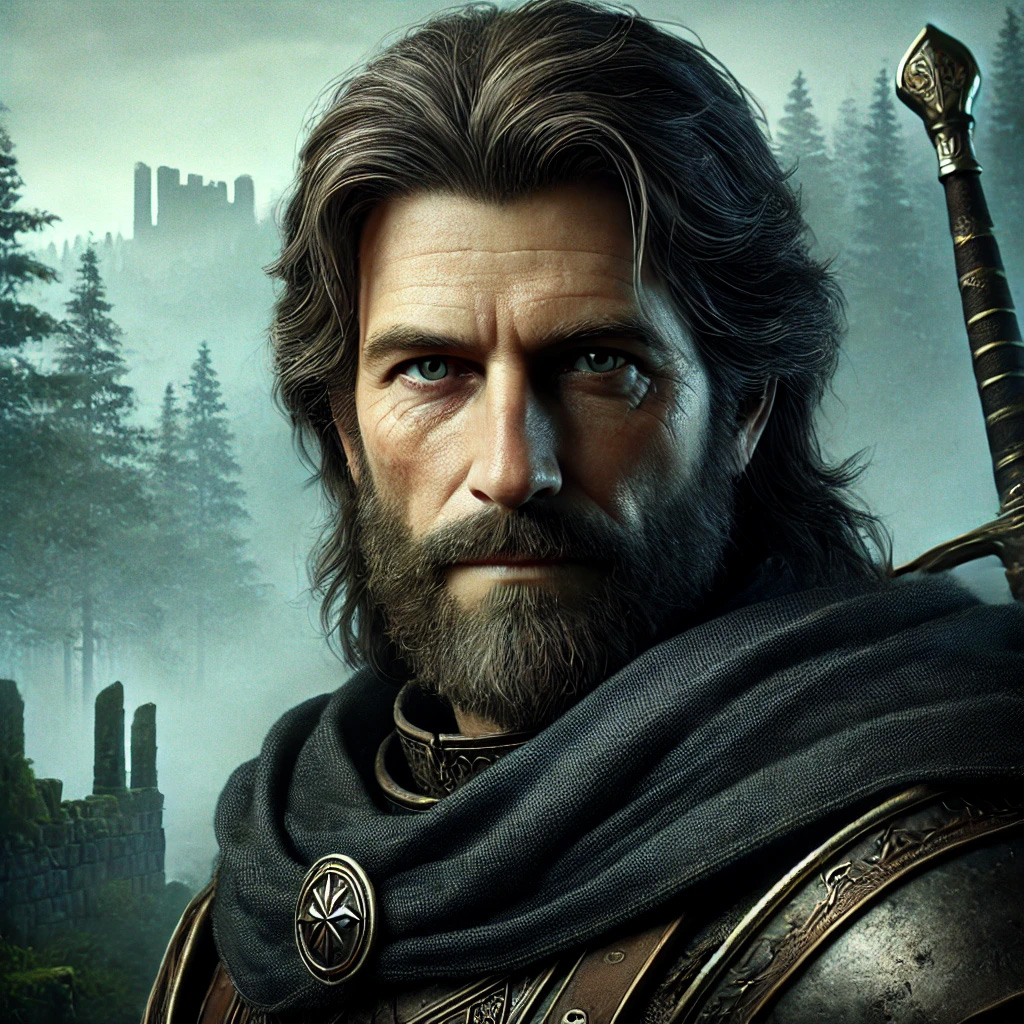
Wardens of Velan, Guardians of the Ancient Ways
The Birthplace of the Eldrakars
The mountains of Velan have stood for ages as silent sentinels, their jagged peaks piercing the heavens while mist-laden valleys conceal secrets older than any kingdom still standing. Long before Vlandor, before the rise and fall of empires, and even before the Great War, Velan was already a land of legend. It was here, within these unforgiving heights, that the first Eldrakars were born, the offspring of elven settlers from Thornwild and the earliest human colonists who dared venture north.
These first Eldrakars were unlike any people the world had known. They carried within them the grace and longevity of the elves, yet tempered by the ambition and resilience of men. Stronger, faster, and gifted in both magic and warfare, they rose swiftly to dominance within the mountains. They carved vast citadels directly into the cliffs, hidden strongholds that became both sanctuaries and bastions of power. Within these halls, the first Warden orders were formed, warriors bound not to conquest, but to preservation, guardians of knowledge, tradition, and the fragile balance of the world.
Yet the Eldrakars were never meant to remain hidden. Under the rule of the first Warden-Kings, they descended from the mountains, uniting the scattered human tribes of the valleys and laying the foundations of what would become Vlandor. Thus began an empire forged from Velan’s strength, guided by its wisdom, and protected by its warriors.
The Golden Age of Velan
For centuries, Velan remained the heart of Eldrakar civilization, a place where the greatest warriors, scholars, and sorcerers were trained. Its strongholds became the birthplace of generals, rangers, and tacticians who would shape the destiny of Vlandor. High among the peaks, the Vhalan Council was formed, gathering the most powerful sorcerers of their time, whose mastery of magic ensured the empire’s supremacy over all lesser realms.
During this golden age, the Wardens took their place as silent protectors. They did not march in grand armies nor seek glory on the battlefield. Instead, they operated from the shadows, guarding sacred sites, hunting those who threatened the ancient ways, and ensuring that power never grew unchecked. Their mastery of guerrilla warfare and reconnaissance became legendary, and even the armies of Vlandor learned to respect, and at times fear, the unseen presence of the Wardens.
Yet even in this age of prosperity, the Wardens saw what others refused to acknowledge. The empire was growing too quickly, stretching itself beyond its limits, blinded by its own strength. And they understood that such imbalance would not endure.
The Fall of Velan
When the Great War erupted, Velan stood as the northern bastion of Vlandor’s might, a fortress realm believed to be unassailable. But even the mountains could not withstand the horrors unleashed by Agramon, the Dark Forgemaster. His legions advanced with unnatural force, overwhelming even the most disciplined defenses.
The Wardens fought with unmatched skill, striking from the mist, ambushing advancing forces, vanishing before retaliation could come. But the enemy was relentless. One by one, Velan’s strongholds fell. Libraries burned, ancient knowledge was lost, and entire bloodlines of Eldrakars were extinguished. The Vhalan Council itself was shattered, its members slain or scattered, their arcane legacy reduced to ashes.
By the war’s end, Velan was no longer a kingdom, but a ruin. Its survivors fled or went into hiding, and the once-great heart of the Eldrakar world became a graveyard of its former glory.
A Kingdom in Exile
Though Vlandor abandoned Velan after the war, the Wardens did not. Those who survived swore an oath to preserve what remained, to protect the ruins, and to ensure that the mistakes of the past would never be repeated. They became wanderers of their own homeland, ghosts in the mountains, reclaiming lost sanctuaries and defending them from those who would defile them.
Over time, scattered enclaves formed, hidden deep within forests, caves, and mist-covered valleys. These communities abandoned the ambitions of empire, choosing instead a life of balance with the land and devotion to ancestral wisdom. Though diminished in number, the Wardens remained formidable, trained from birth to fight, to survive, and to remember.
But peace never truly returned. To the north, Grimstone rose from the ashes of a fallen dwarven kingdom, now twisted into something far darker. And while Vlandor turned its gaze elsewhere, the Wardens understood a truth others ignored, their war had never truly ended.
The Rise of Grimstone
Grimstone was once a proud dwarven kingdom, a bastion of stone and steel standing between the northern horrors and the lands of Velan. During the Great War, its people resisted fiercely, their fortresses holding longer than most. But they were not defeated by strength alone. Agramon sought not to destroy them, but to corrupt what they had built.
Through dark sorcery, he reshaped the orcs, transforming them from fractured warbands into a unified force of conquest. Twisted by magic and driven by insatiable hunger for war, they rose against the dwarves with a fury that could not be contained. Grimstone fell, its halls burned, its forges corrupted, its legacy shattered. Those who survived fled into exile, leaving behind a kingdom that would never be reclaimed.
In its place rose an orc stronghold unlike any other, disciplined, organized, and relentless.
The Second War for Velan
For years, the Wardens managed to contain the threat, striking from the shadows, waging a war of attrition that kept Grimstone at bay. But the orcs adapted. They learned, organized, and fortified their positions. Then, two years ago, they launched their greatest assault.
The invasion came with fire and iron. Massive warbands surged through the northern passes, supported by war machines forged in corrupted dwarven halls. Hidden sanctuaries were burned, entire villages wiped out, and sacred sites desecrated. The Wardens fought desperately, but they were too few to stop the tide.
The Hall of the Ancients, one of the last repositories of Eldrakar knowledge, was nearly destroyed. Only through the desperate defense led by Argavian, the High Warden, was it saved, though at immense cost. Countless relics and records were lost forever.
Now, the war has reached a brutal stalemate. The Wardens hold the last fortresses deep within the mountains, but they are surrounded. Supplies diminish, warriors fall, and every battle pushes them closer to exhaustion. Grimstone, however, does not tire.
This war will not end in peace. One side will fall completely.
The Wardens’ Dilemma
The Wardens now face an impossible choice. They can stand alone and fight until extinction, preserving their honor but dooming their people. They can seek alliances with powers they do not trust, risking their independence for survival. Or they can strike first, launching a desperate offensive that may either break Grimstone, or awaken forces better left buried.
Time is running out. And the shadows of the past are stirring once more.
The War Against Grimstone
For decades after the fall of Velan, the Wardens fought a quiet war, one unseen by the wider world. They struck from the shadows, disrupting orc movements, sabotaging supply lines, and preventing Grimstone from extending its reach beyond the northern mountains. For a time, this was enough. The orcs remained dangerous, but contained.
Yet the nature of their enemy began to change. No longer content with scattered raids or internal consolidation, the orcs of Grimstone turned outward with renewed purpose. The dark influence that had once united them under Agramon never truly faded. Even in his absence, it lingered, shaping their evolution into something far more organized and far more dangerous.
They built watchtowers along the ridgelines, established fortified camps deep within the mountains, and sent hunters to track the Wardens themselves. What had once been a fragmented enemy became a coordinated war machine. And when they were ready, they struck with a force Velan had not seen since the Great War.
The Invasion of the Northern Valleys
The first wave of the Second War for Velan came swiftly and without warning. Orc warbands surged through the northern passes, advancing deeper into Warden territory than ever before. Hidden sanctuaries that had remained untouched for generations were discovered and destroyed. Entire enclaves were wiped out, their people slaughtered, their knowledge erased in a matter of days.
The attack was not random. It was deliberate, calculated, and devastatingly effective. Sacred ruins were targeted first, not only to cripple the Wardens strategically, but to break them spiritually. The message was clear, the past itself would be erased.
The Hall of the Ancients stood at the center of this devastation. One of the last great repositories of Eldrakar knowledge, it became the focal point of the orc offensive. Under Argavian’s command, the Wardens mounted a desperate defense, fighting with everything they had left. The battle raged for days, and though the Hall was ultimately saved, it came at a terrible cost. Many irreplaceable relics were destroyed, and countless warriors fell protecting what little remained of their heritage.
The Wardens’ Counteroffensive
Despite their losses, the Wardens did not collapse. Forced back into the deeper reaches of the mountains, they adapted once more, returning to the methods that had sustained them for generations. Under Argavian’s leadership, they launched a series of calculated counterattacks, targeting the very structure that allowed Grimstone to advance.
Supply lines were severed. Scouts and commanders were hunted down before they could coordinate further offensives. Warbands were lured into ambushes within narrow passes where numbers meant nothing. The Wardens fought not to reclaim territory, but to destabilize the enemy, to slow its advance, to buy time.
Among these actions, one stands above the rest. Arvendor, son of Argavian, led an elite strike force known as the Companions of Velan in a daring raid against a major orc encampment. Striking under cover of night, they tore through the camp’s defenses, assassinated key leaders, and destroyed supplies meant to sustain the invasion. The victory did not end the war, but it proved that Grimstone was not invincible.
The Current Stalemate
Now, the war has reached a fragile and brutal equilibrium. The Wardens retain control of their deepest strongholds, hidden within the most inaccessible regions of the mountains. These fortresses, carved into stone and protected by terrain as much as by steel, remain beyond the easy reach of Grimstone’s forces.
But this is not victory. It is survival.
The Wardens are surrounded. Their supply routes are strained, their numbers dwindling. Every loss is felt, every fallen warrior irreplaceable. And while they fight with discipline and precision, they cannot match the endless tide that Grimstone can unleash.
The orcs, for their part, have not broken through. The cost of advancing further into Velan’s depths is too high, even for them. But they do not retreat. They build, they prepare, and they wait. And unlike the Wardens, they do not tire.
The Shadow of Dark Magic
Whispers now spread through the hidden enclaves of Velan, carried by scouts and captured enemies alike. Deep within the corrupted halls of Grimstone, something stirs. Rituals are being performed, ancient and forbidden, echoing the very sorcery that once bound the orcs under Agramon’s will.
There are reports of warlocks rising among the orc ranks, wielding powers that should have been lost with the fall of the Dark Forgemaster. Some speak of attempts to crown a new warlord, one who would unite the clans fully and lead them in a final, decisive campaign.
If these rumors are true, then the current war is only a prelude. What comes next may not be a battle for Velan, but its complete annihilation.
The Choice That Will Define Velan
The Wardens stand at a turning point. For centuries, they have endured through patience, discipline, and an unyielding commitment to preservation. But the war they now face cannot be won through endurance alone.
They must choose their path.
To stand alone is to remain true to their oath, but it may lead to extinction. To seek allies is to risk the very independence they have fought to protect, opening their gates to powers whose intentions may be no less dangerous than those of their enemies. To strike first, to carry the war into Grimstone itself, may offer a chance at victory, but it also risks awakening forces buried deep within the mountains, forces even the Wardens may not be able to control.
There is no safe path forward. Only choices, and consequences.
And as the war grinds on, one truth becomes increasingly clear.
Velan will not survive unchanged.
Kaelarion, The Exiled Heir of Vlandor
Kaelarion was born into a legacy already in decline. As heir to the throne of Vlandor, he was raised in the certainty of Eldrakar supremacy, taught that his bloodline carried both divine right and unchallengeable authority. From an early age, he was trained in the arts of war, diplomacy, and ancient magic, prepared to one day inherit a kingdom that had once ruled the world.
But Kaelarion saw what others refused to acknowledge. The Great War had shattered the foundations of Vlandor, the Eldrakars were dwindling, and humanity was rising in both number and influence. The rigid structures of the old empire no longer matched the reality of the world. Where his father, King Valtherion the Unyielding, saw strength and continuity, Kaelarion saw decay and denial.
When the Kragar Purge was declared, Kaelarion openly opposed it. He argued not only that it was morally wrong, but that it was a strategic mistake, weakening Vlandor at a time when unity was essential. For this, he was branded a traitor. Stripped of his place, cast out from the court he was meant to rule, he was sent into exile in Velan, the ancestral homeland of his people.
What was meant as punishment became transformation. In Velan, Kaelarion discovered a purpose he had never known in Vlandor. The Wardens did not fight for empire or dominance, but for survival, for memory, for the preservation of a world already half-lost. Under the guidance of Argavian, the High Warden, Kaelarion abandoned the identity of a prince and embraced that of a warrior.
He learned their ways, their discipline, their connection to the land. Among the Wardens, lineage meant nothing without action, and Kaelarion proved himself through battle after battle. Over time, he became one of their finest warriors, blending Eldrakar precision with Warden adaptability into a style uniquely his own.
Yet he remains divided. Velan gave him purpose, but Vlandor remains his birthright. Now, whispers reach even the hidden strongholds of the Wardens. His father is dying, and with his death will come chaos. Kaelarion does not desire the throne, but he understands what will happen if no one claims it.
He may have abandoned his crown.
But the crown may not have abandoned him.
Argavian, The High Warden
Argavian stands as the last great sentinel of Velan, a warrior forged in an age that no longer exists. Born before the Great War, he has witnessed the rise and fall of empires, the arrogance of the Eldrakars, and the devastation that followed their decline. Where others cling to the past, Argavian understands its lessons.
He does not dream of restoring Vlandor, nor does he seek vengeance for what was lost. To him, Velan is no longer a kingdom, but a sanctuary, the final refuge of a dying people. His purpose is not conquest, but preservation.
For decades, he has led the Wardens in their war against Grimstone, striking with precision, dismantling threats before they could grow. But the war has changed. The orcs are no longer scattered enemies. They are organized, disciplined, and driven by something deeper than simple bloodlust.
Argavian sees the truth clearly. If Velan does not break Grimstone, then Grimstone will eventually destroy Velan. There is no longer a path of quiet survival. Only resistance.
Yet even as he leads, he feels the weight of time. His numbers dwindle, his warriors fall, and the future grows uncertain. He does not trust the outside world, not Vlandor, not Storrhold, not even the elves of Thornwild. Each has its own interests, its own ambitions.
Only one among them has earned his trust. Kaelarion.
But Argavian knows that this trust may soon be tested. If Kaelarion returns to Vlandor, Velan will lose more than a warrior. It will lose its future.
And Argavian, for all his strength, cannot fight forever.
Arvendor, The Blade of Velan
If Argavian is the foundation of Velan, then Arvendor is its weapon. The son of the High Warden, he represents everything the Wardens can still become, a warrior without equal, shaped entirely by war.
From childhood, Arvendor was trained without compromise. His skill with the blade surpasses nearly all others, his speed and precision making him a lethal force even among the Eldrakars. Where others rely on strategy or patience, Arvendor relies on execution. When he strikes, he does so to end the fight.
He leads the Companions of Velan, an elite warband tasked with the most dangerous missions. Whether striking deep into enemy territory or dismantling fortified positions, they operate as the cutting edge of Warden warfare. To their enemies, they are not soldiers, but a force of inevitability.
Unlike his father, Arvendor does not believe in prolonged war. He sees the current stalemate not as survival, but as slow defeat. Every passing year strengthens Grimstone, while Velan weakens. To him, the answer is simple, the war must be ended decisively.
Strike first. Strike hard. Leave nothing standing.
This belief places him in quiet conflict with Argavian, whose caution he sees as hesitation. Yet his strongest bond is not with his father, but with Kaelarion. Though not brothers by blood, they have fought side by side long enough to become inseparable.
Still, Arvendor sees what Kaelarion refuses to accept. Velan is his true home now.
And if Kaelarion chooses Vlandor, then Arvendor will choose Velan.
Without hesitation.
Haldaric, The Standard-Bearer of Velan
Where Arvendor is the blade, Haldaric is the anchor that holds it steady. A warrior of immense presence, he embodies stability, loyalty, and unwavering resolve. He does not seek recognition, yet none who fight beside him can ignore his presence.
As Standard-Bearer of the Companions, Haldaric carries more than a banner. The standard he bears is one of the last remnants of Velan’s former glory, a symbol that once flew above the great fortresses of the Eldrakars. In battle, it is not merely a rallying point, but a reminder of what still remains worth fighting for.
Haldaric does not question his role. He does not doubt his purpose. While others wrestle with ambition, destiny, or internal conflict, he remains constant. His loyalty to Arvendor is absolute, and through that loyalty, he anchors the Companions in even the most chaotic battles.
Yet he is not blind. He sees the fractures forming within Velan. He understands Argavian’s fears, Kaelarion’s doubts, and Arvendor’s growing impatience. He knows that the war cannot continue as it is forever.
But knowing this does not change his path.
As long as Velan stands, he will stand with it. As long as there is a banner to carry, he will carry it. And as long as there are enemies to face, he will not falter.