




Gryndor, the Forge of Unyielding Fire
A Land Shaped by Flame
Gryndor is a realm where the very air crackles with heat, and the earth groans beneath the weight of eternal flame. The land stretches between the jagged mountains of the Greyhills to the south and the blistering dunes of Qarath to the northwest, forming a natural crucible where fire, stone, and survival collide. :contentReference[oaicite:0]{index=0} It is a kingdom not shaped by time alone, but by pressure, violence, and the relentless force of the world beneath it.
The sky above Gryndor is perpetually veiled in ash, a thick and suffocating haze expelled by countless forges that burn without rest. Rivers of molten rock carve their way across the land like living veins of fire, illuminating the darkness with an ever-shifting glow. These flows do not simply scar the landscape, they sustain it, feeding the furnaces that define Gryndor’s existence and reminding all who dwell there that the earth itself is alive, unstable, and unforgiving.
The ground is harsh and treacherous, its surface cracked and scorched, its heat capable of burning unprotected flesh within moments. The wind carries the acrid scent of burning metal, and every breath feels heavy, thick with ash and heat. Yet in this hostile environment, life has not only endured, it has adapted, hardened, and evolved into something uniquely suited to survive where others would perish.
The Rise of an Industrial Empire
The orcs of Gryndor were not always masters of fire and steel. Long ago, they were nomadic tribes, wandering the parched plains in search of sustenance, following migrating herds and seasonal water sources. Their lives were defined by movement, survival, and constant struggle against a land that offered little.
Everything changed with the discovery of the immense mineral wealth hidden beneath the volcanic mountains. Deep within the earth lay veins of iron, rare metals, and volatile materials unlike anything found elsewhere in the world. What had once been a land to endure became a land to exploit.
Drawn by this abundance, the tribes settled. What began as scattered encampments slowly transformed into fortified settlements, then into industrial strongholds, and eventually into a unified kingdom built upon extraction, production, and war. The land itself dictated the nature of their civilization, harsh, relentless, and entirely focused on strength and output.
Over centuries, Gryndor evolved into an industrial powerhouse, its identity forged in the rhythm of hammer against steel. Every forge, every furnace, and every workshop became part of a larger machine, one designed not merely to sustain the population, but to dominate through superior weaponry and overwhelming force.
Unlike many other orcish realms, Gryndor does not bow easily to external power. Though it has, at times, aligned itself with Agramon, these alliances are always transactional, never submissive. Gryndor trades weapons, war machines, and expertise, but it does not yield control. Its sovereignty is maintained through a combination of wealth, military strength, and the implicit threat that any attempt to subjugate it would come at an unbearable cost.
Even Agramon, whose influence stretches across vast regions, treats Gryndor with caution.
Because a kingdom that controls fire and steel controls the tools of war itself.
The Iron Crucible
At the heart of Gryndor lies the Iron Crucible, a colossal forge complex that sprawls across the central mountain range like the beating heart of a vast, slumbering beast. :contentReference[oaicite:0]{index=0} It is not a single structure, but an immense network of furnaces, smelters, foundries, and workshops interconnected by bridges of black iron and rivers of molten stone. Day and night have no meaning within its domain, for the fires never dim, and the labor never ceases.
From the highest towers of the Crucible, thick columns of black smoke rise endlessly into the ash-filled sky, merging with the already suffocating haze that blankets Gryndor. The glow of molten metal reflects across the landscape, turning night into a flickering inferno of red and gold. The constant roar of furnaces, the grinding of machinery, and the relentless clang of hammer on steel form a deafening symphony, one that defines the rhythm of life in Gryndor.
The Iron Crucible is more than an industrial center, it is the soul of the kingdom. Every weapon forged, every plate of armor shaped, and every war machine assembled reinforces Gryndor’s identity as a realm built for conquest. It is here that raw material becomes power, and power becomes dominance.
Masters of Fire and Arcane Industry
Beneath the Crucible, deep within the volcanic heart of the mountains, stretches a labyrinth of tunnels and caverns where the most dangerous work is carried out. Here dwell the Forge Masters, figures who stand at the intersection of metallurgy, alchemy, and fire magic. They are not merely craftsmen, but practitioners of a volatile art that binds the raw fury of the earth to the tools of war.
Exposure to these forces has altered them. Their bodies bear the marks of their craft, skin blackened, veins glowing faintly with inner heat, eyes reflecting the light of molten rock. They walk a path that few can endure, channeling energies that could consume lesser beings in moments. Yet their mastery grants Gryndor an advantage few realms can rival.
Under their guidance, weapons are no longer simple tools of steel. Blades burn with internal heat, capable of cutting through armor as if it were softened metal. Warhammers strike with explosive force, releasing bursts of energy that shatter stone and bone alike. Siege engines become instruments of devastation, capable of leveling fortified cities in minutes through a combination of mechanical precision and arcane amplification.
This fusion of industry and magic defines Gryndor’s supremacy. It is not just the quantity of their production that makes them feared, but the quality, each creation designed not merely to kill, but to overwhelm.
The Ironclad Legions
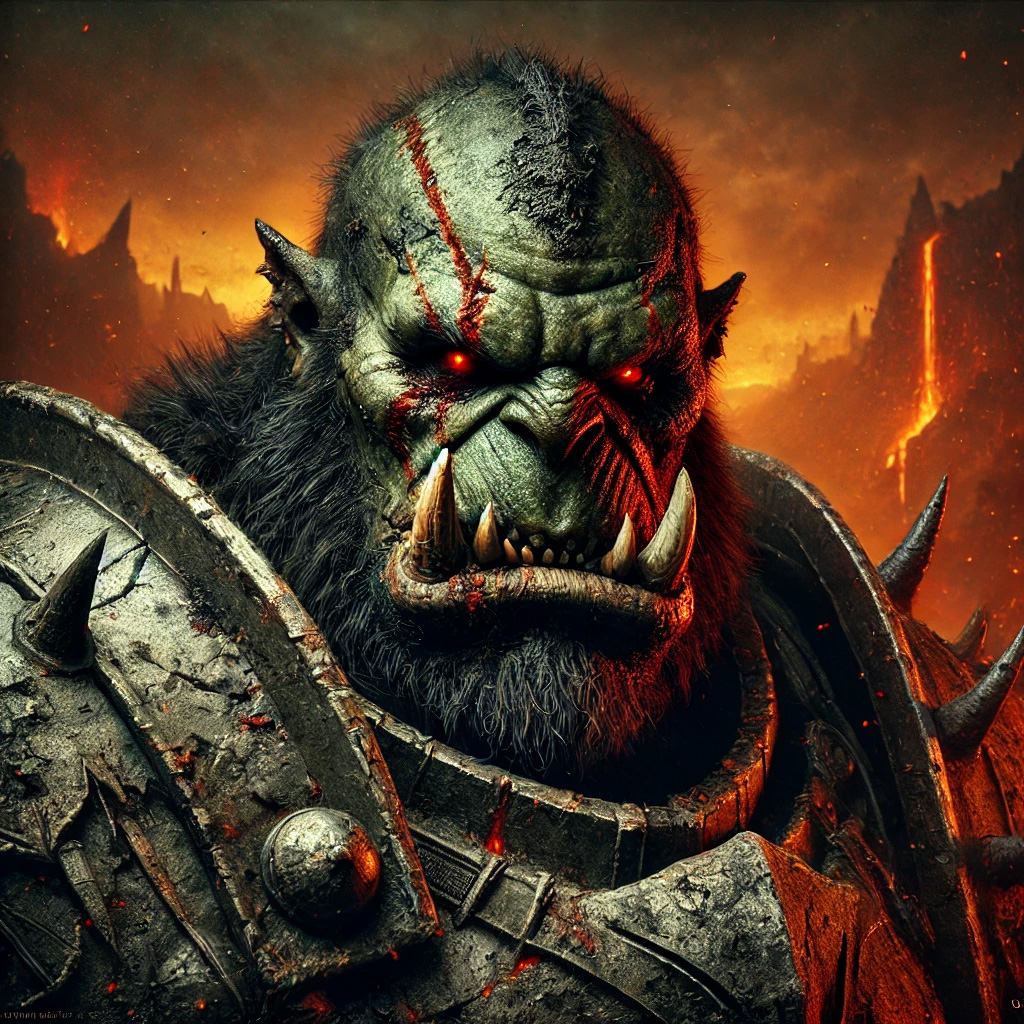
The warriors of Gryndor, known as the Ironclad, are the living embodiment of the kingdom’s philosophy. Encased in thick armor forged from volcanic iron, they are walking fortresses, their silhouettes massive and imposing on the battlefield. Their armor is not elegant, nor is it designed for speed, it is built for endurance, for impact, and for survival under the most extreme conditions.
Each piece of equipment is crafted to maximize destructive potential. Massive warhammers crush armor and bone with equal ease, greataxes cleave through ranks of enemies, and heavy blades are designed to deliver decisive, devastating blows. These are not weapons of finesse, they are instruments of annihilation.
On the battlefield, the Ironclad advance with relentless determination. They do not rush, they do not falter, and they do not retreat. Their formations move like grinding walls of iron, absorbing impact and returning it with crushing force. Against lighter armies, their advance is unstoppable, and even against heavily fortified defenses, their presence alone can shift the tide of battle.
To face the Ironclad is to face inevitability.
They do not break.
They do not yield.
They endure, and they advance.
The Beasts of Fire and War
The orcs of Gryndor do not rely solely on their mastery of steel and industry to dominate the battlefield. They have also shaped the living world around them, breeding and refining creatures capable of surviving, and thriving, within the same brutal conditions that define their land. :contentReference[oaicite:0]{index=0} These beasts are not merely tools of war, they are extensions of Gryndor’s philosophy, strength, endurance, and overwhelming force.
Among the most iconic of these creatures are the Grimfangs, massive wolves bred specifically for combat. Larger, more aggressive, and more resilient than their counterparts in Dreadhold, Gryndor’s Grimfangs have adapted to the extreme heat and ash-filled air of the region. Their fur is often darkened, scorched by proximity to the forges, and their bodies are built for both speed and impact.
The bond between rider and Grimfang is forged through hardship and dominance. Only the most capable warriors are permitted to ride them, and the relationship is not one of simple control, but of mutual survival. In battle, these mounted warriors move with terrifying speed, striking enemy flanks, disrupting formations, and vanishing before a counterattack can be organized.
Yet even the Grimfangs pale in comparison to the Rhakors, colossal beasts whose presence alone can break the morale of entire armies. Resembling massive, iron-skinned rhinoceroses, Rhakors possess hides so thick they can deflect most conventional weapons. Their horns, hardened and reinforced through generations of selective breeding, are capable of tearing through stone, steel, and living flesh with equal ease.
Used as living battering rams, Rhakors are deployed to shatter enemy lines and demolish fortifications. Their charge is unstoppable once unleashed, a wave of destruction that crushes everything in its path. They are also used to haul Gryndor’s massive siege engines, their endurance allowing them to move immense weight across terrain that would halt lesser beasts.
Where the Ironclad represent unyielding advance, the Rhakors embody unstoppable impact.
A Society of Strength and Merit
Gryndor is governed by a strict meritocracy, where strength, skill, and achievement define one’s place within society. Leadership is not inherited, nor is it granted, it is taken, proven through battle, strategy, and the ability to command both fear and respect.
At the pinnacle of this structure stands the Iron King, a ruler who must embody the very essence of Gryndor. He is not simply a political leader, but the strongest and most capable warrior in the realm, a figure whose authority is constantly tested by those who seek to claim his position. His rule endures only as long as he can defend it.
Beneath him, warlords, commanders, and forge overseers compete for influence, their power tied directly to their contributions to Gryndor’s war machine. Success brings status, resources, and authority. Failure brings demotion, exile, or death. This constant pressure ensures that weakness is quickly eliminated, and that only the most capable individuals rise to positions of power.
This system creates a society that is both brutally efficient and inherently unstable. Ambition is encouraged, but never without risk. Alliances form and collapse, rivalries simmer beneath the surface, and every leader must remain vigilant against both external threats and internal challengers.
In Gryndor, power is never secure.
It is only ever held, for as long as one is strong enough to keep it.
Trade, Tension, and Dominance
Despite its aggressive nature, Gryndor does not exist in isolation. Its economy and influence extend beyond its borders through trade, negotiation, and intimidation. The realm’s vast production of weapons, armor, and war machines makes it an indispensable, if dangerous, partner for neighboring regions.
To the south, the Greyhills provide access to additional mineral resources, creating a relationship built on mutual benefit but strained by frequent skirmishes and territorial disputes. Trust between the two regions is minimal, and peace exists only because open war would be costly for both sides.
To the northwest, the desert lands of Qarath represent both opportunity and rivalry. Trade flows between the two regions, with Gryndor supplying weapons and machinery in exchange for resources unavailable within its own harsh environment. Yet this exchange is constantly threatened by raids, betrayals, and shifting alliances, as both sides seek to gain the upper hand.
Gryndor’s approach to diplomacy is simple, it does not rely on persuasion, but on leverage. Its strength, its wealth, and its capacity for destruction ensure that its voice is always heard, even when it is not welcomed.
Its allies remain cautious.
Its enemies remain wary.
And all understand that when Gryndor chooses war, it does so with overwhelming force.
The Lords of Fire and Iron
At the apex of Gryndor’s ironclad hierarchy stands King Vorgath Ironfang, a towering warlord whose presence alone commands both fear and loyalty. :contentReference[oaicite:0]{index=0} Clad in armor of black volcanic iron, he rides into battle atop his Grimfang, Shadewolf, a beast as feared as its master. Together, they embody the essence of Gryndor, strength, dominance, and absolute control forged through fire and blood.
Vorgath did not inherit his crown. He took it, through conquest, challenge, and survival in a system where only the strongest endure. His rise was marked by brutal victories and calculated decisions, proving not only his physical superiority, but also his strategic mind. Under his rule, Gryndor has expanded its influence, strengthening its position as one of the most formidable powers in the world.
Yet his authority is never absolute. In Gryndor, even a king must constantly prove his worth. Every warlord, every commander, and every ambitious rival watches closely, waiting for a moment of weakness. Vorgath understands this, and it is this awareness that has kept him on the throne. He rules not only through strength, but through anticipation, crushing threats before they can fully emerge.
The Pillars of the War Machine
Among Vorgath’s most trusted lieutenants stands Drokmar Skullcrusher, commander of the Ironclad and a living embodiment of Gryndor’s brutal warfare. Massive even by orc standards, Drokmar leads from the front, his warhammer capable of shattering stone and breaking entire formations with a single strike. His tactics are direct, efficient, and devastating, overwhelming enemies through sheer force and relentless pressure.
His loyalty to Vorgath is rooted in respect rather than fear. He recognizes in the Iron King a strength equal to his own, and together they form the unbreakable core of Gryndor’s military power. Where Vorgath commands the vision of war, Drokmar executes it with crushing precision.
Deep within the Iron Crucible, Zunak the Flamecaster shapes the arcane backbone of Gryndor’s dominance. As chief of the Forge Masters, he has pushed the boundaries of fire magic further than any before him. His body bears the marks of his obsession, skin charred, veins glowing with internal heat, his very presence radiating unstable energy.
Zunak’s creations have redefined warfare. Weapons infused with volcanic fury, war machines capable of unleashing catastrophic destruction, and experimental constructs that blur the line between magic and machinery all originate from his relentless pursuit of power. He is both invaluable and dangerous, a figure whose ambitions may one day rival those of the leaders he serves.
Warlords and Hunters of Destruction
Gratak Bloodhorn stands among Gryndor’s most feared warlords, a master of shock warfare who rides into battle atop Steelhide, his massive Rhakor. Together, they are an unstoppable force, tearing through fortifications and crushing enemy lines with devastating impact. Gratak’s strength is matched by his tactical instinct, knowing exactly where and when to strike to cause maximum destruction.
Where Gratak represents overwhelming force, Roga Firefang embodies speed, precision, and relentless pursuit. As the leader of Gryndor’s elite Grimfang riders, she commands a cavalry force unmatched in mobility and ferocity. Her raids penetrate deep into enemy territory, striking supply lines, isolated forces, and vulnerable targets before vanishing without a trace.
Roga is not driven solely by loyalty. Ambition burns within her as fiercely as the forges of Gryndor, and she constantly seeks opportunities to rise higher within the hierarchy. She serves the Iron King, but her gaze is always fixed on what lies beyond her current station.
Beyond the land itself, Gryndor’s reach extends across the sea through Tharnak the Reaver, a pirate lord whose ironclad fleet dominates the western waters. His ships, bristling with siege weapons, are floating extensions of Gryndor’s war machine, capable of devastating coastal settlements with terrifying efficiency.
Tharnak’s allegiance is pragmatic rather than loyal. He serves Gryndor because it benefits him, bringing wealth, protection, and power. As long as he delivers results, his independence is tolerated. But like all powerful figures within Gryndor, his position depends on continued success.
The Unyielding Engine of War
At the center of Gryndor’s industrial dominance stands Zorak Ironfist, overseer of the Iron Crucible. His authority ensures that the forges never fall silent, that production never slows, and that the kingdom’s war machine remains in constant motion. He rules his domain with brutal efficiency, enforcing discipline through fear and absolute control.
Under his watch, every worker, every smith, and every engineer becomes part of a greater system, one that feeds directly into Gryndor’s military strength. Zorak understands that in a realm like Gryndor, usefulness is survival. As long as he continues to deliver results, his power grows. But failure, even once, would mean his immediate downfall.
This is the truth of Gryndor.
No position is secure.
No power is permanent.
Everything must be earned, and constantly defended.
The Forge That Never Dies
Gryndor is not merely a kingdom, it is a force. A realm where fire shapes the land, where iron shapes its people, and where war shapes its future. Its armies are relentless, its forges eternal, and its leaders among the most dangerous in the world.
It does not seek peace.
It does not rely on diplomacy.
It endures, expands, and dominates through strength alone.
And as long as its fires continue to burn, Gryndor will remain what it has always been.
The forge of unyielding war.